
Turtle Hatchling Releases in Todos Santos: Season & Etiquette

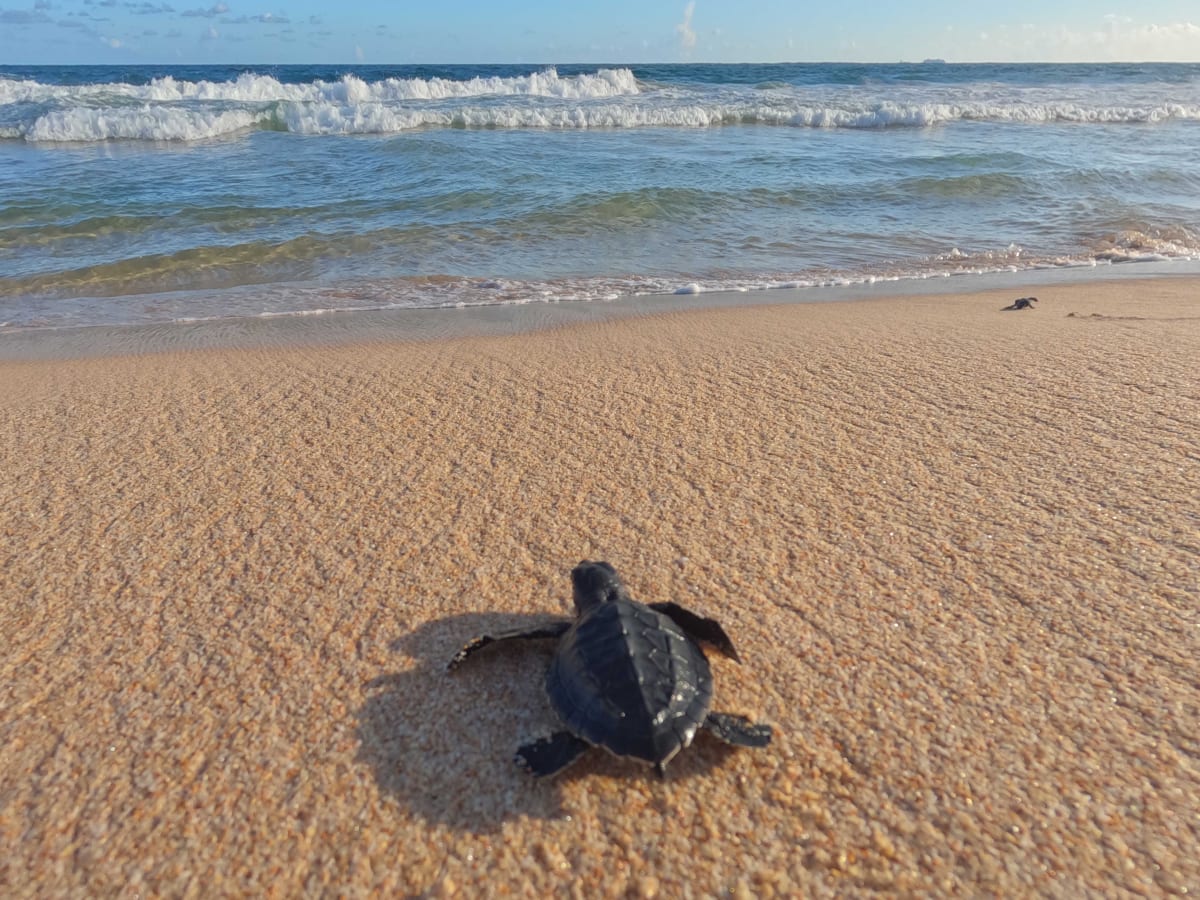
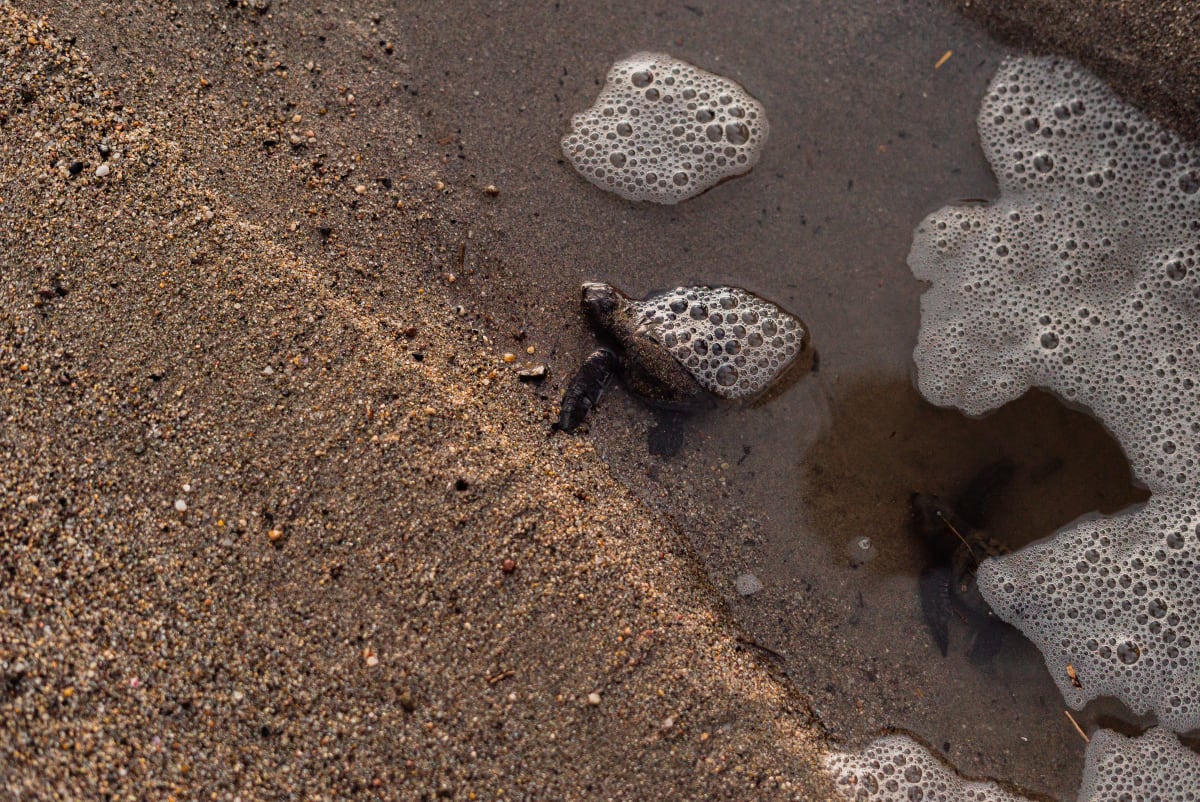
A Todos Santos turtle release is one of the quietest and most moving things you can do on this stretch of the Baja California Sur coast: at sunset, a few dozen hatchlings born in a protected hatchery are set down on the sand and crawl, on their own, into the Pacific. It is run by local volunteers, not by tour companies, and it only happens in season and when nests are hatching. This guide explains who runs it, which turtles nest here, roughly when to come, and the etiquette that matters more than anything else.
Who runs the turtle releases in Todos Santos
The releases are the work of Tortugueros Las Playitas, a volunteer conservation group that has spent years protecting nests on the beaches just north of town, around Las Playitas. The beach there is long, open and pounded by surf, and a nest left in place faces high tides, dogs, vehicles and people digging for eggs. So volunteers patrol at night during the nesting season, move newly laid eggs into a fenced hatchery on the beach, and wait.
What happens in the hatchery
Each clutch is reburied in the hatchery at a depth similar to the original nest, marked with the date it was laid, and left to incubate in the warm sand. When the hatchlings dig their way out, usually at night or early in the morning, volunteers collect them and hold them briefly until the evening release. This is the same method used by turtle camps up and down Mexico's Pacific coast: it trades a little naturalness for a much higher survival rate for each nest.
Why the release happens at sunset
Hatchlings are released in the late afternoon or at dusk because the sand has cooled, there are fewer birds hunting along the shoreline, and the young turtles reach the water when the light over the ocean is brightest, which is the cue they follow to find the sea. Releasing them at midday on hot sand would exhaust them before they reached the waves.
Which sea turtles nest near Todos Santos
The Pacific beaches of the southern Baja peninsula are a nesting ground for several species. Around Todos Santos, three are the ones you are likely to hear about at a release:
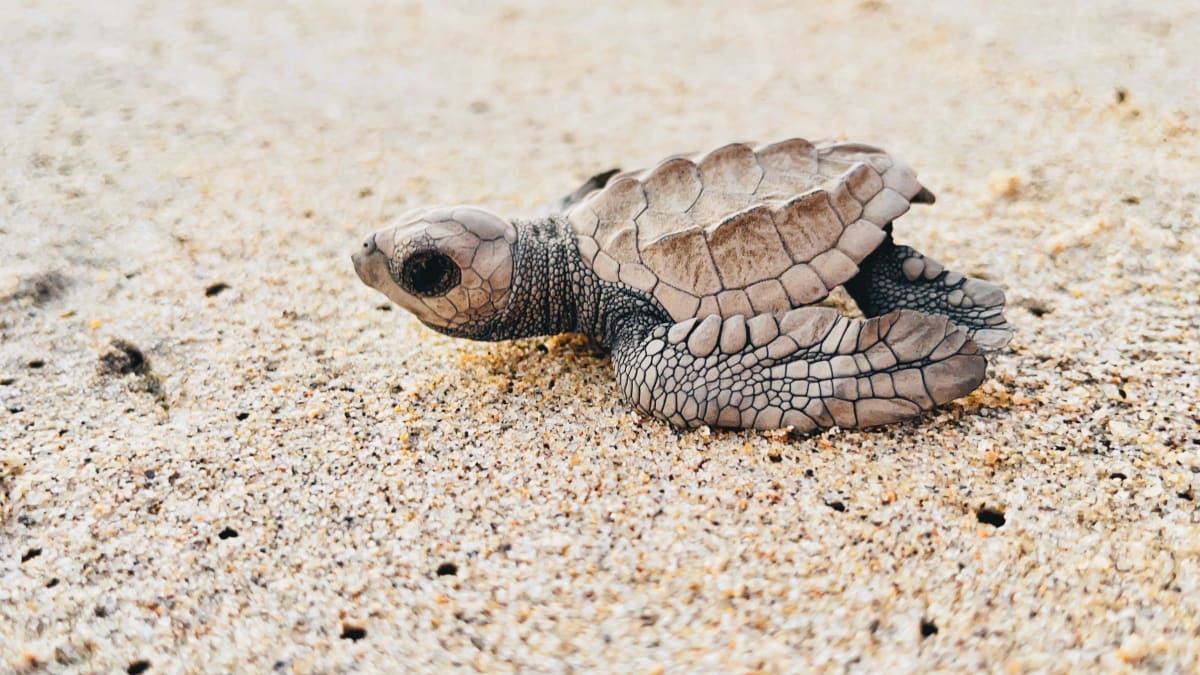
- Olive ridley (tortuga golfina): the smallest and by far the most common nester on this coast. Most hatchlings you see released will be olive ridleys.
- Leatherback (tortuga laúd): the largest sea turtle in the world. The eastern Pacific population has collapsed, so every leatherback nest found on these beaches is a big event for the volunteers.
- Black turtle (tortuga prieta): the eastern Pacific form of the green turtle, which nests here only occasionally.
All sea turtles are protected in Mexico, and the country has banned the capture of turtles and the trade in their eggs and meat since 1990. For background on the species you are most likely to meet, see the olive ridley sea turtle entry.
When is turtle release season in Todos Santos?
There is no fixed calendar, and anyone who promises you a release on a specific date is guessing. What decides it is biology: females come ashore to lay, the eggs incubate for roughly six to eight weeks, and only then do the hatchlings emerge. In practice that means:
The broad pattern
Nesting on this coast happens mostly in the second half of the year, so releases are most likely from late summer through the end of the year, with leatherback nests, when there are any, running later into the winter. Outside that window the hatchery is usually empty. The busiest weeks change from year to year with water temperature and how many females arrive.
How to find out about tonight's release
Releases are announced at short notice, often the same day, because nobody knows exactly when a clutch will hatch. Ask at your hotel, at cafés and shops in the centre of town, or follow the volunteer group on social media. Once you are in town, it is worth asking daily: a release can happen several evenings in a row and then not for a week.
Turtle release etiquette: the rules that matter
The volunteers will brief the group before each release. Their instructions come first; this table sums up the usual ones and the reason behind each.
| Do | Don't | Why |
|---|---|---|
| Stand behind the line drawn in the sand | Step into the path the hatchlings take | They are small, the colour of sand and easy to tread on |
| Keep your hands to yourself | Pick up, stroke or "help" a hatchling | Handling stresses them and the crawl to the sea is part of how they orient |
| Take photos without flash | Use flash, torches or phone lights | Hatchlings head for the brightest horizon; artificial light pulls them the wrong way |
| Keep children close and quiet | Let anyone run along the waterline | The last metres are where hatchlings are most often stepped on |
| Leave dogs at home | Bring a dog onto a nesting beach | Dogs dig up nests and chase hatchlings |
| Give a donation if you can | Expect a ticket or a show | Donations are voluntary and pay for patrols and the hatchery |
Light is the biggest threat
Hatchlings find the ocean by moving towards the brightest, lowest horizon, which on a natural beach is the sea. A phone screen, a car headlight or a lit-up house behind the dunes can turn them around. If you are staying on the beach, close curtains and switch off outdoor lights at night during the season.
Do not "help" the slow ones
Some hatchlings will stall, turn in circles or get rolled back by a wave. It is hard to watch, but carrying them to the water is the volunteers' call, not yours. They decide whether a weak hatchling needs help.
Planning your evening
Las Playitas is a short drive north of the centre of Todos Santos; you will need a car or a ride, and the last stretch is a sandy road. Bring a light layer, since the wind off the Pacific turns cool once the sun drops, and plan to arrive early: the volunteers usually explain what is happening before the release, and that talk is half the experience.
Combine it with the rest of the day
A release fits neatly at the end of a day exploring town or surfing south at Los Cerritos; see our guide to things to do in Todos Santos for ideas. If you are deciding between staying in town or near the beaches, our guide to where to stay in Todos Santos compares the areas. For other outings around town, browse our Todos Santos tours.
Swimming near the release beach
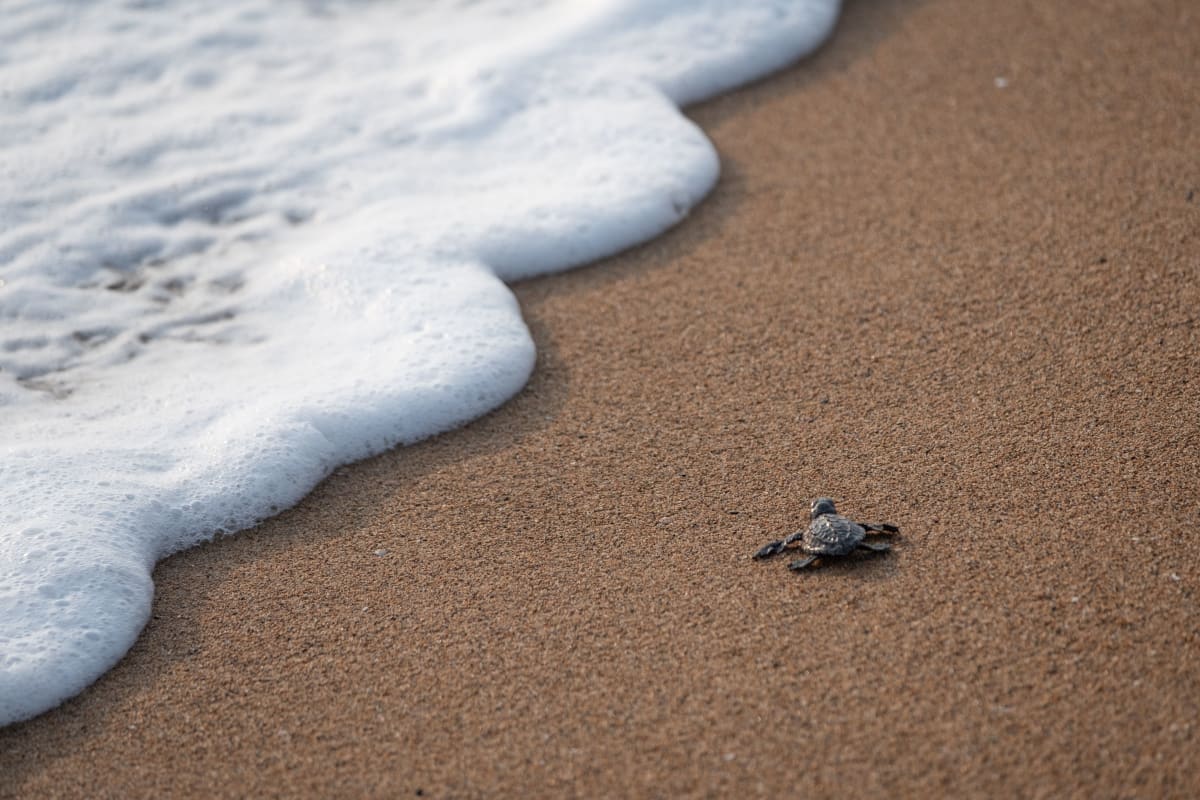
The beaches north of town have strong surf, steep drop-offs and rip currents, and they are not swimming beaches. Watch the release from the sand and save swimming for calmer spots on days when the sea allows it.
Volunteering and other ways to help
Some seasons the group takes on volunteers for night patrols or hatchery shifts; ask them directly, as it depends on the year and on how long you are staying. Whether or not you volunteer, you can help by keeping beaches clean, staying off nests and never buying anything made from turtle shell. If you find a nesting turtle or a damaged nest, keep your distance and tell the volunteers; in Mexico, wildlife crimes are reported to PROFEPA, the federal environmental protection agency.
Frequently Asked Questions
Can you watch a turtle release in Todos Santos for free?
Yes. The releases are run by volunteers, and watching does not require a ticket. A donation is welcome and helps pay for patrols and the hatchery, but it is voluntary.
What month is best for a Todos Santos turtle release?
There is no guaranteed month. Releases are most likely from late summer to the end of the year, depending on when nests hatch, so ask locally once you arrive.
Can I touch or hold a baby turtle?
No. Do not touch, pick up or carry hatchlings. Only the volunteers handle them, and only when it is necessary.
Which turtles are released in Todos Santos?
Mostly olive ridleys, the most common nester on this coast. Leatherback and black turtle nests are found less often.
Continue exploring Todos Santos
You Might Also Like
 ExploringNov 9, 2026
Todos Santos vs La Paz: Where to Base Yourself in Southern Baja
Todos Santos vs La Paz: a small Pacific art town with surf and empty beaches, or a relaxed state capital on the calm Sea
 ExploringOct 26, 2026
Todos Santos vs Cabo San Lucas: Art Town or Party Marina?
Todos Santos vs Cabo: a quiet Pueblo Mágico of galleries and wild surf, or a lively marina town with calm swimming bays,
 ExploringOct 24, 2026
El Pescadero Guide: Beaches, Farms & Surf Stays South of Todos Santos
El Pescadero is the farming and surf village about 10 minutes south of Todos Santos, between San Pedrito and Los Cerrito