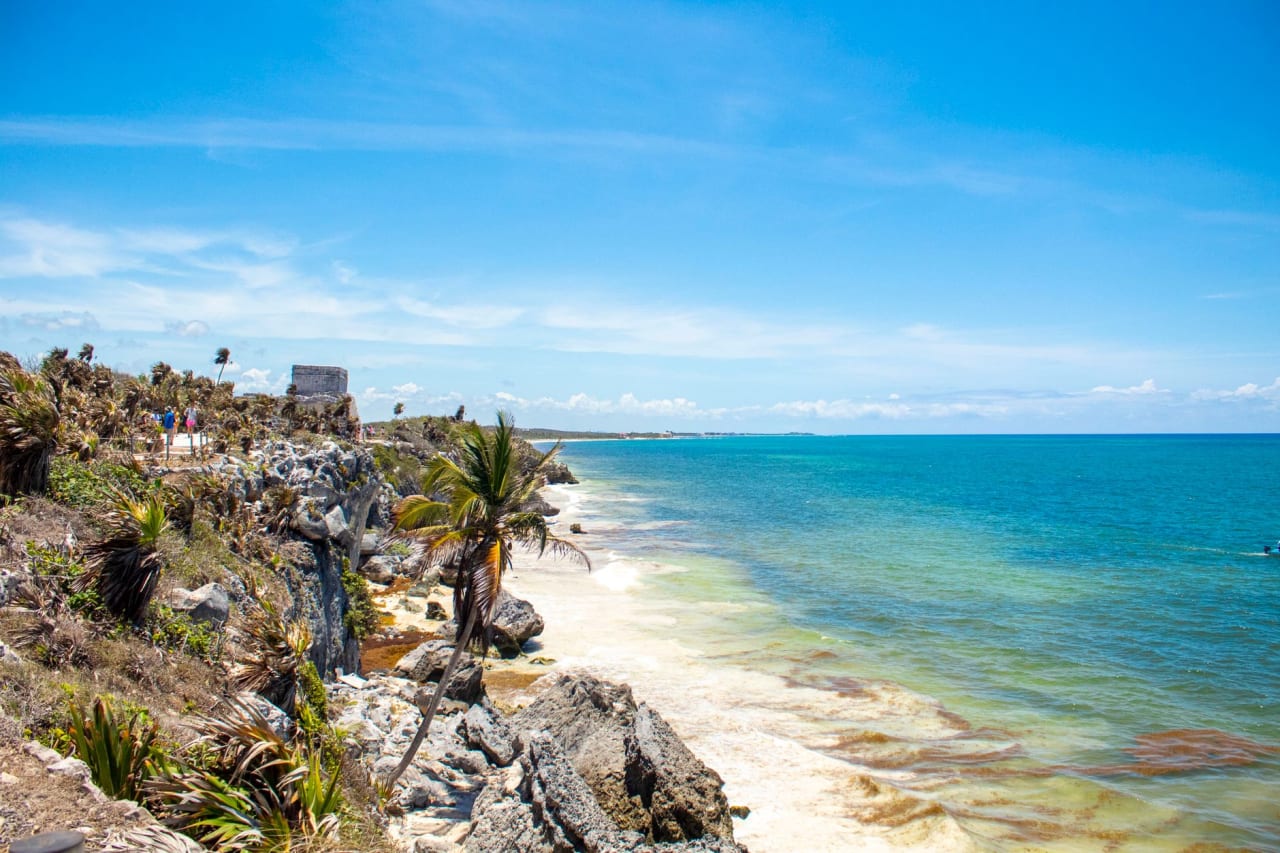
The Best Time to Experience Whale Season Near Tulum
One of my most memorable experiences was the first time I witnessed a humpback whale breach the warm Caribbean waters off the Yucatan Peninsula. We had departed from Isla Mujeres at dawn, the turquoise sea ahead of us glittering in the early light, and there it was — a massive humpback launching itself skyward in a full breach. If you are staying in Tulum and want to add this once-in-a-lifetime encounter to your itinerary, here is everything our Tulum team found you need to know.
Tulum sits on Mexico's Caribbean coast in the state of Quintana Roo, roughly 130 kilometres south of Cancun along the Riviera Maya corridor. It is celebrated for its ancient Mayan cliff-top ruins, crystalline cenotes, and the laid-back eco-chic vibe that has made it a favourite for travellers seeking both adventure and wellness. What many visitors do not realize is that the Caribbean waters of the Yucatan Peninsula also serve as a seasonal passage for humpback whales — and booking a day trip to witness them is one of the most extraordinary things you can do while based in Tulum.
Understanding when to experience whale season near Tulum, and how to do it responsibly, can transform your beach holiday into something positively magical.
The Spectacular Whale Season
The whale season in the waters near Tulum and the broader Yucatan Peninsula is a veritable spectacle — a seasonal event where you can witness the awe-inspiring power and grace of the ocean's mightiest inhabitants. It was during one of my whale watching tours departing from Isla Mujeres that I experienced the true grandeur of this event first hand, a moment that has etched itself into my memory forever.
A Personal Experience of Whale-Watching
The anticipation as you stare into the vast expanse of the Caribbean Sea is palpable the moment you embark on your Tulum-area whale watching tour. Tours typically depart from Cancun or Isla Mujeres — both easily reached from Tulum by ADO bus or organized transfer — and head north into the open Caribbean. The ocean's surface begins to churn, creating a path as the creature ascends from its watery depths. Then, in a wondrous moment, the whale breaches the surface. The feeling of watching such a majestic creature up close is simply otherworldly — a mix of surprise, appreciation, and immense respect for the gentleness of their ways amidst their enormity.
All around you, gasps of awe, excited chatter, and the rapid clicking of cameras echo your own excitement. The charm and charisma of the humpback whales we encounter are unmatched, the playful flips of their tails both a tease and an invitation to marvel at their grandeur.
Different Whale Species and Their Unique Behaviors
Whale watching, for us, is not just about seeing these majestic creatures for the spectacle of it — it is about understanding and appreciating the rich marine life of the Yucatan Peninsula's Caribbean waters. Every whale sighting is unique and equally captivating. Humpback whales are by far the most commonly sighted species in these waters, celebrated for their acrobatic breaches and their hauntingly beautiful songs. Occasionally whale sharks — the ocean's gentle giants — are spotted in the same northern Caribbean zones, especially between June and September.
Observing these behaviors, noting the different whale routes along the Caribbean corridor off Cancun and Isla Mujeres, can be a deeply enlightening experience. It offers insights into their amazing communication patterns, mating rituals, and complex social structures. As a whale watcher, you are not just a spectator but a privileged guest given a glimpse into the vibrant lives of these ocean-dwelling giants.

The whale migration near Tulum also highlights the impact of the changing seasons on Caribbean marine life. Witnessing this migration is a humbling experience, offering a vivid reminder of the powerful rhythms of nature that dictate not just the lives of these extraordinary creatures, but all forms of life on our planet.
When Is the Best Time to See Whales Near Tulum?
Tulum's whale season coincides with the winter and early spring months, when humpback whales migrate through the warm Caribbean waters of the Yucatan Peninsula. It is during this window — roughly November through March — that our team recommends building a whale watching day trip into your Tulum itinerary.
Prime Months: November to March
As we set out from Isla Mujeres onto the Caribbean, the air was filled with an electrifying mix of anticipation and excitement. The ocean that day was calm, the turquoise water reflecting the blue Mexican sky. But as the first spout of water broke the stillness, heartbeats quickened. It was a humpback, rising and falling rhythmically in and out of the water, its massive body catching the sunlight each time it surfaced. It was a galvanizing experience, one that stirred something deep within us.
December and January tend to offer the highest concentrations of humpbacks in these waters. February and March are also excellent, often providing calmer sea conditions. Travelers tell us that any of these months deliver memorable sightings, though December departures often benefit from festive, smaller group sizes as many visitors come for the holidays.
What About Sea Turtle Season?
If you miss whale season or want to combine your Tulum trip with another extraordinary marine encounter, consider that Akumal — just 30 minutes north of Tulum along Highway 307 — offers wild sea turtle encounters in the water year-round. Green and loggerhead turtles feed on the seagrass beds in Akumal Bay every single morning, and you can snorkel right alongside them with a local guide. This is a completely different experience from whale watching but equally moving, and it fits perfectly into any Tulum itinerary.
How to Get to the Whale Watching Departure Points from Tulum
Whale watching tours depart from Cancun and Isla Mujeres, not from Tulum's own coastline — the Caribbean shelf here is relatively close to shore and whales tend to pass through deeper waters further north. The good news is that getting there from Tulum is straightforward.
- ADO Bus: Comfortable direct buses run from Tulum's bus terminal to Cancun in about 2 hours. From the Cancun ferry terminal you can reach Isla Mujeres in 20 minutes.
- Private transfer: Many Tulum tour operators offer combined transfers plus whale watching packages, picking you up at your hotel in the Zona Hotelera or Aldea Zama and delivering you to the boat dock.
- Rental car: Highway 307 is a smooth, well-signed toll road. Driving from Tulum to Cancun takes about 1.5 to 2 hours.
We recommend booking your whale watching excursion at least a week in advance during peak season (December through February), as reputable operators with small-group boats fill up quickly.
What to Expect on a Whale Watching Tour
Most tours last between 3 and 5 hours on the water. Responsible operators in this region maintain strict distance guidelines from the whales — typically no closer than 30 metres — to minimize stress to the animals. Here is what our team recommends bringing:
- Sunscreen (reef-safe — this is the Caribbean and the coral reef matters here)
- Light layers — the breeze on the open Caribbean can feel cool in early morning even in December
- Sea-sickness medication if you are sensitive — open-water swells can occasionally be choppy
- A good camera with a zoom lens — the moments go fast
- Water and snacks — some tours provide these, confirm when booking
Combining Whale Watching with the Best of Tulum
A whale watching day trip fits beautifully into the wider tapestry of a Tulum visit. Before or after your whale watching excursion, consider pairing it with these Tulum classics:
- Gran Cenote — just 4 kilometres from Tulum Pueblo, this is the most iconic cenote on the peninsula, with crystal-clear freshwater ideal for snorkelling among stalactites and resident turtles.
- Dos Ojos cenote system — one of the world's longest underwater cave systems; both beginner snorkelling and full cave diving are available.
- Tulum Ruins — the only Mayan archaeological site perched directly above the Caribbean Sea. Arrive at opening time (8 am) to avoid the heat and the crowds, then walk down to Playa Ruinas for a swim.
- Sian Ka'an Biosphere Reserve — just south of Tulum, this UNESCO-protected reserve encompasses mangroves, coastal lagoons, and pristine reef. Guided boat tours let you drift the ancient Mayan canals and spot manatees, crocodiles, and hundreds of bird species.
- Playa Paraíso — consistently ranked among Mexico's most beautiful Caribbean beaches, just a short bike ride or taxi south of the Zona Hotelera.
Responsible Whale Watching: Our Commitment
Our Tulum team only partners with operators who follow Mexican environmental regulations for marine wildlife observation. Humpback whales are a protected species under Mexican law, and responsible tourism means keeping a safe distance, limiting boat engine noise near surfacing animals, and never feeding or touching wildlife. Travelers tell us that the most meaningful encounters happen precisely because the guides keep their distance — the whales approach the boats out of curiosity, on their own terms, and that is when the magic happens.
If you are keen to learn more about Caribbean marine conservation, the Sian Ka'an area south of Tulum also offers volunteer and educational programs through several NGOs operating in the biosphere reserve.
Book Your Whale Watching Experience
Ready to witness one of nature's greatest migrations from the Caribbean shores of the Yucatan Peninsula? Book your whale watching tour here and let our team handle the logistics so you can focus entirely on the experience. Whether you are staying in the Zona Hotelera, Aldea Zama, or right in Tulum Pueblo, we will take care of your transfer and ensure you are on the water during the best window for sightings.
Whale season near Tulum is a reminder that this stretch of the Caribbean coast is not just about cenotes and Mayan ruins — extraordinary wildlife encounters await above the water's surface too. We hope to see you out there.
auto_awesome Continue exploring Tulum
You Might Also Like
 article Adventures calendar_today Dec 4, 2024
 Complete Guide to Whale Watching Season Near Tulum
Humpback whales visit the warm Caribbean waters off the Yucatán Peninsula every winter. Here is everything you need to k
 article Dolphins calendar_today Dec 14, 2023
 8 Must-Have Items for Your Dolphin Watching Trip in Tulum
Ever since we joined our first dolphin watching trip in Tulum, our appreciation for these magnificent creatures deepened
 article Adventures calendar_today Nov 30, 2023
 The Species of Whales and Dolphins You Can See in Tulum
Arriving in Tulum, Mexico, I knew I was in for an adventure of a lifetime. Drawn by stories of majestic whales and playf