
Whale Watching from the Beach in Todos Santos

Todos Santos whale watching needs no ticket and no boat. From roughly December to April, humpback whales spend the winter along the Pacific coast of Baja California Sur, and from the beaches and low hills around town you can often watch them blow, slap their fins and breach, sometimes only a few hundred metres out. The peak is usually January to March. This guide covers when to come, where to stand, how to actually spot a whale, and what to know if you decide to go out on the water.
| Month | What to expect from shore | Tip |
|---|---|---|
| November | Occasional early arrivals | Do not plan a trip around whales yet |
| December | Sightings become regular | Christmas weeks are the busiest in town |
| January–March | Peak season, daily sightings likely on calm days | The best window for a whale-focused trip |
| April | Fewer whales, often mothers with calves | Early April is still worth a look |
| May–October | Humpbacks have left for their feeding grounds | Come for surf, food and turtles instead |
Why the whales come to Todos Santos
The whales you see from the beach are travelling, mating and raising calves, not feeding. Knowing which species is where saves you a wasted drive.
Humpback whales off the beach
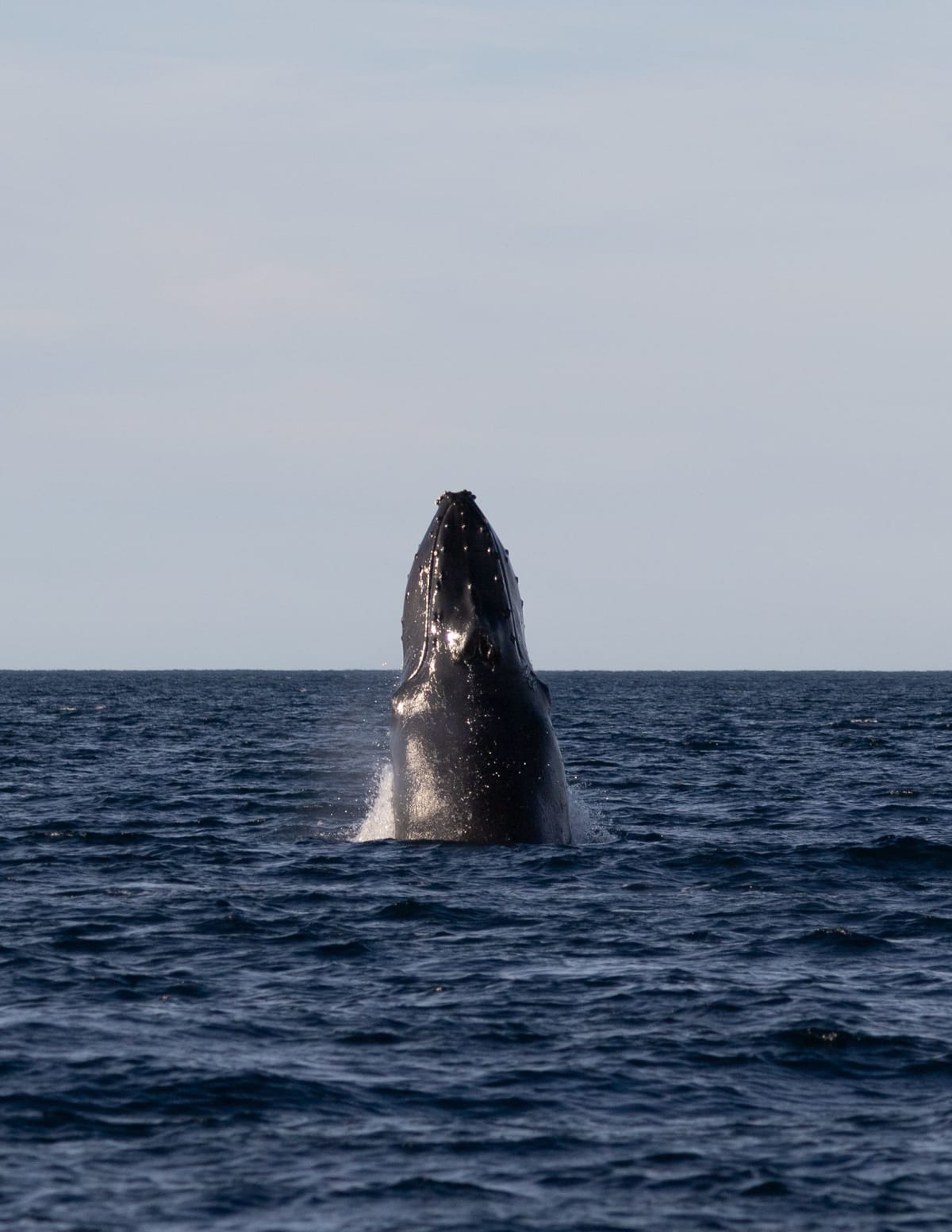
The humpback whale spends the summer feeding in the cold waters of the North Pacific and comes south in winter to breed and give birth in warm water. Adults reach about 15 metres, and they are the most acrobatic of the large whales: breaches, pectoral fin slaps and tail lobs are common, and all of them throw up white water that is visible from shore. Mothers with calves often stay in shallower water close to the coast, which is part of why sightings from the beach are so good here.
Gray whales are farther north
Gray whales also winter in Baja California Sur, but in the sheltered lagoons on the Pacific side much farther north. The closest to Todos Santos is Bahía Magdalena, reached from Puerto San Carlos or Puerto Adolfo López Mateos. It is several hours' drive each way, so most people who go stay at least one night. Do not expect to see gray whales from the beach in Todos Santos: the humpback is the whale of this stretch of coast.
Where to watch whales from the beach
Any beach facing the open Pacific can give you a sighting, but height helps. From a few metres up you see over the shore break and can scan a much wider stretch of sea.
Punta Lobos and the hills above it
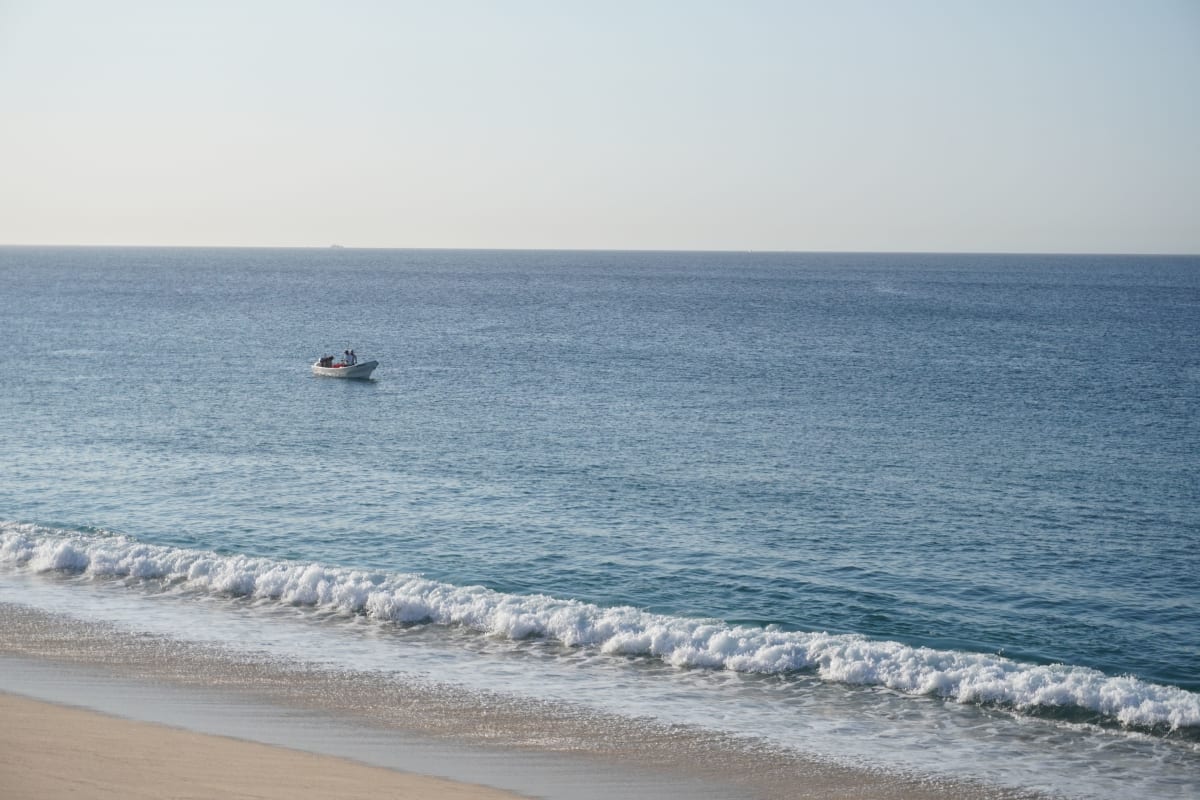
Just south of town, Punta Lobos is where the fishing cooperative launches its pangas through the surf. The rocky point and the slopes behind the beach give a raised view north and south, and the afternoon panga landing makes a good excuse to stay a while. Watch your footing on loose ground and stay well back from the edge.
La Cachora, Las Pocitas and Las Palmas
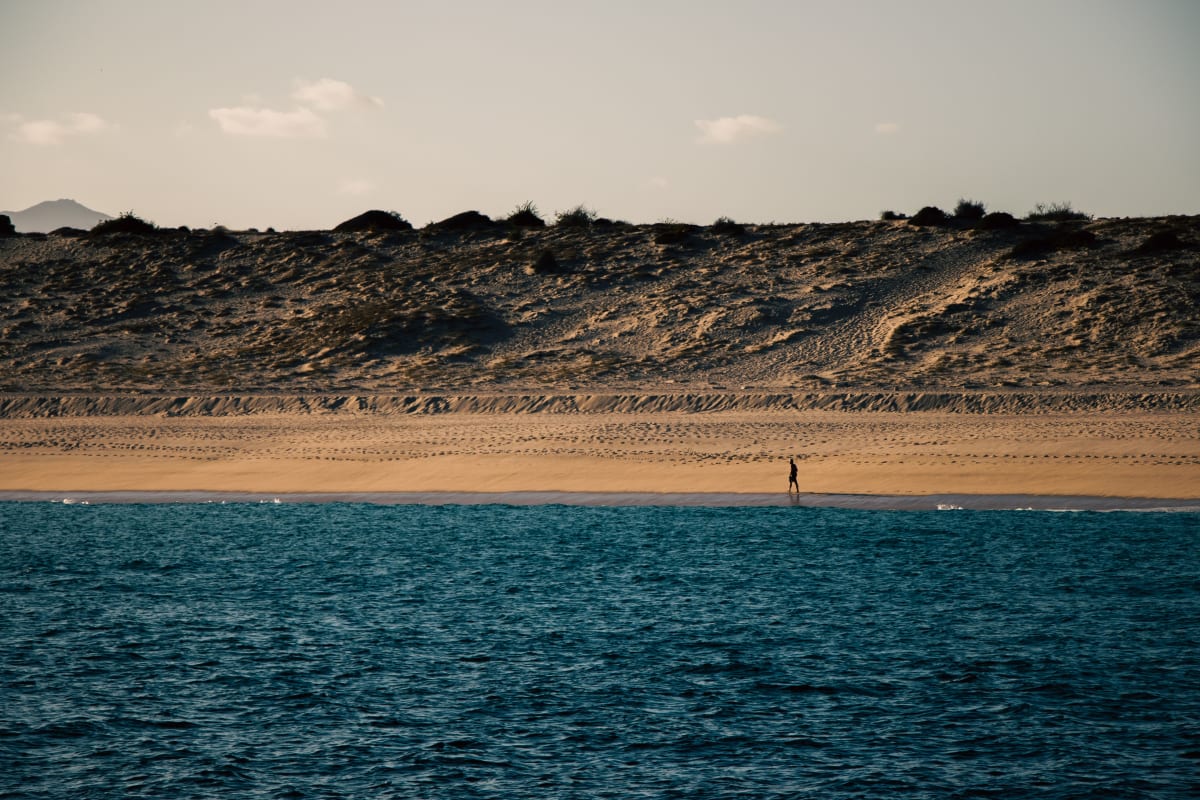
La Cachora and Las Pocitas, close to town, are long, open beaches where you can walk and scan at the same time. Playa Las Palmas, south of Punta Lobos, is a cove backed by a palm grove with rocks at either end to climb for a better angle. All three are for looking, not swimming: the surf and currents here are dangerous.
Cerritos and El Pescadero
About 15 minutes south, Los Cerritos has a rocky headland at its northern end, and the beaches around El Pescadero face the same stretch of ocean. If you are staying in that area, a morning walk along the sand is often enough. Your own terrace may be the best seat of all: many rentals on the hillsides look straight out to sea.
How to spot a whale from shore
Most first-time watchers miss whales that are right in front of them because they are looking for a whole animal. You are looking for signs.
Choose the time of day
Go in the morning. On this west-facing coast the early sun is behind you, so there is no glare on the water, and the sea is usually calmer before the wind picks up in the afternoon. Whitecaps make blows much harder to pick out. Late afternoon can work too, but you will be looking into the sun as it sets.
What to look for
- The blow: a bushy puff of mist, up to about three metres high, that hangs for a second or two. It is the first sign in almost every sighting.
- Splashes: a sudden burst of white water away from the breaking waves usually means a breach or a fin slap.
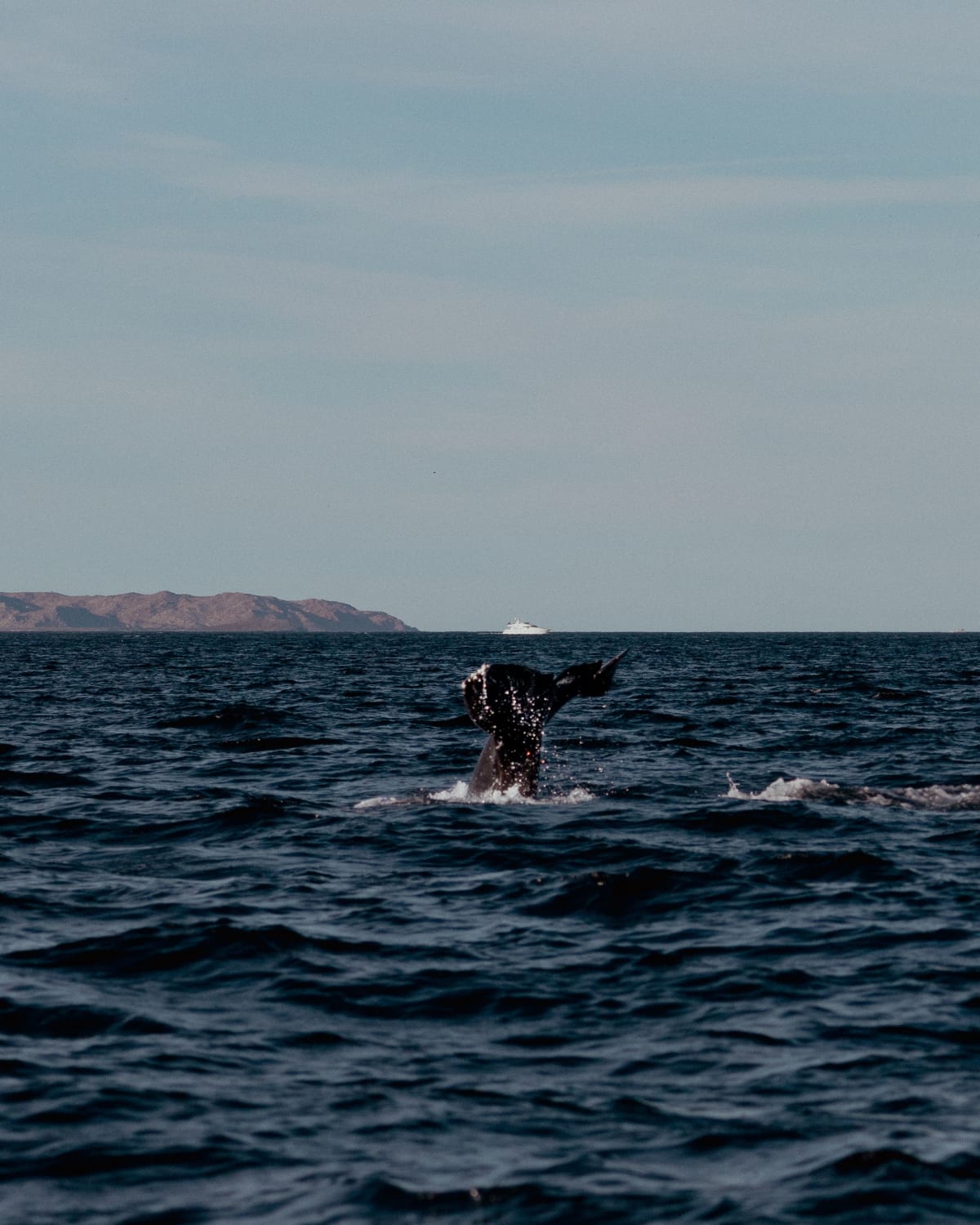
- The tail: when a humpback lifts its flukes, it is starting a deep dive. Note the spot and expect it to surface some distance away several minutes later.
- Patterns: whales often blow several times in a row before diving, and a breach is frequently followed by more. Once you see one, keep watching the same area.
What to bring
Binoculars make the biggest difference: a pair around 8x42 or 7x50 is easy to hold steady and good in low light. Add a hat, water, sunscreen and a layer for the morning, since winter mornings on this coast can be cool and breezy. A camera with a zoom lens helps, but watch first and shoot second; most breaches are over before you can lift a phone.
Whale watching by boat: what to know
Watching from shore is free and does not disturb anyone, but a boat gets you closer and gives you a better chance on a windy day. Todos Santos has no harbour, and many of the whale-watching trips in southern Baja leave from the marina in Cabo San Lucas, about an hour south by road.
The rules in brief
Whale watching in Mexico is regulated by a federal standard, NOM-131-SEMARNAT, and commercial boats that take people to see whales need an authorisation from the environment ministry. In broad terms, boats keep a minimum distance and approach slowly from the side or behind, only a limited number may watch the same group for a limited time, mothers with calves get extra space, and swimming with or feeding whales is not allowed. A good captain follows these rules without being asked; if yours chases whales or cuts across their path, that is a reason to choose someone else next time.
Choosing a trip
Ask whether the boat is authorised for whale watching, how many passengers it carries, how long the trip lasts and whether life jackets and shade are on board. Smaller groups and a morning departure usually make for a better outing. Seasickness is common on open Pacific swells, so take a remedy before you board if you are prone to it.
Plan a whale-watching stay in Todos Santos
Whale season overlaps with the best weather of the year and with the winter surf swells, which also makes it the busiest and most expensive period, especially over Christmas and New Year. Book early if you want a place with an ocean view. If you are deciding whether the town suits you at all, read our honest take on whether Todos Santos is worth visiting, and fill the rest of your days with our list of things to do in Todos Santos. In December, the end of the sea turtle release season can overlap with the first whales; see our guide to turtle releases in Todos Santos.
For guided outings, from boat trips to day trips along the coast, see our Todos Santos tours, and compare neighbourhoods and rentals before you book.
Frequently Asked Questions
When is whale season in Todos Santos?
Humpback whales pass roughly from December to April, with the peak usually from January to March. From May to October they are away at their feeding grounds in the North Pacific.
Can you really see whales from the beach in Todos Santos?
Yes. In season, humpbacks often swim close to shore and their blows and breaches are visible from the beaches and hills around town, especially on calm mornings. Binoculars help a lot.
Can you see gray whales in Todos Santos?
Not reliably. Gray whales gather in lagoons farther north, and the closest to Todos Santos is Bahía Magdalena, a long day's drive away. The whale you will see from Todos Santos is the humpback.
Can you swim with whales in Baja California Sur?
No. Mexican rules for whale watching do not allow swimming with whales, feeding them or chasing them. Watch from shore or from an authorised boat that keeps its distance.
Continue exploring Todos Santos
You Might Also Like
 ExploringNov 9, 2026
Todos Santos vs La Paz: Where to Base Yourself in Southern Baja
Todos Santos vs La Paz: a small Pacific art town with surf and empty beaches, or a relaxed state capital on the calm Sea
 ExploringOct 26, 2026
Todos Santos vs Cabo San Lucas: Art Town or Party Marina?
Todos Santos vs Cabo: a quiet Pueblo Mágico of galleries and wild surf, or a lively marina town with calm swimming bays,
 ExploringOct 24, 2026
El Pescadero Guide: Beaches, Farms & Surf Stays South of Todos Santos
El Pescadero is the farming and surf village about 10 minutes south of Todos Santos, between San Pedrito and Los Cerrito