Turtles in Tulum: Swimming with Sea Turtles on the Caribbean Coast
Knowing the typical flora and fauna of a place brings you closer to a more complete experience of the destination you want to visit. Understanding what kind of wildlife lives in a place where you go on vacation is both beneficial and enriching for your trip.
Most likely, if your next destination is Tulum — or you are at least considering it — you are a nature lover. This captivating town on Mexico's Caribbean coast, tucked into the heart of the Riviera Maya in Quintana Roo, is one of the most attractive natural paradises in all of the Mexican Caribbean.
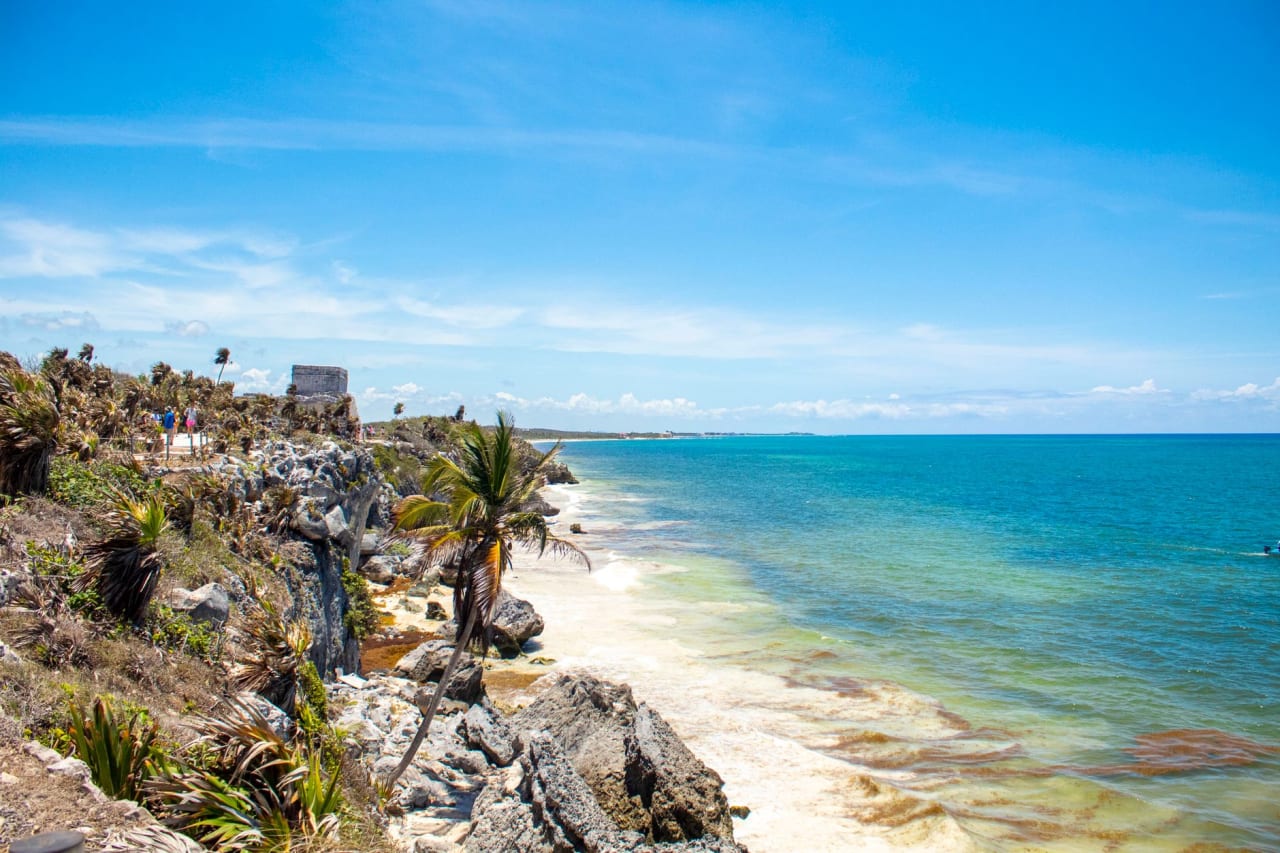
What makes Tulum so special? Among the main highlights is the beauty of its natural landscape: pristine white-sand beaches lapped by the warm turquoise waters of the Caribbean Sea, lush jungle vegetation, swaying palm trees, ancient Mayan ruins perched dramatically on coastal cliffs, and a network of freshwater cenotes hidden beneath the jungle floor. But beyond the scenery, there is also a wide and varied marine fauna that inhabits this Caribbean ecosystem — and if you know where to look, you will be able to spot some extraordinary animals.

You will find all kinds of tropical birds, crocodiles in the Sian Ka'an lagoons, dolphins leaping in the sea, brilliantly colored reef fish, spider monkeys swinging through the jungle canopy and many, many sea turtles.
Something that truly defines the Caribbean coast near Tulum is the remarkable presence of sea turtles in its waters. The warm, calm Caribbean Sea provides ideal feeding and nesting habitat. Just 30 minutes north of Tulum, the bay of Akumal — whose name means "place of the turtle" in Mayan — is one of the most reliable spots in the world to snorkel alongside wild sea turtles year-round. Closer to town, the beaches of the Zona Hotelera and Playa Paraíso serve as nesting grounds during the summer months. Due to threats from coastal development and climate change, local conservation groups operate turtle monitoring programs along Tulum Beach, carefully protecting nests until the hatchlings are ready to make their journey to the sea.
What kind of turtles can we find?
There are mainly four different species of sea turtles that frequent the Caribbean waters around Tulum and the wider Riviera Maya:
1. The Green Sea Turtle (Chelonia mydas)
The star of Akumal! Green sea turtles are the most commonly spotted species in Tulum's waters and the ones you are most likely to encounter while snorkelling in the bay. They graze peacefully on sea grass in the shallow turquoise bays, seemingly unbothered by respectful snorkellers who keep a safe distance. Adults can weigh up to 190 kilos and measure around 1.5 metres. Their shell is smooth and streamlined, and their colour ranges from olive to brown — the "green" refers not to their shell, but to the greenish fat beneath it, a result of their plant-based diet of sea grass and algae. They are considered an endangered species globally.
2. The Hawksbill Sea Turtle (Eretmochelys imbricata)

The jewel of the Caribbean reef! Hawksbill turtles are critically endangered and one of the most visually striking sea turtles in the world. They measure between 60 and 90 centimetres and the largest can weigh up to 127 kilos. Their most distinctive feature is their narrow, pointed beak — resembling a hawk's bill — which they use to extract sponges and invertebrates from coral reef crevices. The Mesoamerican Barrier Reef, just offshore from Tulum, is one of their most important Caribbean habitats. Their beautiful patterned shells were historically targeted by the tortoiseshell trade, which is why they remain critically endangered today.
3. The Loggerhead Sea Turtle (Caretta caretta)
The powerful open-ocean traveller! Loggerheads are named for their large, broad heads and strong jaws, which give them the crushing power to feed on hard-shelled prey like conch and crabs. They measure between 80 and 110 centimetres and can weigh up to 180 kilos. While less commonly seen while snorkelling in shallow bays, loggerheads do nest on the beaches of the Riviera Maya, including the shores near Tulum's Zona Hotelera, during the summer nesting season from May through October. They are classified as a vulnerable species.
4. The Leatherback Sea Turtle (Dermochelys coriacea)
The largest of all sea turtles — and one of the most ancient creatures on Earth! Its size can reach more than 2 metres in length and over 600 kilos in weight. Unlike all other sea turtles, the leatherback has no hard shell: instead, its back is covered with a flexible, leathery skin reinforced with thousands of tiny bone fragments, giving the animal its distinctive semi-cylindrical silhouette and its common name. Leatherbacks feed almost exclusively on jellyfish and undertake epic migratory journeys across entire ocean basins. They occasionally nest on Caribbean beaches, and sightings offshore from the Riviera Maya are a rare but unforgettable experience.

If you visit Tulum, you can help release baby turtles from one of these incredible sea turtle species. It is truly a rewarding and humbling experience. Our team always recommends informing yourself with local conservation organizations before participating — follow their guidelines, never touch the turtles or their nests, and you will be contributing to the preservation of a species that has called these Caribbean waters home for over 100 million years.
Are you ready to dive into Tulum's turquoise waters and spot these gentle giants of the Caribbean Sea?
auto_awesome Continue exploring Tulum
You Might Also Like
 article Adventures calendar_today Nov 27, 2023
 Understanding the Life Cycle of Sea Turtles in Tulum
Having spent many summers peering into crystal-clear turquoise waters, I’ve had the privilege of witnessing a marine wor
 article Uncategorized calendar_today May 11, 2021
 Visit Sian Ka'an Lagoons from Tulum — A Tropical Paradise Within Reach
Tropical paradise. There is a place where time moves differently and where spending the day drifting in a boat through m
article Adventures calendar_today Apr 27, 2021 Lagoon Campfire
The Sian Ka'an lagoons are among the most extraordinary natural attractions in Tulum. Nestled inside a UNESCO-protected