
Is Zipolite Safe? Rip Currents, Theft & Nudist-Beach Etiquette
Is Zipolite safe? On land, mostly yes: it is a small, laid-back beach village where the usual problems are petty theft and dark lanes at night, but the sea is genuinely dangerous. Zipolite's rip currents and heavy shore break drown swimmers, including strong ones, and that is the risk to plan your trip around.
| Risk | What to know | What to do |
|---|---|---|
| Rip currents | Strong along most of the beach; drownings happen | Check flags, ask locally, swim only in calm conditions or go to a calmer beach |
| Theft | Mostly opportunistic: bags left on the sand, open cabañas | Take little to the beach, use a safe or locker, lock your room |
| Night | Beach road is lively; lanes behind it are dark | Carry a light, walk in company, take a taxi between villages |
| Cash | Few ATMs on the coast, and they can run dry | Bring pesos or withdraw at the banks in Pochutla |
| Health | Strong sun, tap water not for drinking, mosquitoes in the rainy season | Shade, bottled or purified water, repellent |
| Roads | Speed bumps, livestock and no lighting on the coast road | Avoid driving after dark |
Zipolite lies on the Pacific coast of Oaxaca, between the fishing port of Puerto Ángel and the villages of San Agustinillo and Mazunte. It is a single long beach backed by cabañas, bars and guesthouses, with a long-stay, mixed crowd and Mexico's best-known clothing-optional scene. This guide goes through each risk honestly, without crime statistics we cannot verify, and tells you where to find current official information.
The real danger in Zipolite: rip currents
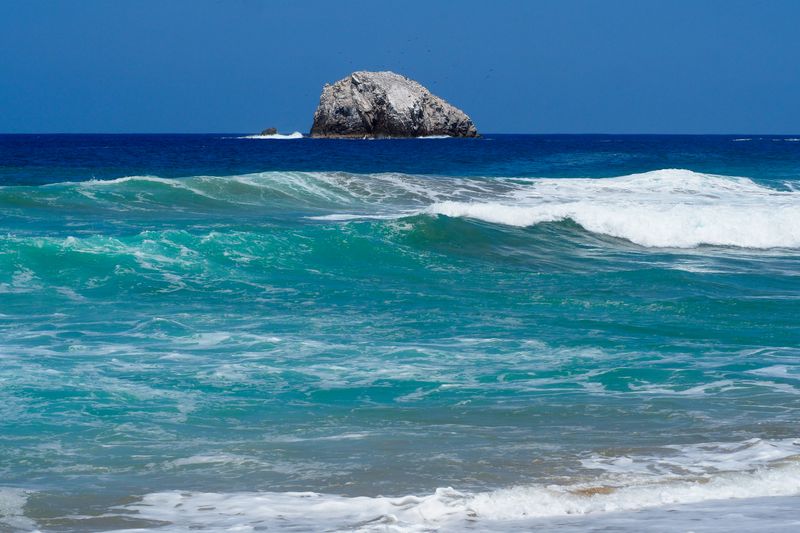
The name Zipolite is often said to mean "beach of the dead" in a local language. The etymology is disputed, but the reputation of its sea is not. The beach faces the open Pacific with almost nothing to break the swell, the bottom drops quickly and waves dump hard on the sand. Water pushed onto the beach drains back out through narrow channels, and those channels are the rip currents that pull swimmers away from shore. People drown here, visitors and locals alike, and many of them were confident swimmers. Lifeguard cover is limited, so do not count on anyone seeing you in trouble.
How to spot a rip
- A gap in the breaking waves: a strip where waves are not breaking, between areas that are, is often a rip.
- Darker or murkier water moving out, sometimes carrying foam or sand beyond the surf line.
- Choppy, rippled water in a line running out to sea.
- Flags: if a red flag is up, stay out. Ask your hotel or the restaurants on the sand how the sea is that day; conditions change with every swell.
If you are caught in one
Do not try to swim straight back to the beach against the current; that is how people exhaust themselves. Stay calm, float and raise an arm to call for help. Rips are usually narrow, so swim parallel to the shore until you no longer feel the pull, then swim back in at an angle, using the waves. If you see someone else caught, call for help and throw something that floats rather than swimming out yourself.

Where to swim instead
When Zipolite is rough, the bay at Mazunte is usually the gentlest beach nearby, and the small coves around Puerto Ángel, such as Estacahuite, are more sheltered. They are not always calm either, so the same rules apply. Never swim after drinking, at night or alone, and keep children out of the water at Zipolite unless it is clearly flat. Our guide to things to do in Mazunte and Zipolite compares every beach on this stretch for swimming.
Theft and personal safety on land
Zipolite does not have a reputation for violent crime against visitors, but it is not immune to the problems of any place where tourists carry phones and cash. Most reported trouble is opportunistic theft, so a few habits cover most of the risk.
On the beach and in your room
- Do not leave belongings on the sand while you swim. Take only what you need, or go in turns.
- Cabañas are often open-sided or have simple doors. Choose a place with a safe, lockers or a room you can lock properly, and do not leave valuables on show.
- Keep your passport in your room and carry a copy.
At night
The beach road comes alive after sunset and is busy on foot, but the lanes behind it and the far ends of the beach are dark. Carry a torch, walk back in company, and avoid lonely stretches of sand late at night. Shared taxis and pickups thin out after dark, so arrange a taxi to get back to Mazunte or San Agustinillo. Do not buy drugs: it is illegal, and it puts you in contact with exactly the people you want to avoid.
Cash and ATMs
There are few cash machines on this coast and they can run dry, especially on busy weekends. The banks and reliable ATMs are inland in San Pedro Pochutla, so bring enough pesos or withdraw there on your way in; check the banks and ATMs before you arrive. Our guide on how to get to Mazunte and Zipolite explains the Pochutla stop.

Nudist-beach etiquette in Zipolite
Zipolite is clothing-optional by long custom, and nudity is accepted along the beach. It is most common at Playa del Amor, the small cove at the eastern end. Nobody has to undress: on any day you will see swimsuits, topless sunbathers and nude swimmers side by side, families included.
The unwritten rules
- No photos of other people without asking first, and keep strangers out of the background of your own. This is the rule that matters most.
- Do not stare, and do not treat the beach as a show.
- Sexual behaviour in public is not acceptable here any more than anywhere else in Mexico.
- Sit on a towel or sarong on shared loungers and seats.
- Get dressed when you leave the sand: for the beach road, shops and most restaurants.
Outside Zipolite
Nudity is not the norm in Mazunte, San Agustinillo or Puerto Ángel. Wear swimwear on those beaches and dress as you would anywhere else in the villages.

Is Zipolite safe beyond the beach? Health, roads and advisories
Health and medical help
The sun is strong all year; use shade and high-factor sunscreen and drink plenty of water. Tap water is not for drinking: use bottled or purified water. In the rainy season, roughly June to October, mosquitoes increase, so bring repellent. The villages have small pharmacies and clinics for minor problems; for anything serious you will need to go to Pochutla or further, to Huatulco or Puerto Escondido. Look up the nearest doctors and clinics when you arrive, and in an emergency call 911. Travel insurance that covers medical evacuation is worth having on a coast this far from a big hospital.
Roads and getting around
The coast road is paved but narrow and unlit, with speed bumps (topes) in every village and animals on the road. Drive in daylight. Between villages, colectivos run through the day; after dark, take a taxi rather than walking along the road.
Check the official advisory
Governments rate Mexico state by state, and the level for Oaxaca can change. Do not rely on a level quoted in a blog, including this one: before you book, and again a few days before you travel, read the current US State Department travel advisory for Mexico and the section on Oaxaca, or your own government's equivalent.

If you want to see the coast from the water without risking the shore break, the boat trips from Mazunte and Puerto Ángel, and the mangrove trips nearby, are on our Mazunte and Zipolite tours page.
Frequently Asked Questions
Is it safe to swim in Zipolite?
Only in calm conditions and with great care. Zipolite has strong rip currents and a history of drownings, and lifeguard cover is limited. Check the flags, ask locally, never swim alone or after drinking, and go to Mazunte or the coves near Puerto Ángel when the surf is up.
Is Zipolite safe at night?
The beach road is busy and generally fine, but the lanes behind it and the ends of the beach are dark. Carry a light, walk in company and take a taxi between villages after dark.
Do you have to be nude in Zipolite?
No. Zipolite is clothing-optional, not clothing-free. Swimwear is completely normal; nudity is most common at Playa del Amor, at the eastern end.
Is Zipolite safe for solo female travellers?
Many women travel here alone and the atmosphere is relaxed. Use the same precautions as anywhere: a room that locks, company or a taxi at night, an eye on your drink, and no swimming alone.
auto_awesome Continue exploring Mazunte
You Might Also Like
 article Travel Tips calendar_today Oct 11, 2026
 Where to Stay: Mazunte vs Zipolite vs San Agustinillo
Where to stay in Mazunte and Zipolite depends on what you want from the coast: Mazunte for a walkable village and calmer
 article Travel Tips calendar_today Oct 6, 2026
 How to Get to Mazunte & Zipolite from Puerto Escondido, Huatulco & Oaxaca City
How to get to Mazunte: fly into Huatulco or Puerto Escondido and drive about an hour along the coast, or come down from
 article Exploring calendar_today Oct 4, 2026
 Best Things to Do in Mazunte & Zipolite
The best things to do in Mazunte and Zipolite, on the Pacific coast of Oaxaca: the turtle centre, sunset at Punta Cometa