
Chichén Itzá Spring Equinox 2027: The Serpent of Light, Dates & Crowds
The Chichén Itzá equinox is the one day a year when a pyramid seems to come alive: in the late afternoon, the stepped terraces of El Castillo cast a row of triangles of light down the northern staircase, joining a carved serpent head at the bottom. In 2027 the spring equinox falls on Saturday 20 March, at 3:24 pm Yucatán time, and the serpent is visible for several afternoons either side of it.
That date matters more than usual. A Saturday equinox, a Sunday when Mexican residents enter for free and the start of Holy Week (Palm Sunday is 21 March 2027) all land on the same weekend. This guide explains what you actually see, which days to choose, how the site runs on equinox days and how to organise it from Mérida, two hours away.
Chichén Itzá equinox 2027: dates and times at a glance
The astronomical equinox is a single moment, but the light effect depends on the sun’s angle in the afternoon, which barely changes over a week. The serpent shows best between about 3 pm and 5 pm on any clear afternoon from roughly 17 to 24 March. What changes from day to day is the crowd.
| Date (2027) | Day | What happens | Expected crowd |
|---|---|---|---|
| 17–18 March | Wed–Thu | Serpent visible, normal opening hours | Busy, manageable |
| 19 March | Fri | Serpent visible, start of the equinox operation | Heavy |
| 20 March | Sat | Equinox at 3:24 pm local time | Peak of the year |
| 21 March | Sun | Free entry for Mexican residents, Palm Sunday | Peak of the year |
| 22–24 March | Mon–Wed | Serpent still visible, Holy Week holidays begin | Heavy |
| 22–23 September | Wed–Thu | Autumn equinox, same effect | Moderate, rainy season |
If you have a choice, go on Wednesday 17 or Thursday 18 March. The shadow is practically identical, you can stand much closer to the northern staircase, and you avoid the parking queues on the highway from Pisté. The autumn equinox in September produces the same effect, but afternoon storms often hide the sun.
What you actually see: the serpent of light
How the effect works
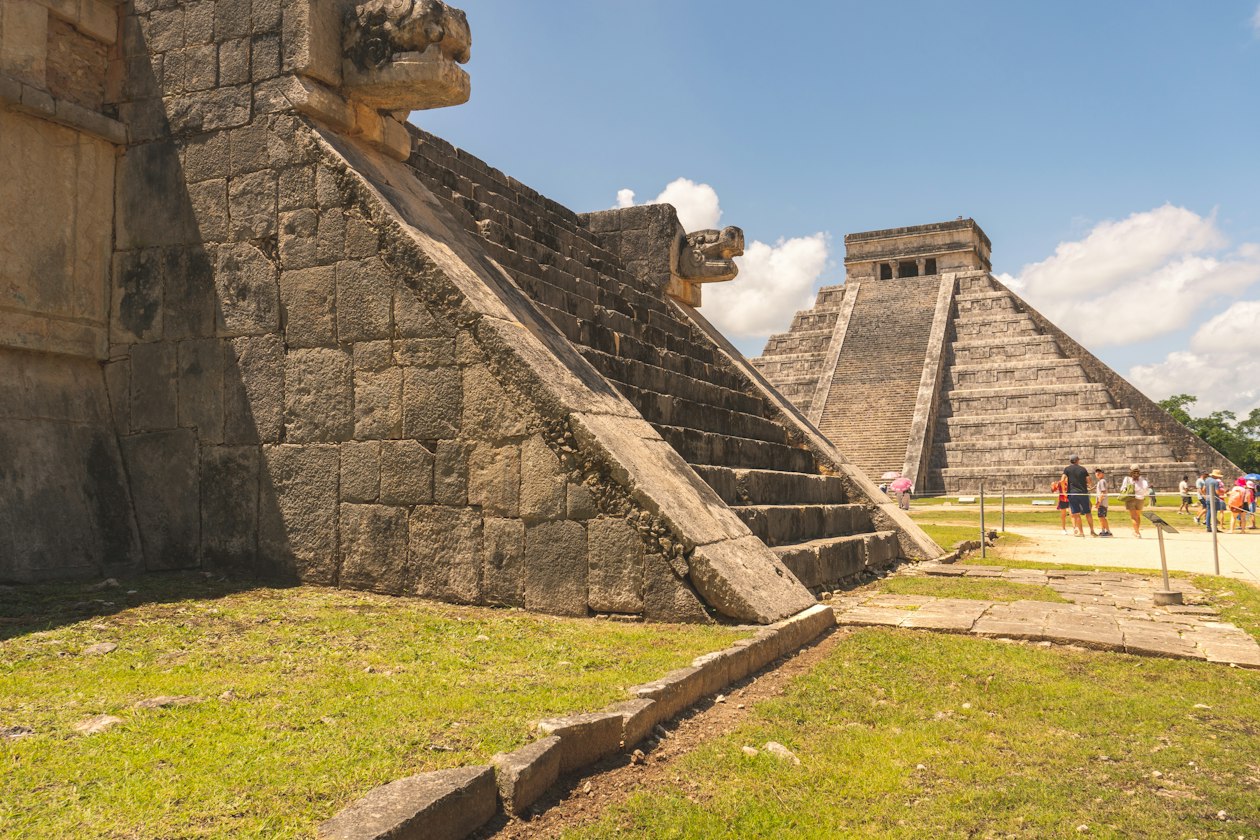
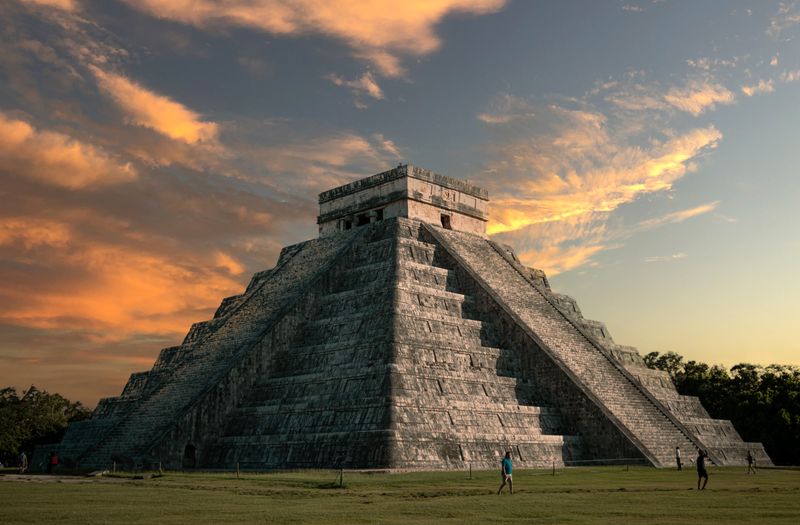
El Castillo, also called the Temple of Kukulcán, has nine stepped terraces and a staircase on each side. On the northern staircase, the balustrades end in two large stone serpent heads at ground level. In the afternoons around the equinox, the sun sits low in the west and the corners of the terraces throw their shadows onto the western balustrade of that staircase. What remains lit is a chain of seven triangles of light that runs from the top to the serpent head, looking like the body of a snake descending the pyramid. As the sun drops, the triangles appear one by one from the top and then fade from the top down; the whole sequence lasts about an hour.
Myth and evidence
Kukulcán, the feathered serpent, was a central deity of Chichén Itzá, and the image of the god descending to the earth at the start of the agricultural year is a powerful one. Whether the builders designed the pyramid for this exact shadow is still debated: no Maya text describes it, and the effect was popularised in the 1970s. What is not in doubt is that the pyramid encodes the calendar, with 91 steps on each side plus the top platform adding up to 365. Many visitors wear white and raise their palms to the sun at the moment of the equinox, a modern tradition you will see all around you.
Crowds, rules and tickets on equinox days
How busy it gets
According to INAH, the federal institute that runs the site, the 2025 spring equinox brought more than 32,000 visitors to Chichén Itzá over the equinox operation, and a similar figure was expected in 2026. Most of them arrive in the early afternoon and gather on the north side of El Castillo, so by 3 pm the best viewpoints are several people deep. The effect is clearest from the open ground facing the northwest corner of the pyramid; arrive early, claim a spot and stay put.
Hours and rules
For the 2026 equinox INAH opened the site at 8 am (9 am on the Friday), closed the ticket windows at 4 pm and cleared the zone at 5:30 pm. Expect a similar schedule in 2027 and confirm it in early March, when INAH announces the operation. The rules are strict on those days:
- No drones, and no professional photo or video equipment without prior permission.
- No ceremonies, and no access to roped-off structures. You cannot climb El Castillo on any day.
- No alcohol, cigarettes, costumes or flammable items; bags are checked at the entrance.
- Tickets are sold only at the site, at the ticket windows or the official kiosks, so ignore resellers.

Tickets
Foreign visitors pay 676 MXN (about 37 USD): 105 MXN for INAH and 571 MXN for the state of Yucatán. Since April 2026 both are paid at one window with a single ticket, which shortens the queue. Mexican nationals pay less, Yucatán residents pay only the federal fee, and on Sundays all residents of Mexico enter free, which is why Sunday 21 March 2027 will be one of the busiest days of the year. Prices checked in October 2026; they usually rise in January.
How to plan the equinox from Mérida
Chichén Itzá is about 120 km east of Mérida, 1 hour 45 minutes to 2 hours by car. Our guide to Chichén Itzá from Mérida covers the road, the bus and the regular tours in detail; on equinox days three things change.
Book a tour that stays for the afternoon
Most day tours reach the ruins in the late morning and leave by 3 pm, exactly when the serpent starts. For the equinox you need one that arrives after lunch and stays until the site closes, or a private driver who will wait. Look for equinox departures on our Mérida tours page from January, and check the itinerary hour by hour before paying.
Driving yourself
Driving gives the most control. Leave Mérida by 11 am, eat in Pisté or at a cenote on the way and be inside by 1 pm. The car parks fill on the weekend, and leaving at 5:30 pm with thousands of other cars means slow traffic until the motorway. Avoid the free road back after dark.
Sleeping near the site
The simplest equinox plan is to spend the night before in Pisté, at a hotel beside the archaeological zone, or in Valladolid, 40 km east. You can visit the ruins in the quiet morning, rest through midday and return for the afternoon. Book early: rooms near the site sell out for the equinox week. If you are deciding between bases, compare Mérida and Valladolid, or see where to stay in Mérida if you would rather drive back.
Dzibilchaltún: the equinox sunrise 20 minutes from Mérida
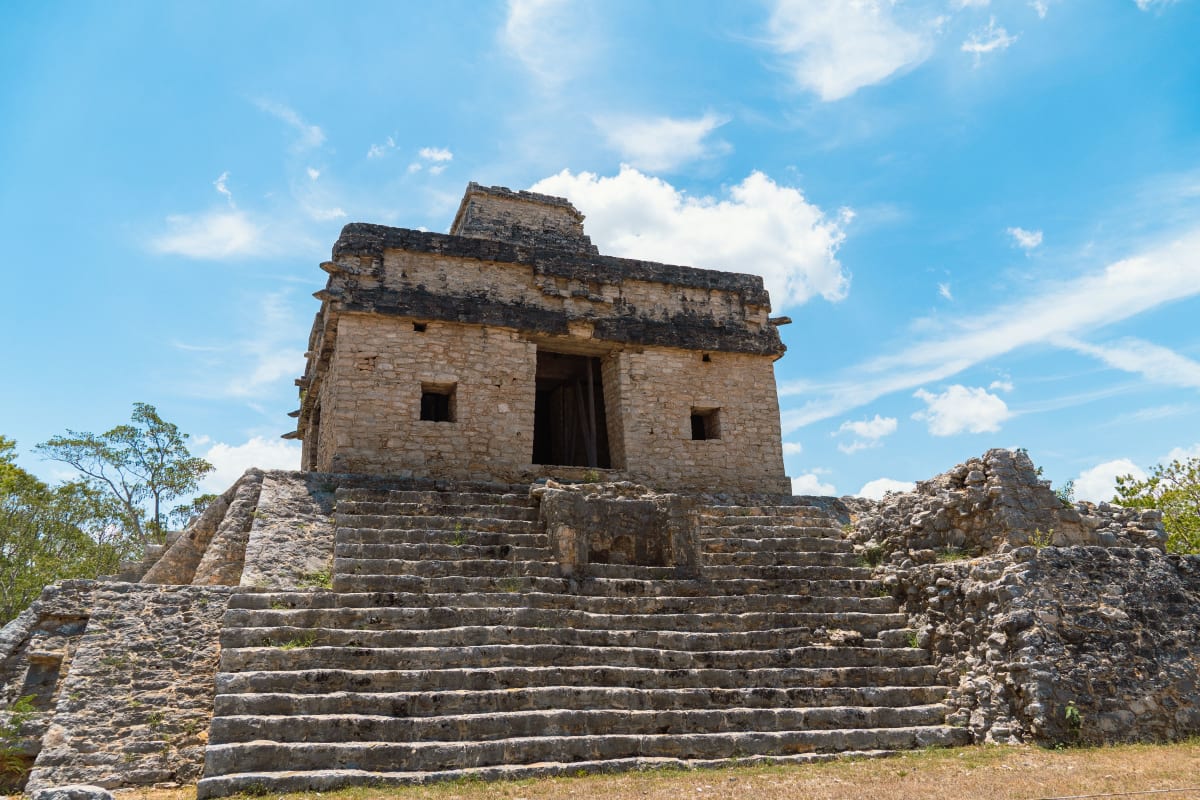
Chichén Itzá is not the only equinox site in Yucatán. Dzibilchaltún, about 17 km north of Mérida, has the opposite show: at sunrise on the equinox the sun rises exactly in line with the doorway of the Temple of the Seven Dolls, and for a few minutes it shines straight through the building. It is smaller, closer and far calmer than Chichén Itzá, and you can be back in Mérida for breakfast.
How the morning works
In 2026 INAH opened Dzibilchaltún at 4:30 am on 20 and 21 March, with the alignment at around 6 am. The special early entry cost 730 MXN (about 40 USD), cash only; from 8 am the site reopened at the normal fee of 105 MXN. The schedule for 2027 is usually announced in early March. After the sunrise, cool off in the Xlakah cenote inside the site, then visit the small Museum of the Maya People by the entrance.
Doing both on the same day is possible: sunrise at Dzibilchaltún, a long breakfast in Mérida, then the drive east for the afternoon serpent. It is a 14-hour day, so it suits travellers with a car and an early night afterwards. If you want to see more Maya sites on the same trip, our comparison of Chichén Itzá, Uxmal, Cobá and Tulum helps you choose. For background on the site itself, see the UNESCO World Heritage listing for Chichén Itzá.
Frequently Asked Questions
When is the Chichén Itzá equinox in 2027?
The spring equinox is on Saturday 20 March 2027 at 3:24 pm Yucatán time. The serpent of light is visible on clear afternoons from about 17 to 24 March, between roughly 3 pm and 5 pm. The autumn equinox is on 22–23 September 2027.
What time does the serpent appear?
The triangles of light begin to form on the northern staircase from about 3 pm and are fully drawn between around 4 pm and 4:45 pm. On equinox days the ticket windows have closed at 4 pm, so you must be inside before then.
Is it worth going on a different day to avoid the crowds?
Yes. The effect is nearly identical for several days around the equinox. Wednesday 17 and Thursday 18 March 2027 are the best bets; the weekend of 20–21 March, with free Sunday entry for residents and the start of Holy Week, will be the busiest.
What if it is cloudy?
The serpent needs direct sun. March is in the dry season and most afternoons are clear, but a cloudy spell can hide it. Having two possible days, or staying nearby, is the best insurance.
auto_awesome Continue exploring Mérida
You Might Also Like
 article Travel Tips calendar_today Oct 12, 2026
 How to Get to Mérida: Airport, ADO Buses & Transfers
The easiest way to get to Mérida is to fly into Mérida airport (MID) or take an ADO bus from Cancún, Playa del Carmen or
 article Exploring calendar_today Oct 11, 2026
 Izamal, the Yellow City: Day Trip from Mérida
An Izamal day trip from Mérida takes about an hour each way and combines a 16th-century convent, a climbable Maya pyrami
 article Adventures calendar_today Oct 10, 2026
 Las Coloradas & Río Lagartos: Pink Lakes and Flamingo Tour Guide
How to see the pink salt ponds of Las Coloradas and the flamingos of Río Lagartos from Mérida: tour or self-drive, the a