
Chichén Itzá from Mérida: Tours, Timing & How to Beat the Crowds
Visiting Chichén Itzá from Mérida is the easiest way to see the most famous Maya city early in the day, before the coaches from Cancún and the Riviera Maya arrive. The site is roughly 120 km east of Mérida, about 1 hour 45 minutes to 2 hours by car, which means a Mérida-based visitor can be at the gate when it opens at 8 am, while day-trippers from the Caribbean coast are still on the road.
This guide compares the four ways to make the trip, explains how to time it, what the entrance fee consists of, what to see once inside and which cenotes and towns to add on the way back. If you are still building the rest of your trip, start with our list of things to do in Mérida.
How to get to Chichén Itzá from Mérida
The route is simple: the four-lane road east from Mérida towards Kantunil, then the 180D toll motorway (or the free Highway 180 through the villages) to the exit for Pisté, the town right next to the ruins. All four options below use roughly the same road; what changes is when you arrive and how much freedom you have once there.
| Option | Time each way | Usual arrival | Flexibility | Best for |
|---|---|---|---|---|
| Shared group tour | About 2 h plus stops | Late morning | Low: fixed stops and lunch | First-timers who want a guide and no logistics |
| Private driver or guide | 1 h 45 min – 2 h | Whenever you choose | High | Families, small groups, early starts |
| Rental car | 1 h 45 min – 2 h | At opening time if you leave by 6 am | Total | Beating the crowds, adding cenotes |
| ADO bus | About 2 – 2 h 30 min | Depends on the timetable | Low | Solo travellers on a budget |
Chichén Itzá tours from Mérida: which option to choose
Shared group tour
The classic day tour picks you up at your hotel in the morning, drives to the site, gives you a guided walk of the main structures and some free time, then stops at a cenote for a swim and a buffet lunch. Many add Izamal or Valladolid; compare the options on our Mérida tours page. It is the least effort, but you will reach the ruins at the same time as everyone else, and the day usually ends back in Mérida in the early evening.
Private driver or guide
A private tour costs more per person but lets you set the start time, which is the single biggest factor in how much you enjoy Chichén Itzá. Ask for a 6 am pickup, spend the cool, quiet first two hours at the ruins and do the cenote while the tour groups are arriving. For a family of four, the price gap with a shared tour narrows quickly.
Rental car
Driving is easy on these roads, and it gives you complete freedom. The toll motorway is faster and well maintained; the free road passes through Maya villages with speed bumps (topes) at every entrance. There is a paid car park at the site. Fill up in Mérida or Pisté, and avoid driving the back roads after dark, when cyclists and animals are hard to see.
ADO bus
First-class ADO buses run from Mérida to Chichén Itzá and stop at the site entrance. The schedule changes, so check the ADO website or app and buy your return ticket in advance on busy days. The main drawback is timing: the morning departures rarely put you at the gate for opening.

Timing: how to beat the crowds at Chichén Itzá
Chichén Itzá is one of the most visited archaeological sites in Mexico. The difference between 8 am and noon is huge: in the first hour the main plaza is almost empty, the light is soft and the temperature is bearable. By late morning the large groups from Cancún, Playa del Carmen and Tulum arrive, the vendor stalls along the paths are in full swing and there is very little shade.
Arrive at opening time
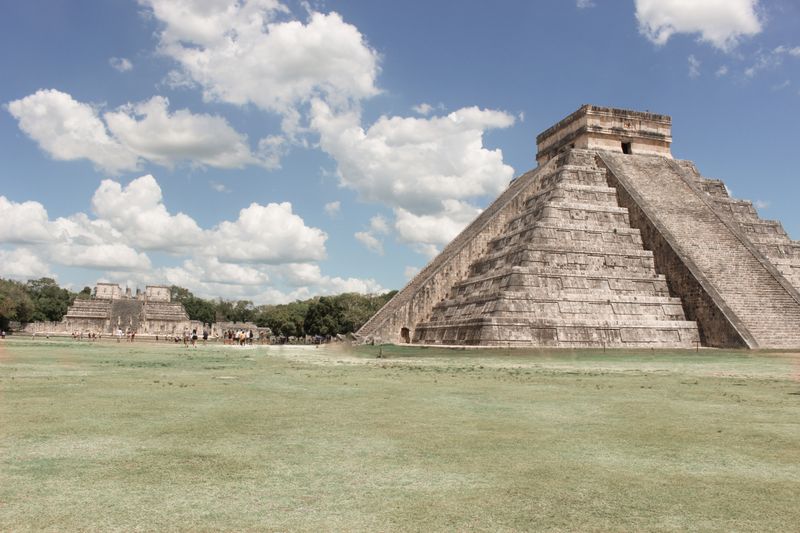
Aim to be in the ticket line before 8 am. Go straight to El Castillo for photos without people, then work outwards to the Great Ball Court, the Temple of the Warriors and the Sacred Cenote. By the time the plaza fills up you will have seen the essentials and can take your time in the quieter southern group around El Caracol. The last hour before closing is the second-quietest window, but in the hot months it is also the hottest part of the day to be walking on stone.
Choose your day and month
Weekdays are calmer than weekends. Sundays are busy with Mexican families, because Mexican citizens and residents get reduced or free entry to federal sites on Sundays. Christmas, New Year and Semana Santa are the most crowded weeks of the year. The most comfortable months are December to February; April and May are the hottest, so arriving early matters even more. Our guide to the best time to visit Mérida covers the weather month by month.
The equinoxes
Around the spring equinox (about 20–21 March) and again in September, the afternoon sun draws a serpent of light and shadow down the northern staircase of El Castillo. It is a spectacular sight and attracts very large crowds. The effect is also visible for several days either side of the date, when the site is much calmer.

Tickets and entrance fees
Entry to Chichén Itzá is made up of two charges: the federal fee set by INAH, the national institute that manages Mexico’s archaeological sites, and a separate Yucatán state fee. Foreign visitors pay both, and the combined amount has risen in recent years, so check the current figure shortly before you go rather than relying on an old blog post. Tours usually say whether the ticket is included; many are not, so read the description carefully. A few practical points:
- Bring a card and some cash. Payment methods at the ticket windows have changed over time.
- Guides licensed by the authorities offer their services at the entrance; agree on the price and length before you start.
- You cannot climb El Castillo. Climbing it is no longer allowed, and most buildings are roped off.
- Bring a hat, sunscreen and plenty of water. The site is large and mostly exposed; plan on at least two to three hours of walking.
- Drones are not permitted without official authorization.
In the evening, a sound-and-light show is held at the site on a separate ticket, which is one more reason to consider spending the night nearby.
What to see inside the site
Chichén Itzá was one of the largest cities of the Maya world and was declared a UNESCO World Heritage Site in 1988. Do not leave without seeing these:
- El Castillo (Temple of Kukulcán): the stepped pyramid, about 30 m high, whose four staircases and top platform add up to 365 steps, one for each day of the year.
- The Great Ball Court: about 168 m long, the largest known in Mesoamerica, with stone rings set high on the walls and carved reliefs of the players.
- The Temple of the Warriors and the Thousand Columns: a temple topped by a chac mool figure, surrounded by rows of carved pillars.
- The Sacred Cenote: reached by a raised causeway north of the plaza; offerings were thrown into it.
- El Caracol: a round tower long interpreted as an astronomical observatory.
- The Tzompantli: a platform carved with rows of skulls, next to the ball court.

Cenotes and stops on the way back to Mérida
Ik Kil and Yokdzonot
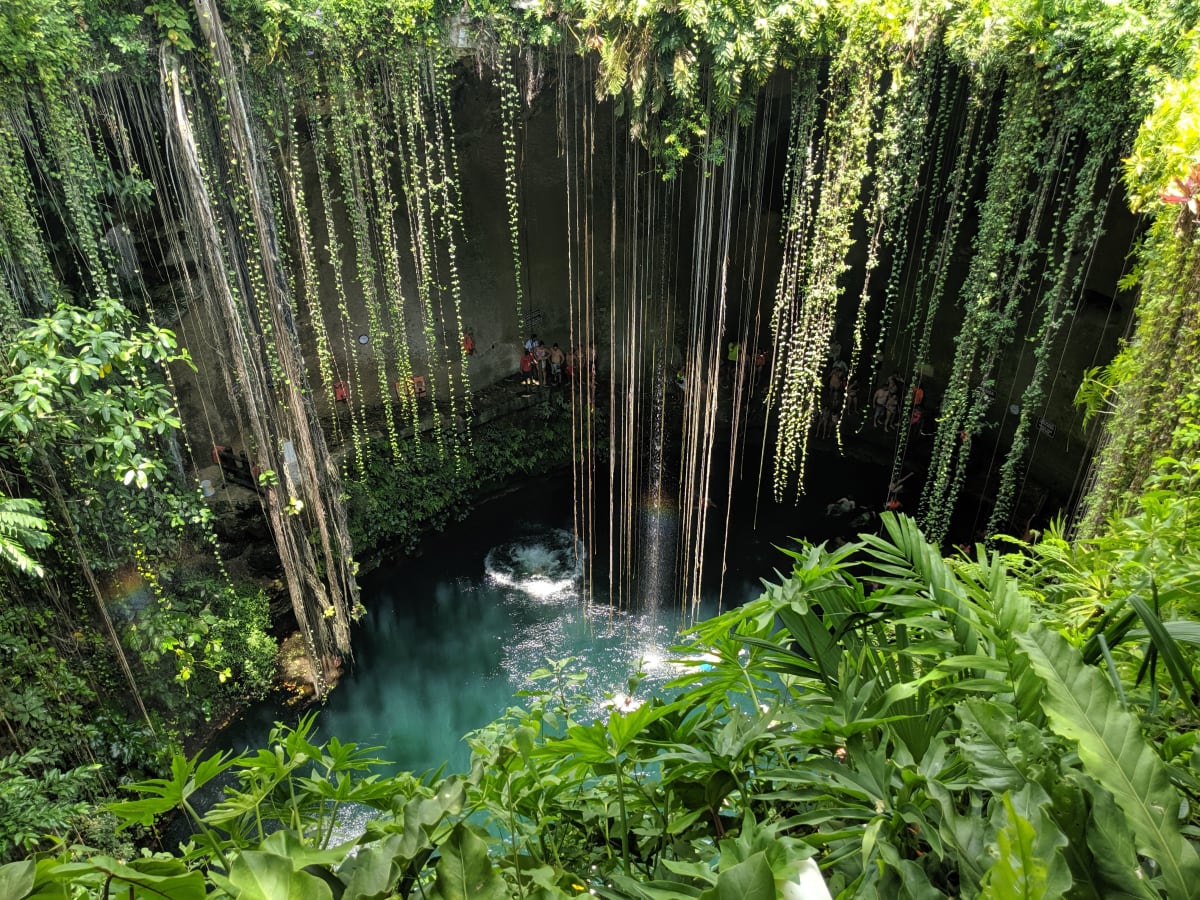
Ik Kil, about 3 km from the ruins, is the best-known cenote nearby: a deep, open sinkhole with vines hanging down to the water. It is on most tour itineraries, so it gets busy around lunchtime. Yokdzonot, a community-run cenote west of Pisté in the direction of Mérida, is usually quieter and makes an easy stop on the drive back. Life jackets are commonly required, and you are asked to shower before swimming.
Valladolid or Izamal
Valladolid, about 40 km east of Chichén Itzá, is a colonial town with colourful streets, a central square and the cenote Zací in the middle of town; it is a good lunch stop if you are driving on towards the Caribbean. Izamal, the yellow town, lies a little north of the Mérida road and is famous for its huge Franciscan convent built on top of a Maya pyramid. Many tours include one or the other.
Staying the night near the ruins
If you want the site at its quietest, sleep in Pisté or at one of the hotels next to the archaeological zone and walk in at opening time, then return to Mérida after lunch. Otherwise, a central base in Mérida keeps the drive short; our guide on where to stay in Mérida compares the neighbourhoods.
Frequently Asked Questions
How far is Chichén Itzá from Mérida?
About 120 km, or roughly 1 hour 45 minutes to 2 hours by car on the toll motorway. By bus or on a tour with hotel pickups, count on 2 to 2.5 hours.
Can you visit Chichén Itzá from Mérida without a tour?
Yes. ADO buses go from Mérida to the site entrance, and the roads are easy to drive in a rental car. Going on your own lets you arrive at opening time, which is the best way to avoid the crowds.
How much time do you need at Chichén Itzá?
Two to three hours is enough for the main structures. With a cenote and lunch, the round trip from Mérida takes a full day.
Is Chichén Itzá better from Mérida or from Cancún?
From Mérida. The drive is shorter, so you can be at the gate by 8 am, an hour or more before most groups from Cancún and the Riviera Maya arrive.
auto_awesome Continue exploring Mérida
You Might Also Like
 article Travel Tips calendar_today Oct 12, 2026
 How to Get to Mérida: Airport, ADO Buses & Transfers
The easiest way to get to Mérida is to fly into Mérida airport (MID) or take an ADO bus from Cancún, Playa del Carmen or
 article Exploring calendar_today Oct 11, 2026
 Izamal, the Yellow City: Day Trip from Mérida
An Izamal day trip from Mérida takes about an hour each way and combines a 16th-century convent, a climbable Maya pyrami
 article Adventures calendar_today Oct 10, 2026
 Las Coloradas & Río Lagartos: Pink Lakes and Flamingo Tour Guide
How to see the pink salt ponds of Las Coloradas and the flamingos of Río Lagartos from Mérida: tour or self-drive, the a