
Las Coloradas & Río Lagartos: Pink Lakes and Flamingo Tour Guide
A Las Coloradas tour takes you to the far north coast of Yucatán, about three hours from Mérida, where rectangles of bright pink water sit between a small fishing village and the Gulf of Mexico. Most trips pair them with a boat ride in Río Lagartos, a fishing village around 20 minutes to the west and the gateway to the Ría Lagartos Biosphere Reserve, where the Yucatán's flamingos breed. It is a long day, and the pink lakes are not what many photos suggest, so here is what you will actually see, the rules at the ponds and the best way to get there.
What Las Coloradas really is
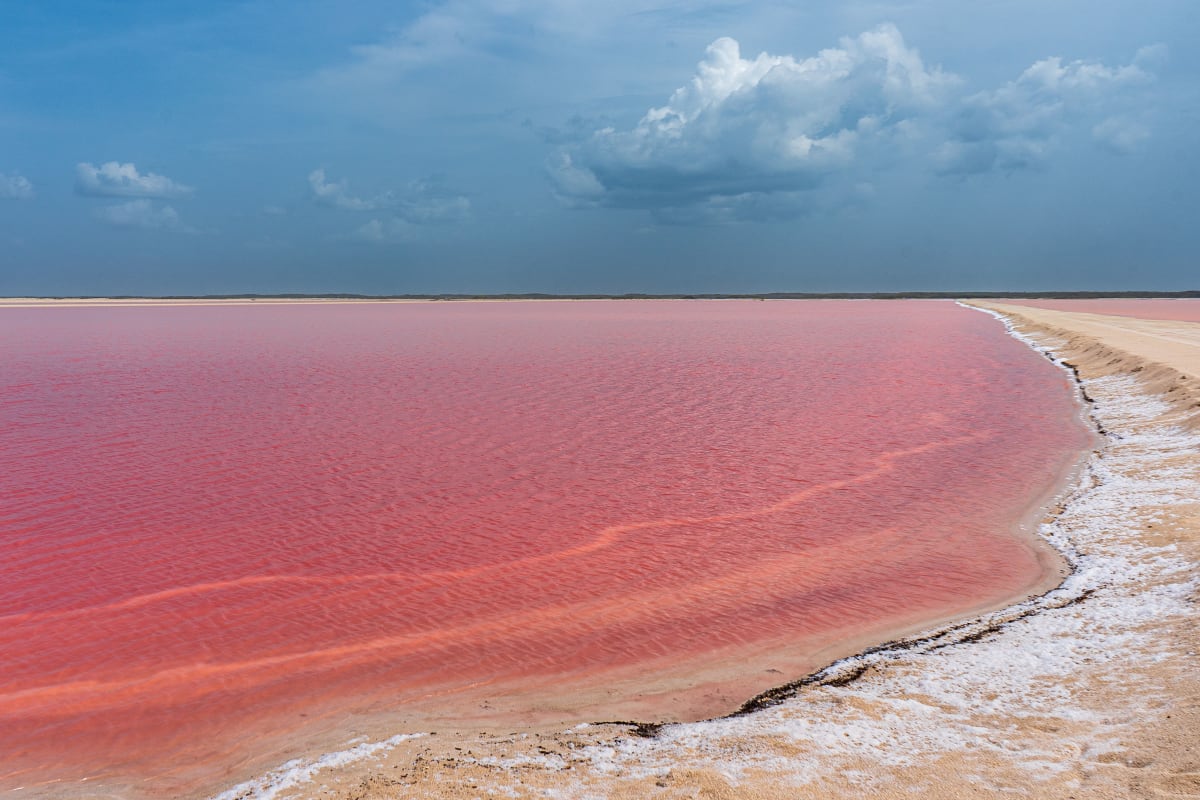
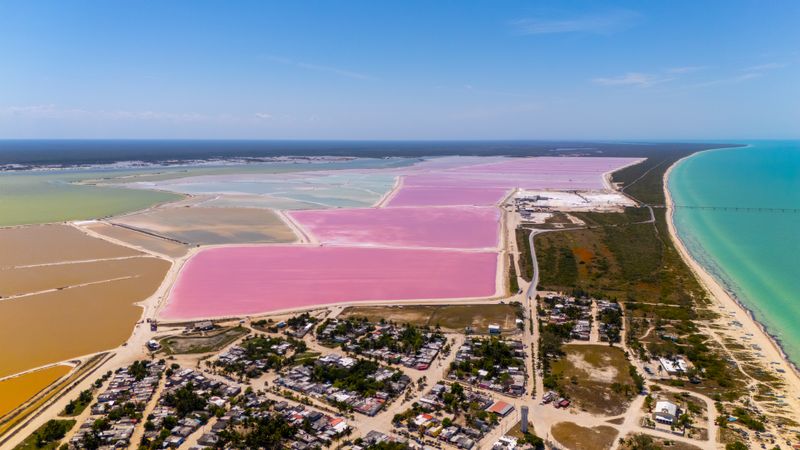
Las Coloradas is a small community in the municipality of Río Lagartos, built on the narrow strip of land that separates the estuary from the sea. The pink "lakes" are not natural lagoons: they are evaporation ponds of a working salt company, filled with seawater that the sun slowly turns into salt. Salt has been gathered on this coast for a very long time; archaeologists think the island of Isla Cerritos, in the same estuary, was a Maya trading port linked to Chichén Itzá in a major salt-producing region.
Why the water turns pink
As the water evaporates it becomes saltier, and only a few organisms survive: salt-loving microalgae and bacteria with red pigments, and tiny brine shrimp that feed on them. The more concentrated the brine, the stronger the colour. That is why the shade changes from pond to pond, from pale peach to deep pink, and why it looks brightest under strong midday sun and flatter on a cloudy day or after heavy rain. The same pigments, passed up the food chain, are what colour the flamingos.
The rules: look, do not swim
Swimming in the pink ponds is not allowed, and neither is wading or walking on the salt banks. The ponds are private industrial land, the brine is far saltier than the sea and stings eyes and cuts, and footprints damage the crust. In recent years visits have been organised from the village as short guided walks to set viewing points, with a fee paid on arrival, but how access works and what it costs have changed several times. Check locally or with your tour before you go, follow the guide's instructions and keep drones on the ground unless you are told otherwise. If you want to swim, the open Gulf beach is a few steps away on the other side of the road.
Río Lagartos: the biosphere reserve and its flamingos
The estuary behind Las Coloradas, the Ría Lagartos, runs for roughly 80 km along the coast and is the heart of the Ría Lagartos Biosphere Reserve, about 60,000 hectares of mangroves, dunes, lagoons and coastal forest. In 1986 it became Mexico's first Ramsar wetland of international importance. The name goes back to the Spanish, who took the estuary for a river (río) and the crocodiles that live in it for "lagartos". Four villages sit inside the reserve: San Felipe, Río Lagartos, Las Coloradas and El Cuyo.
The boat tour
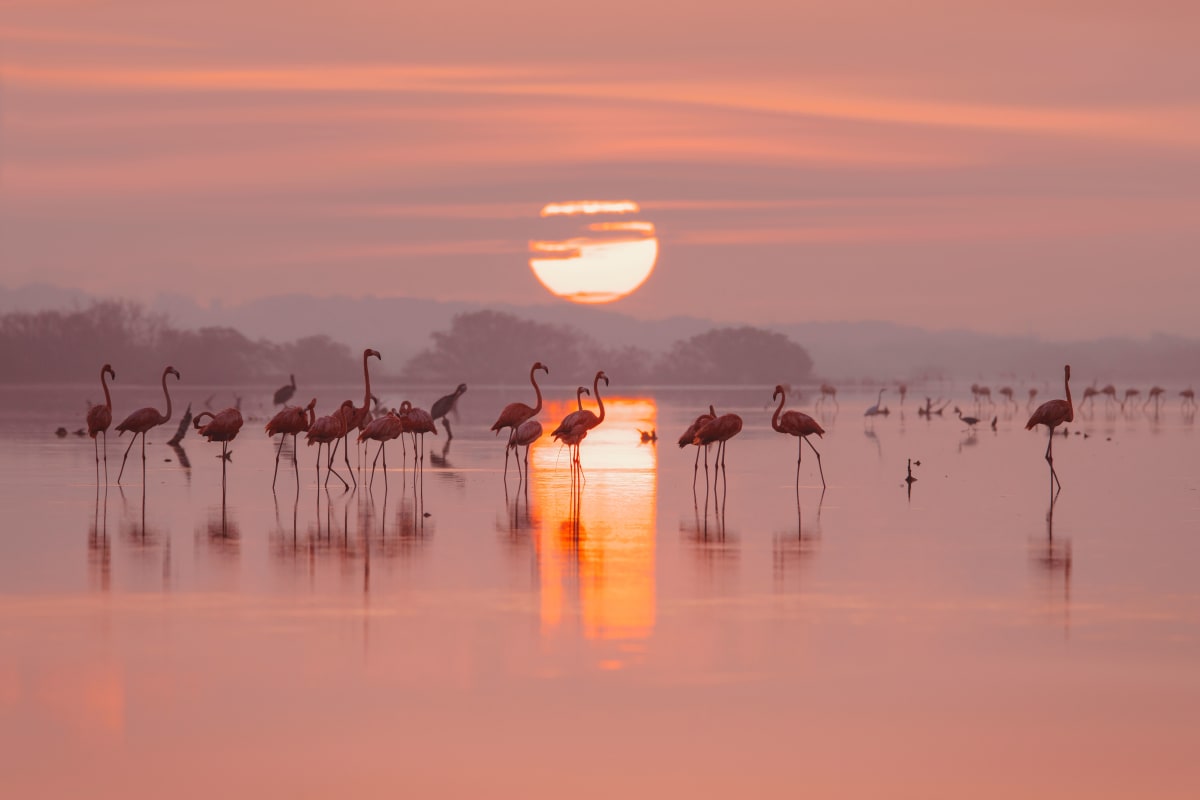
Boat trips leave from the waterfront of Río Lagartos with local guides, most of them fishermen who know the estuary well. A typical outing lasts a few hours and winds through mangrove channels to the shallow flats where flamingos feed, with herons, egrets, pelicans, spoonbills and, with luck, a crocodile along the way. Boats are usually priced per boat rather than per person, so a small group shares the cost. Go early: the water is calmer, the light is better and the birds are more active before the heat builds.

When the flamingos nest
The birds here are American flamingos, and Ría Lagartos is their main breeding ground in Mexico. They are present all year, but in spring and early summer large numbers gather in the eastern part of the estuary to nest. The colonies themselves are protected and closed to visitors, so you will see feeding flocks, not nests. In winter the biggest flocks are on the other side of the state, at Celestún, which is why many people choose between the two.
Las Coloradas tour from Mérida: tour or self-drive?
There is no quick way to get here: the usual route runs inland through Tizimín, the last large town, and Mérida is about three hours away each way. That leaves four realistic options.
| Option | Time from Mérida | What you see | Best for |
|---|---|---|---|
| Organised day tour | About 3 h each way; a 12-hour-plus day | Las Coloradas, a Río Lagartos boat ride, often a lunch stop | No car, first visit |
| Self-drive day trip | About 3 h each way | The same, on your own schedule | Couples and families with a rental car |
| Overnight in Río Lagartos | 3 h, then stay | Sunrise boat tour, midday pink ponds, no rush | Birdwatchers and photographers |
| From Valladolid | About 1.5 h to Río Lagartos | A shorter day on the way to Cancún | Travellers crossing the peninsula |
Organised day tour
The simplest choice. Pick-up is early, transport, the boat and the guided visit to the ponds are handled for you, and some tours add a stop in Valladolid or at a cenote on the way back. Read what is included: whether the pond access fee and lunch are covered, how long you spend on the water and how big the group is. You can compare the options on our Mérida tours page.
Driving yourself
The roads are flat and quiet, and a car lets you reach Río Lagartos for an early boat. Fill the tank in Tizimín, carry cash because card payment in the villages is unreliable, and avoid driving the rural roads after dark, when animals and unlit vehicles are common. Las Coloradas is a short drive east of Río Lagartos along the coast road.
Staying the night
Río Lagartos has small, simple hotels and guesthouses along the waterfront. Sleeping there turns a long drive into an easy day: an early boat when the birds are most active, the ponds in the midday sun when the pink is strongest, and seafood by the water in the evening.

Best time to go and what to bring
- For flamingos in numbers: spring and early summer, when they gather to nest, though you will see some all year.
- For the brightest pink: a sunny day, between late morning and early afternoon.
- For comfort: November to March, when the heat is lower; from June to October expect heat and afternoon storms.
- Bring: sunscreen, a hat and sunglasses (there is no shade at the ponds), plenty of water, insect repellent for the mangroves and cash.
- Respect the wildlife: ask your captain to keep a distance from the flocks; a boat that pushes them into flight costs them energy.
If you only have one day for flamingos and want the easier trip, read our guide to the Celestún flamingo tour from Mérida, which is closer. For the full list of options, see our day trips from Mérida, and to pick your dates, check the best time to visit Mérida.
Frequently Asked Questions
Can you swim in Las Coloradas?
No. The pink ponds belong to a working salt operation, and swimming, wading and walking on the salt banks are not allowed. You can swim in the sea at the beach on the other side of the road.
How far is Las Coloradas from Mérida?
About three hours by car each way, usually via Tizimín. Río Lagartos is a short drive to the west of Las Coloradas, so both fit in the same long day.
Is there an entrance fee for Las Coloradas?
In recent years visitors have paid a fee for a short guided visit to the viewing points. The system and the price have changed more than once, so confirm the current arrangement locally or with your tour.
When is the best time to see flamingos in Río Lagartos?
Flamingos are there all year, but numbers are highest in spring and early summer, when they come to nest. Go on an early-morning boat for the calmest water and the most active birds.
auto_awesome Continue exploring Mérida
You Might Also Like
 article Travel Tips calendar_today Oct 12, 2026
 How to Get to Mérida: Airport, ADO Buses & Transfers
The easiest way to get to Mérida is to fly into Mérida airport (MID) or take an ADO bus from Cancún, Playa del Carmen or
 article Exploring calendar_today Oct 11, 2026
 Izamal, the Yellow City: Day Trip from Mérida
An Izamal day trip from Mérida takes about an hour each way and combines a 16th-century convent, a climbable Maya pyrami
 article Adventures calendar_today Oct 9, 2026
 Celestún Flamingos from Mérida: Season, Boat Tours & Tips
How to see the flamingos of Celestún on a day trip from Mérida: when the flocks are largest, how the boat tours work, ho