
Celestún Flamingos from Mérida: Season, Boat Tours & Tips
A Celestún flamingos tour is the wildlife day trip from Mérida: about 95 km west, roughly an hour and a half by road, a fishing village on the Gulf of Mexico sits at the mouth of a long, shallow estuary where thousands of American flamingos feed. You see them from a small open boat run by local captains, and the same ride usually continues into the mangroves. This guide covers when to go, how the boats work, how to get there and the rules that protect the birds.
If you are still deciding between trips, our ranking of day trips from Mérida puts Celestún in context, and the month-by-month guide to the best time to visit Mérida shows how the flamingo season fits with the weather and the festival calendar.
Celestún and the Ría Celestún Biosphere Reserve
The word ría describes what makes the place work: a long coastal lagoon where fresh water rising from underground springs mixes with salt water from the Gulf. The result is shallow, brackish water full of the small crustaceans and algae that flamingos filter from the mud, framed by mangroves that shelter herons, egrets, cormorants and pelicans.
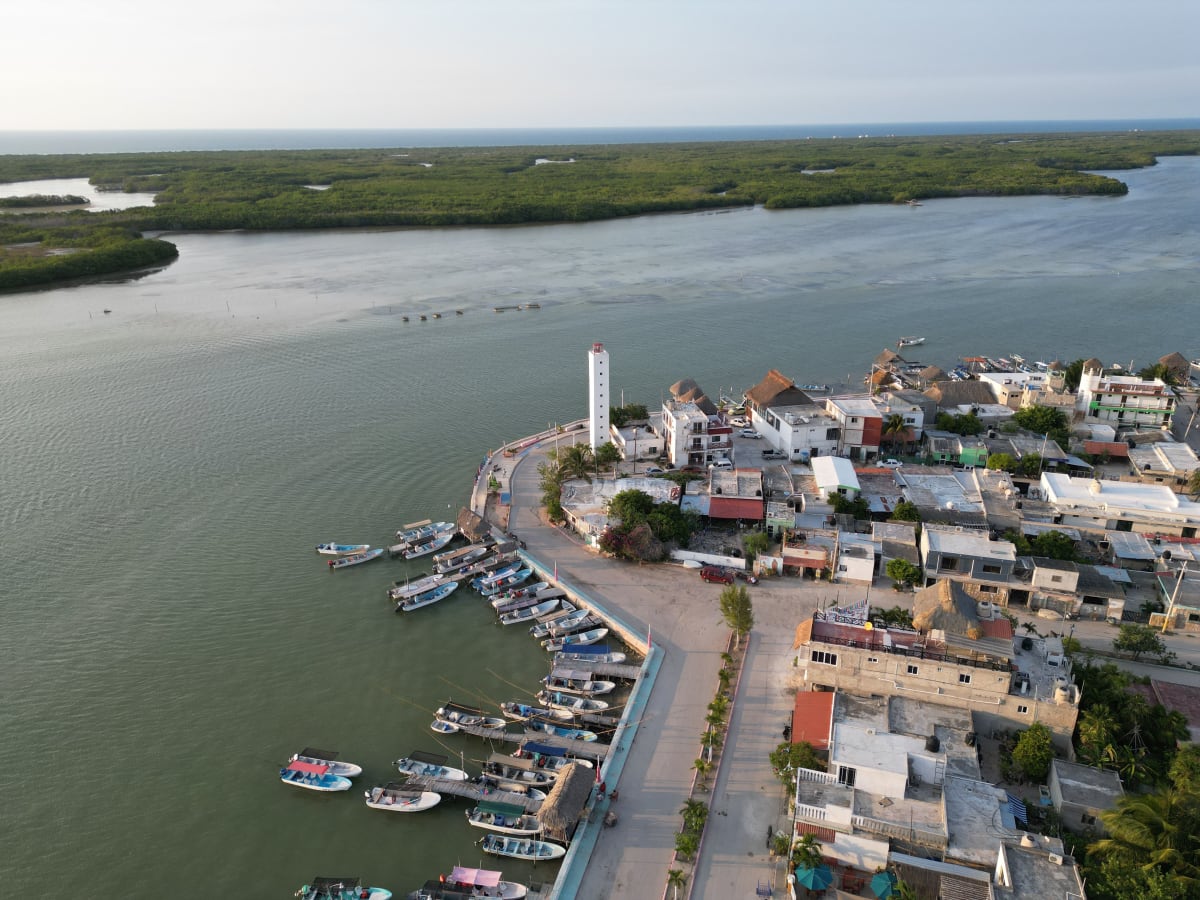
The lagoon and its surroundings form the Ría Celestún Biosphere Reserve, declared by the Mexican government in 2000 and recognised by UNESCO’s Man and the Biosphere programme and as a Ramsar wetland in 2004. It covers more than 800 km² across the border of Yucatán and Campeche, and more than 300 bird species have been recorded there, according to the reserve’s summary on Wikipedia. The village itself is small and lives from fishing; the boat tours are a second income for many families.
When to see the flamingos at Celestún
November to March: the biggest flocks
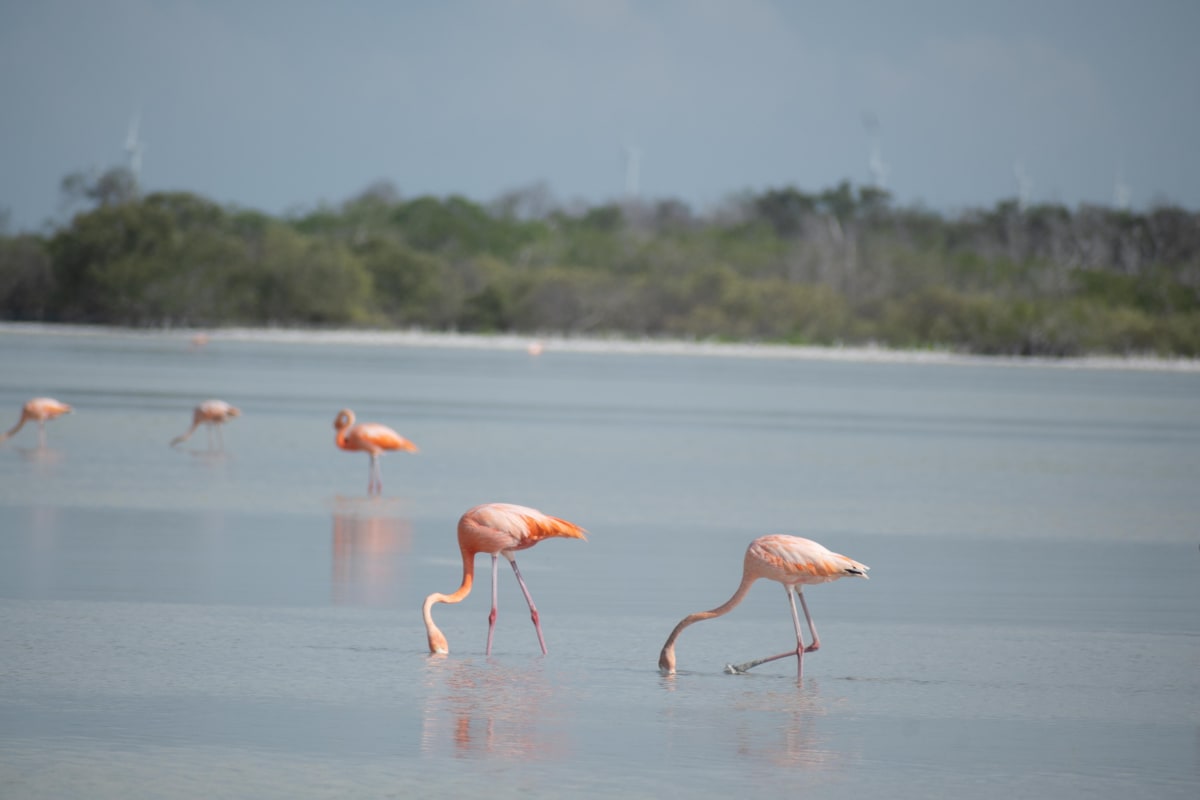
Flamingos can be seen on the Yucatán coast all year, but the largest groups gather in the Celestún estuary from roughly November to March. This is also the coolest and driest part of the year in Mérida, so it is the easiest time for a day on the water. December, the holiday weeks and Easter bring more visitors from Mexico, and the queue for boats at weekends can be long; a weekday in January or February is the calmest combination.
April to October: fewer birds
In spring and early summer many adults leave for the breeding grounds near Río Lagartos, on the north coast, so numbers at Celestún drop. Some birds, especially young ones, stay behind, but you may see dozens rather than thousands, and the captain may have to look for them. From June to October, afternoon storms and heat are the norm. If your visit falls in these months, go anyway for the mangroves and the other birds, but set your expectations on the flamingos.
Time of day and weather
Go in the morning. The water is usually calmer, the light is softer for photos and you avoid the worst of the heat on an open boat with little shade. The wind from the Gulf tends to pick up after midday. In winter, cold fronts known as nortes can bring strong wind and choppy water for a day or two; captains may shorten the route or stop going out, so keep a spare day if the trip matters to you.
How a Celestún flamingo boat tour works
From the beach or from the bridge
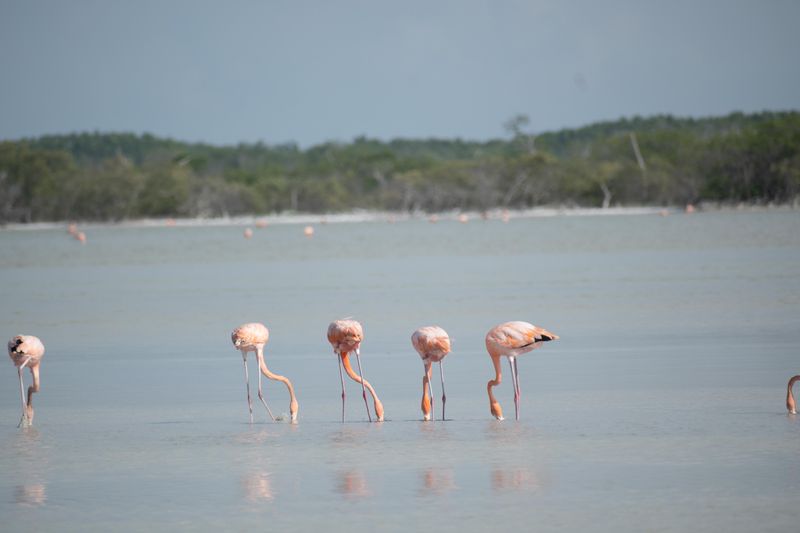
There are two departure points. Boats leave from the beach in the village, where the ride starts with a stretch along the open coast before entering the estuary, and from the bridge at the entrance to town, on the road in from Mérida, where you start inside the lagoon. The bridge is quicker to the flamingo areas and more sheltered on windy days; the beach route adds sea views and the chance to see pelicans fishing. Boats are hired per boat, so a full boat is cheaper per person, and groups are often combined with other visitors. Prices change, so confirm what is included before you set off, including whether the reserve’s visitor fee is part of it.
What the route usually includes
Most standard rides last somewhere around one and a half to two hours and follow a similar loop:
- The flamingo flats, the shallow parts of the estuary where the flocks feed.
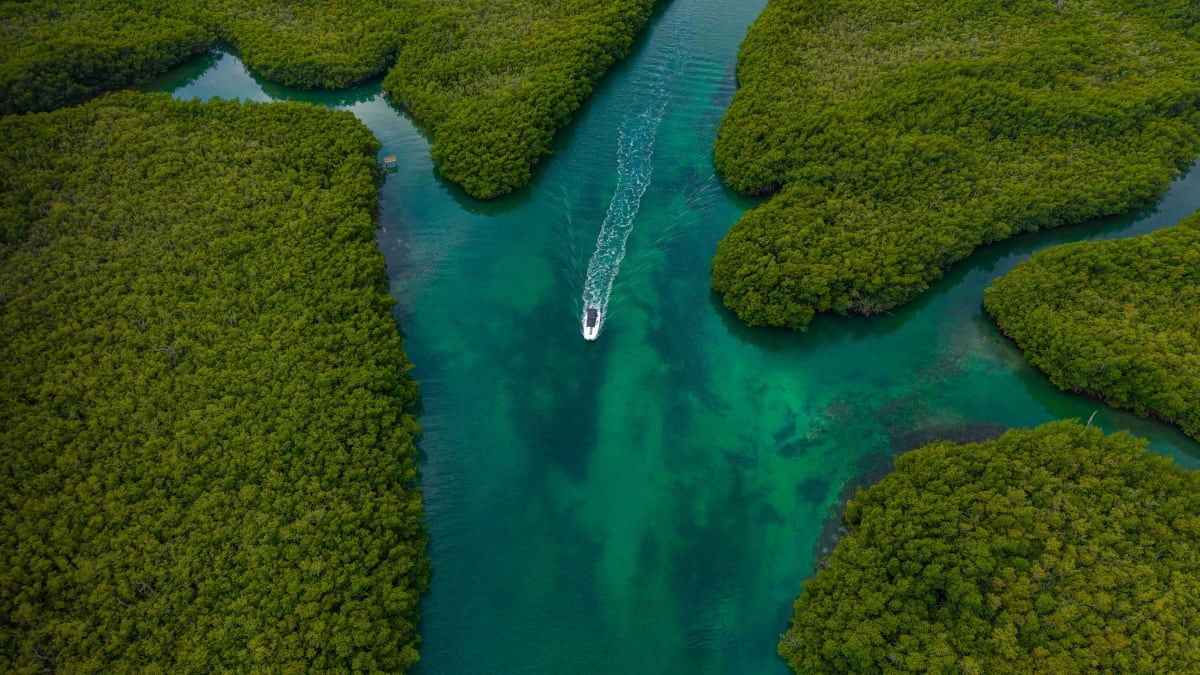
- A mangrove tunnel, a narrow channel where the branches close overhead.
- A freshwater spring (ojo de agua) inside the mangroves, often with a boardwalk, where you can usually get in the water.
- On longer routes, the petrified forest, a stretch of dead, bleached mangrove trunks, and islets used by roosting birds.
Keeping your distance
Inside the reserve, boats have to keep their distance from the flocks. Do not ask the captain to get closer or to make the birds fly for a photo: every time a flock takes off it spends energy it needs for feeding, and repeated disturbance pushes the birds away from the best areas. A good captain cuts the engine and lets the boat drift. Bring binoculars or a zoom lens instead; that is what makes the difference in the photos.
Getting there from Mérida: tour, car or bus
| Option | How it works | Best for |
|---|---|---|
| Group tour from Mérida | Hotel pick-up, transport, boat ride and usually lunch in one booking | First-time visitors and anyone without a car |
| Rental car | About 1 h 30 each way via Umán and Kinchil; hire a boat on arrival | Early starts and combining Celestún with a hacienda or a beach |
| Bus | Second-class buses from Mérida to the village; slower, with limited return times | Budget travellers with a full day free |
| Private driver | Your own schedule, without having to drive | Families and small groups who want flexibility |
A tour is the simplest way: you are collected in the morning, the boat is arranged and you are back in Mérida by late afternoon. Compare the options on our Mérida tours page. Driving is easy on a flat, straight road, but slow down for the speed bumps (topes) in every village and try to be back before dark. By bus, check the return times at the terminal before you leave, because the last bus back can be earlier than you expect.
Tips for the day: what to bring, photos and lunch
- Sun protection. The boats are open and the light reflects off the water. A hat, sunglasses and a long-sleeved shirt work better than sunscreen alone.
- Cash in pesos. Small businesses in the village may not take cards, and you may want to tip the captain.
- Binoculars or a zoom lens. Because boats keep their distance, a phone camera shows the flock as a pink line; 200 mm or more gets you individual birds.
- Swimwear and a towel if your route includes the freshwater spring.
- A dry bag for phones and cameras: spray is common on the beach route when the wind rises.
After the boat, have lunch on the beach. Celestún is a fishing village, and fresh fish and seafood, ceviche and fried fish, are what the beachfront restaurants do best. Most visitors sleep in Mérida and do Celestún as a day trip; if you are still choosing a base, see where to stay on our Mérida stays page.

Celestún or Río Lagartos?
The Yucatán has two famous flamingo areas. Celestún, on the west coast, is the closer of the two to Mérida and the one most tours go to, with its biggest flocks in the winter months. Río Lagartos, on the north coast, is a longer drive from Mérida, about three hours, and is closer to Valladolid. It is where the flamingos breed, and its boat tours combine flamingos with the pink salt ponds of Las Coloradas nearby. The nesting colonies themselves are protected and not visited.
For a single day trip from Mérida, Celestún is the practical choice. If you are travelling on to Valladolid or Cancún, Río Lagartos fits better on the way.
Whichever you choose, combine it with the rest of your plans: our list of things to do in Mérida covers the city, and most flamingo tours can be booked alongside trips to the ruins and cenotes.
Frequently Asked Questions
When is the best time for a Celestún flamingos tour?
From roughly November to March, when the largest flocks gather in the estuary, and in the morning, when the water is calm and the light is soft. There are fewer flamingos from spring onwards because many go to Río Lagartos to breed.
How far is Celestún from Mérida?
About 95 km west, around an hour and a half by car. Tours from Mérida usually take most of the day, including the boat ride and lunch.
Can you see flamingos at Celestún all year?
Usually yes, but in much smaller numbers outside the winter months. From April to October you may see dozens rather than thousands.
Is it better to take the boat from the beach or the bridge?
The bridge at the town entrance is closer to the flamingo areas and more sheltered when it is windy. The beach adds a stretch along the coast. Both reach the same estuary, so choose by the wind and by which boat fills up first.
auto_awesome Continue exploring Mérida
You Might Also Like
 article Travel Tips calendar_today Oct 12, 2026
 How to Get to Mérida: Airport, ADO Buses & Transfers
The easiest way to get to Mérida is to fly into Mérida airport (MID) or take an ADO bus from Cancún, Playa del Carmen or
 article Exploring calendar_today Oct 11, 2026
 Izamal, the Yellow City: Day Trip from Mérida
An Izamal day trip from Mérida takes about an hour each way and combines a 16th-century convent, a climbable Maya pyrami
 article Adventures calendar_today Oct 10, 2026
 Las Coloradas & Río Lagartos: Pink Lakes and Flamingo Tour Guide
How to see the pink salt ponds of Las Coloradas and the flamingos of Río Lagartos from Mérida: tour or self-drive, the a