
How Much Does a Trip to Mérida Cost? What Drives Your Daily Budget
Your Mérida travel cost depends mostly on three choices: when you travel, what kind of place you sleep in and how many paid day trips you add. Food, city buses and the weekly cultural events are cheap or free, so a traveller in a guesthouse who eats at markets spends a fraction of what a boutique-hotel guest touring every day spends in the same city. The table shows where the money goes.
| Expense | What pushes it up | How to keep it down | Rough guide (approximate, check current prices) |
|---|---|---|---|
| Accommodation | Christmas–New Year, Easter week, boutique casonas with pools | Travel May–October, guesthouses, weekly rentals | The biggest line; rates move with season and demand |
| Food | Restaurants on Calle 60 and Paseo de Montejo | Market stalls, loncherías, set lunches | Tacos or panuchos at a market often around MXN 20–40 (about US$1–2) each |
| Local transport | Taxis for every trip, an airport taxi from the counter | Walking in the centre, city buses, ride-hailing apps | A city bus ride usually costs well under MXN 20 (about US$1) |
| Day trips | A guided tour every day, private drivers | Public buses, shared costs, one or two tours that matter | The line that varies most between travellers |
| Entry fees | Big archaeological sites, several cenotes a day | Free weekly events, free museums on the Plaza Grande | Ruins and cenotes charge separately; check fees before you go |
We do not publish a single "average day" figure on purpose: hotel rates in Mérida change with the season and the exchange rate moves. Use the table to decide where your money goes, then price your own dates. In most travellers’ experience Mérida costs noticeably less than Cancún or Tulum for the same comfort, because it is a working city of around a million people rather than a resort strip.
What drives the cost of a trip to Mérida
Two decisions set most of the budget before you arrive: the dates and the type of accommodation. Everything else is small by comparison unless you book a tour every day.
Season
Mérida is less seasonal than the beach towns, but demand still peaks in the cool months from November to March, when many Canadians and Americans spend the winter here and long-stay rentals go early. The Christmas–New Year fortnight and Semana Santa (Easter week) are the most expensive weeks. From May to October it is very hot and, from June, rainy in the afternoons, and that is when rates are at their lowest. Our guide to the best time to visit Mérida covers the weather month by month.
Type of stay and neighbourhood
The historic centre is full of restored colonial houses, the casonas, turned into small hotels with a courtyard pool. They are Mérida’s signature stay and are priced accordingly. Simple guesthouses and hostels in the same streets cost much less and keep you within walking distance of the plazas, markets and buses, which saves money every day. The big chain hotels sit mostly on and around Paseo de Montejo. Our guide to where to stay in Mérida compares each neighbourhood.
Where to sleep for less
Accommodation is where a Mérida budget is won or lost. A few rules hold in any season.
Guesthouses and hostels
Dorm beds and private rooms cluster in the centre and around Santa Ana and Santiago. Many occupy old houses with a garden or a small plunge pool. Check that the room you will sleep in has air conditioning, not just a fan: from April to September it matters more than anything else.
Rentals for a week or more
For longer stays, a house or apartment with a kitchen lets you shop at the market and make breakfast, which cuts the daily spend noticeably. Owners often give weekly or monthly discounts outside the winter season. Many rented houses in Santiago and the centre have their own pool, which can make them better value than a hotel room for a family or a group.
Taxes and extra fees
Mexican hotels add VAT (IVA) and a state lodging tax, and not every booking site shows them up front. On rentals, check the cleaning fee and the deposit before you compare prices.

Eating well on a small budget
Food is where Mérida is easiest on the wallet, because Yucatecan cooking is at its best in the cheapest places.
Markets and loncherías
The markets of Santa Ana, Santiago and the big Lucas de Gálvez market near the Plaza Grande have food stalls serving cochinita pibil tacos and tortas, panuchos, salbutes and relleno negro. Small lunch counters called loncherías do the same in every neighbourhood. Cochinita is a morning dish: the best stalls often sell out before lunch. Many family restaurants also serve a set lunch, a comida corrida, with soup, a main and a drink for much less than ordering à la carte.

Restaurants, drinks and tipping
Restaurant terraces on Calle 60 and the converted mansions of Paseo de Montejo charge several times market prices, and cocktails add up fast. A sensible plan is to eat lunch at a market or lonchería and choose one good dinner out. In restaurants a tip of 10–15% is customary in Mexico; check the bill first, as some add a service charge. Do not drink tap water: buy large bottles at convenience stores or supermarkets.

Getting around cheaply
The historic centre is compact and laid out on a numbered grid, so most visitors walk almost everywhere and spend little on transport inside the city.
City buses
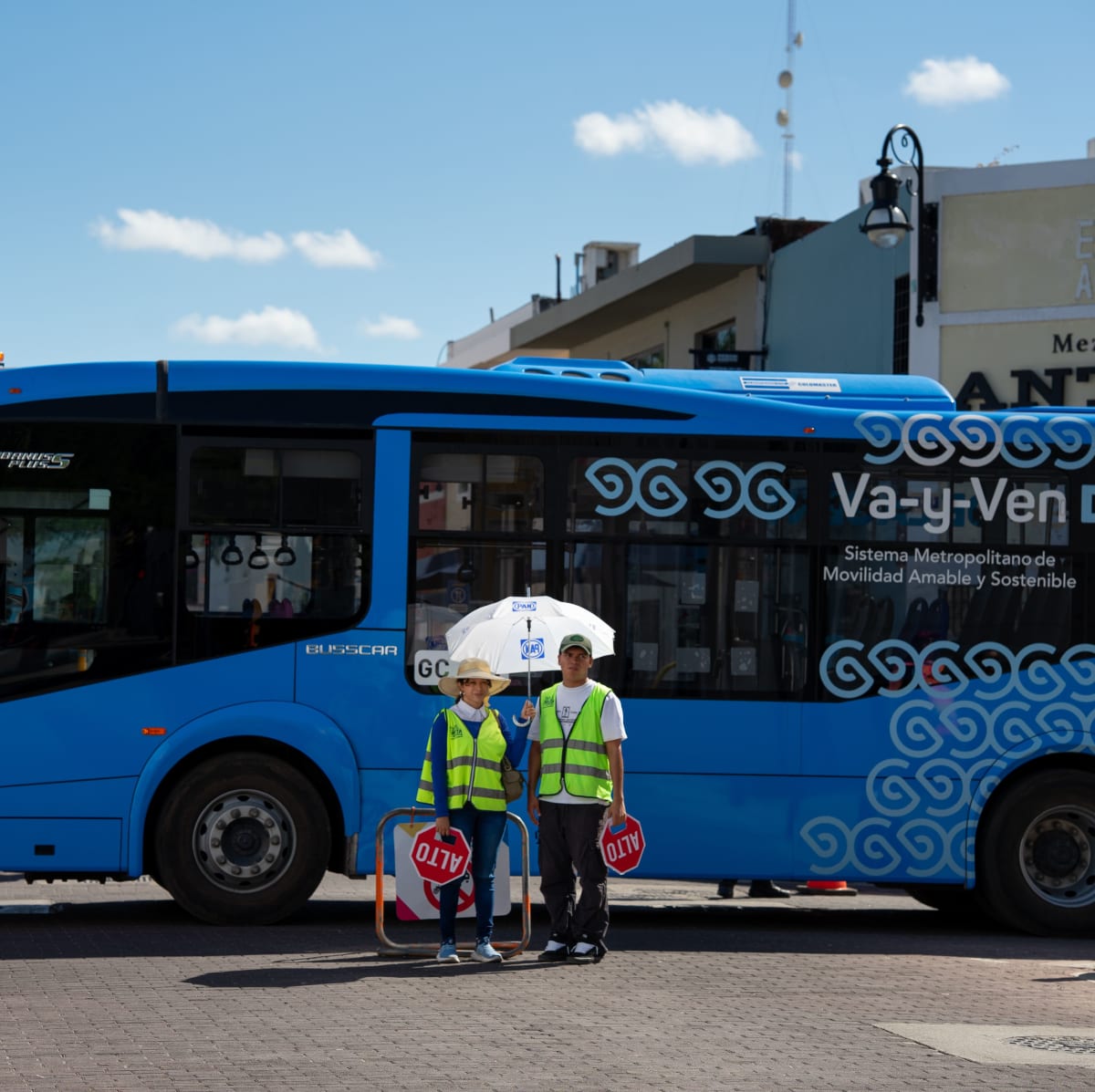
Mérida’s public bus network, branded Va y Ven, covers the city with blue buses, including routes along Paseo de Montejo and to the north. A ride usually costs well under MXN 20 (about US$1); fares and payment methods have changed in recent years, with a rechargeable card used on many routes, so check how to pay before your first trip.
Taxis and apps
Uber and DiDi work across the city and are usually cheaper than a street taxi; if you take a taxi, agree the fare before you get in. From the airport, the authorised taxis sold at the counter in arrivals charge set fares by zone, which is simple but not the cheapest option.
Renting a car for day trips
A rental car pays off if you plan several day trips to ruins, cenotes and the coast, especially if you share it. Online quotes often leave out the mandatory Mexican liability insurance, so compare the final price at the counter, and remember tolls and fuel. For a city-only stay, a car is a cost, not a saving: parking in the centre is scarce.
Free and cheap things to do
Some of the best things in Mérida cost nothing:
- Mérida en Domingo. Every Sunday the Plaza Grande fills with a market, food stalls and dancing, and in the morning Paseo de Montejo closes to cars for cyclists.
- The weekly shows. The Vaquería with jarana dancing in front of the city hall on Monday evenings, and the Serenata Yucateca in Parque Santa Lucía on Thursdays.
- The Palacio de Gobierno. The state government building on the Plaza Grande is free to enter, with large murals by Fernando Castro Pacheco on the history of Yucatán.
- Walking the barrios. Santa Ana, Santiago, Santa Lucía and La Mejorada each have a park, a church and, in most cases, a market.
Paying for ruins and cenotes
Paid excursions are where daily budgets differ most. Large archaeological sites such as Chichén Itzá and Uxmal charge a federal ticket and a separate state ticket, and foreign visitors pay more than Mexican residents; check the current fees before you go. Cenotes around Homún and Cuzamá charge per cenote, and transport to them is often the bigger cost. A sound plan is to pick one or two excursions that matter to you and fill the other days with the city. Our list of day trips from Mérida shows which you can do by bus and which need a car or a tour, and the Mérida tours page lets you compare prices before you commit.
Money tips that add up
Pay in pesos. When a card terminal or an ATM offers to charge you in your home currency, decline: the conversion it applies is usually worse than your bank’s. Use ATMs inside bank branches, carry small bills for buses, markets and tips, and keep an eye on the exchange rate of the Mexican peso, which can change your total noticeably over a few months.

Frequently Asked Questions
How much does a day in Mérida cost?
It depends mainly on where you sleep and whether you take a paid excursion that day. Food and city transport can be kept low by eating at markets and walking or riding buses. Price your own dates and accommodation rather than relying on an average figure.
Is Mérida cheaper than Cancún or Tulum?
For most travellers, yes. Mérida is a large city with local markets, loncherías and buses, so it is easy to eat and move around at local prices, while accommodation on the Caribbean coast is priced for beach tourism.
What is the cheapest time to visit Mérida?
May to October, when it is hottest and, from June, rainy. Christmas–New Year and Easter week are the most expensive, and the winter months are busy with long-stay visitors.
Do I need cash in Mérida?
Yes. Hotels, supermarkets and most restaurants take cards, but market stalls, loncherías, cenotes in the villages and many small shops want cash in pesos. Carry small bills.
auto_awesome Continue exploring Mérida
You Might Also Like
 article Exploring calendar_today Oct 14, 2026
 Yucatán Haciendas: Which Henequen Haciendas to Visit (and Stay In)
The henequen haciendas around Mérida made Yucatán rich and then fell silent. Here is their story, which ones you can vis
 article Exploring calendar_today Oct 13, 2026
 Beaches Near Mérida: Progreso, Sisal, Chelem & Telchac
The beaches near Mérida are on the Gulf of Mexico, not the Caribbean: shallow, calm and greener. Here is how Progreso, C
 article Travel Tips calendar_today Oct 12, 2026
 How to Get to Mérida: Airport, ADO Buses & Transfers
The easiest way to get to Mérida is to fly into Mérida airport (MID) or take an ADO bus from Cancún, Playa del Carmen or