Best Time to Visit Sayulita
The best time to visit Sayulita is from November to April: dry, sunny days, cool evenings, small and friendly surf for beginners and, from December to March, humpback whales offshore. For fewer people and lower rates with weather that is still mostly dry, choose November or May. From June to October it is hot, humid and stormy, the sea water near the river mouth is at its worst after rain, and the town is at its quietest.
| Month | Weather | Sea & surf | Crowds | Good for |
|---|---|---|---|---|
| January | Dry, sunny, cool nights | Cool (about 25 °C); small NW swell | High | Whales, learning to surf |
| February | Driest month | Coolest of the year | High | Whale peak, beginner waves |
| March | Dry, warming up | Cool; small swell | High; spring break | Last whales, beach days |
| April | Dry, hot afternoons | Warming | Very high at Easter, then medium | Beaches, boat trips |
| May | Dry, hot, humidity rising | Warm; first S swells | Medium to low | Value, uncrowded beach |
| June | First storms, usually at night | Warm; bigger S swells | Low | Value, experienced surfers |
| July | Hot, humid, frequent storms | Very warm | Mexican summer holidays | Family trips, turtles |
| August | Hot, humid, wet | Very warm (about 30 °C) | Low after mid-month | Green jungle, turtles |
| September | Wettest month, hurricane peak | Warmest; powerful swells | Lowest; some places close | Lowest rates, if flexible |
| October | Rain easing, still humid | Very warm | Low | Value, quiet town |
| November | Dry, pleasant | Warm; swell turning NW | Medium, rising | Best balance overall |
| December | Dry, sunny | Cooling | Highest at Christmas–New Year | Whales arrive, holidays |
Sayulita is a surf town on the Pacific coast of Nayarit, about 40 km north of Puerto Vallarta airport, and it shares the climate of Banderas Bay: it never gets cold, so the seasons are decided by rain, humidity and swell rather than temperature. The table is the short answer; below is what each season is really like and which months suit which trip.
Dry season (November to May): the classic time to go
From November to May it almost never rains. Daytime highs sit around 28–30 °C, nights fall to around 17–20 °C in January and February, and the low humidity makes walking around town at midday comfortable. This is when most visitors come, the restaurants and surf schools all run at full speed, and the beach in front of the plaza is busy from early morning.
Peak weeks: Christmas, New Year and Easter
The busiest stretch runs from mid-December to Easter. The Christmas–New Year fortnight and Semana Santa (Holy Week, the week before Easter Sunday) are the two peaks, when Mexican families join the North American winter crowd. In a town this small that means full rentals, the year's highest rates, traffic jams of cars and golf carts on the way in, and a crowded line-up at the beginner break. Between those dates, January to March is busy but calmer, and many long-stay visitors rent for the whole winter, so book a house for February months ahead.
November and May: the shoulder months
November is the month we would pick for a first visit: the rains are over, the jungle behind town is still green, the sea is warm from the summer and peak-season prices have not arrived. May is the other good-value window, dry and quieter after Easter. The trade-off in May is heat and humidity that build through the month, a browner landscape and, from mid-May, the official start of the eastern Pacific hurricane season.
Rainy season (June to October): hot, green and quiet
The wet season starts in June and is strongest from July to September. Highs are around 31–33 °C, but nights stay near 24–25 °C and the humidity makes it feel much hotter. Apart from the Mexican school holidays in July and early August, this is low season, and in September some restaurants and shops close for a few weeks.
What a rainy day looks like
It rarely rains all day. The usual pattern is a clear, steamy morning, clouds building over the hills in the afternoon and a heavy thunderstorm in the evening or at night. Plan the beach and any boat trip for the morning and you lose surprisingly little. Expect muddy unpaved streets after a storm, more mosquitoes (pack repellent), and a jungle that is at its greenest.

Water quality after storms
This is the part most guides skip. Sayulita's wastewater problems are concentrated around the river mouth in the middle of the main beach, and contamination is worst after heavy rain, which makes the June to October months the riskiest for swimmers and surfers. Stay out of the water for a couple of days after a big storm, swim away from the river, and ask your surf school or hotel how the water has been that week. Our guide to whether Sayulita is safe explains how to check the official beach results.
Hurricane season
The eastern Pacific hurricane season runs officially from 15 May to 30 November, with the highest risk in September and October. Direct hits on this stretch of coast are uncommon, but storms bring heavy rain, big surf and the occasional road closure. If you travel in this window, book flexible rates, take insurance that covers weather and follow the forecasts of the US National Hurricane Center in the days before you fly.
Surf seasons: which months suit your level
For many people the real question is not the weather but the waves, and in Sayulita the two calendars line up.
Beginners: November to April
From roughly November to April the swell comes from the north-west and is usually small, so the slow, soft waves in front of town are at their friendliest and most first-timers stand up during their first lesson. Mornings are the cleanest time before the afternoon wind. Our guide to Sayulita surf lessons covers the breaks and how a lesson works.
Experienced surfers: May to October
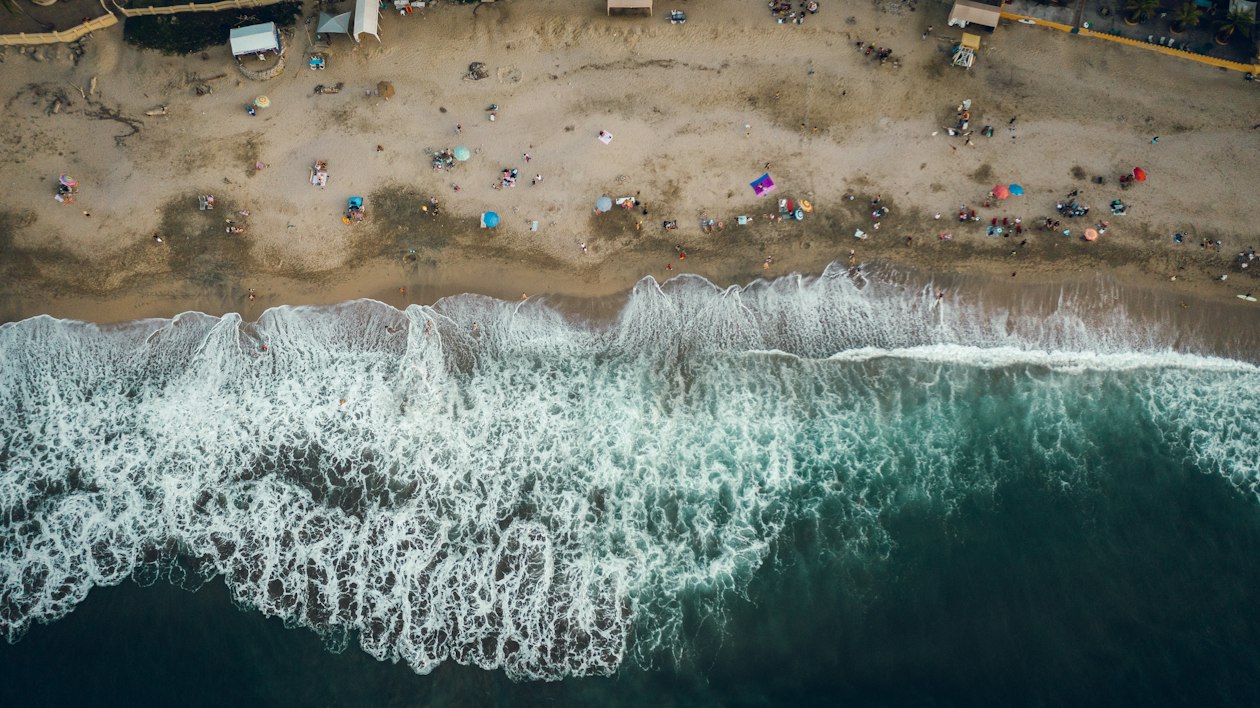
From about May to October, southern swells bring bigger and more powerful surf to the main right, to San Pancho to the north and to the breaks around Punta de Mita. It is the best time for confident surfers and the most demanding for beginners, and it overlaps with the rainy season, so check water quality as well as the forecast.
Whales, turtles and holidays: the calendar that decides your dates
Humpback whales (December to March)
Humpbacks come down from the North Pacific to breed and calve in and around Banderas Bay. Sightings start in December, peak in January and February and taper off through March. Boat tours run from Sayulita and nearby Punta de Mita, and on calm days you can sometimes see whales breaching from the beach. If whales are the reason for the trip, aim for late January or February.

Sea turtles (roughly July to December)
Olive ridley turtles nest on the beaches of this coast during the rainy season, and conservation camps release hatchlings from late summer into early winter. It is one of the few experiences that is better in low season.
Holidays that fill the town
- Christmas to New Year: the busiest two weeks of the year. Book months ahead.
- Semana Santa (March or April): the peak for Mexican visitors; beaches and roads are packed.
- Mexican summer holidays (July to early August): busy with families despite the heat.
- Día de Muertos (1–2 November): altars and decorated streets, an easy add-on to a November trip.
- Long weekends (puentes): visitors drive in from Guadalajara and fill the town for three days.
The best time to visit Sayulita for your kind of trip
- First visit, all-round: November, or late March to April avoiding Easter week.
- Learning to surf: December to March, when the swell is small and the water is clean between rains.
- Bigger waves: May to October, for experienced surfers only.
- Whale watching: late January to February.
- Lowest prices and fewest people: late August to October, if you accept heat, storms and some closed restaurants.
- Families on school holidays: July works; pick a rental with air conditioning and a pool.
Once you have your dates, plan the days with our list of things to do in Sayulita and check which boat trips and excursions run that month on the Sayulita tours page. In peak weeks, secure your room before anything else.
Frequently Asked Questions
What is the best month to visit Sayulita?
November is the best all-round month: dry, a warm sea, a green landscape and fewer people than in winter. For whales and the gentlest surf, February. For the lowest prices, September and October.
When is the rainy season in Sayulita?
From June to October, with most of the rain from July to September, usually as evening or night thunderstorms. Mornings are often clear.
Is it safe to swim in Sayulita in the rainy season?
Be careful. Water quality near the river mouth is at its worst after heavy rain, so wait a couple of days after a big storm, swim away from the river and check the latest official beach results.
When are the waves best for beginners in Sayulita?
From November to April, when the north-west swell is usually small and the waves in front of town are soft and slow.
auto_awesome Continue exploring Sayulita
You Might Also Like
 article Adventures calendar_today Oct 10, 2026
 Surfing in Sayulita: Breaks, Lessons & Board Rentals for Beginners
Where the waves break in Sayulita, how a first surf lesson works, what board to rent and when the surf is easiest, plus
 article Travel Tips calendar_today Oct 8, 2026
 How to Get from Puerto Vallarta Airport to Sayulita
Sayulita is about 40 km north of Puerto Vallarta airport on Highway 200. Here is how the private transfer, shared shuttl
 article Travel Tips calendar_today Oct 7, 2026
 Where to Stay in Sayulita: Downtown, North End, South End or San Pancho
Downtown Sayulita puts you next to the plaza and the surf, the North End and South End trade a short walk for quieter ni