Driving in Tulum: Your Complete Car Rental Guide & Safety Tips
Exploring Tulum and the stunning Caribbean coast by car opens up adventures that public transportation simply can’t match. From hidden cenotes beyond Gran Cenote to the ancient Mayan cliff-top ruins at sunrise, morning snorkelling stops at Akumal, and spontaneous pull-offs at roadside taco stands, having your own wheels transforms your vacation. This comprehensive guide covers everything you need to know about renting and driving in Tulum, from navigating the Riviera Maya highway to understanding local driving customs and finding the best spots only accessible by car.

Why Rent a Car in Tulum?
Tulum’s public transportation network serves the main tourist areas well, but a rental car unlocks experiences that most visitors miss. The region’s most spectacular attractions—hidden cenotes, jungle biosphere reserves, Mayan ruins, and secluded beach stretches—often lie beyond colectivo routes or require multiple transfers that consume precious vacation time.
With your own vehicle, you can visit the Sian Ka’an biosphere reserve on your own schedule, explore Cobá ruins at dawn when the jungle mist still hangs over the pyramids, or chase the perfect sunset from Playa Paraíso before the tour buses arrive. You’ll discover roadside comedores serving authentic Yucatecan and Caribbean cuisine, stop at artisan cooperatives, and experience the freedom to change plans based on weather, mood, or a local’s recommendation.
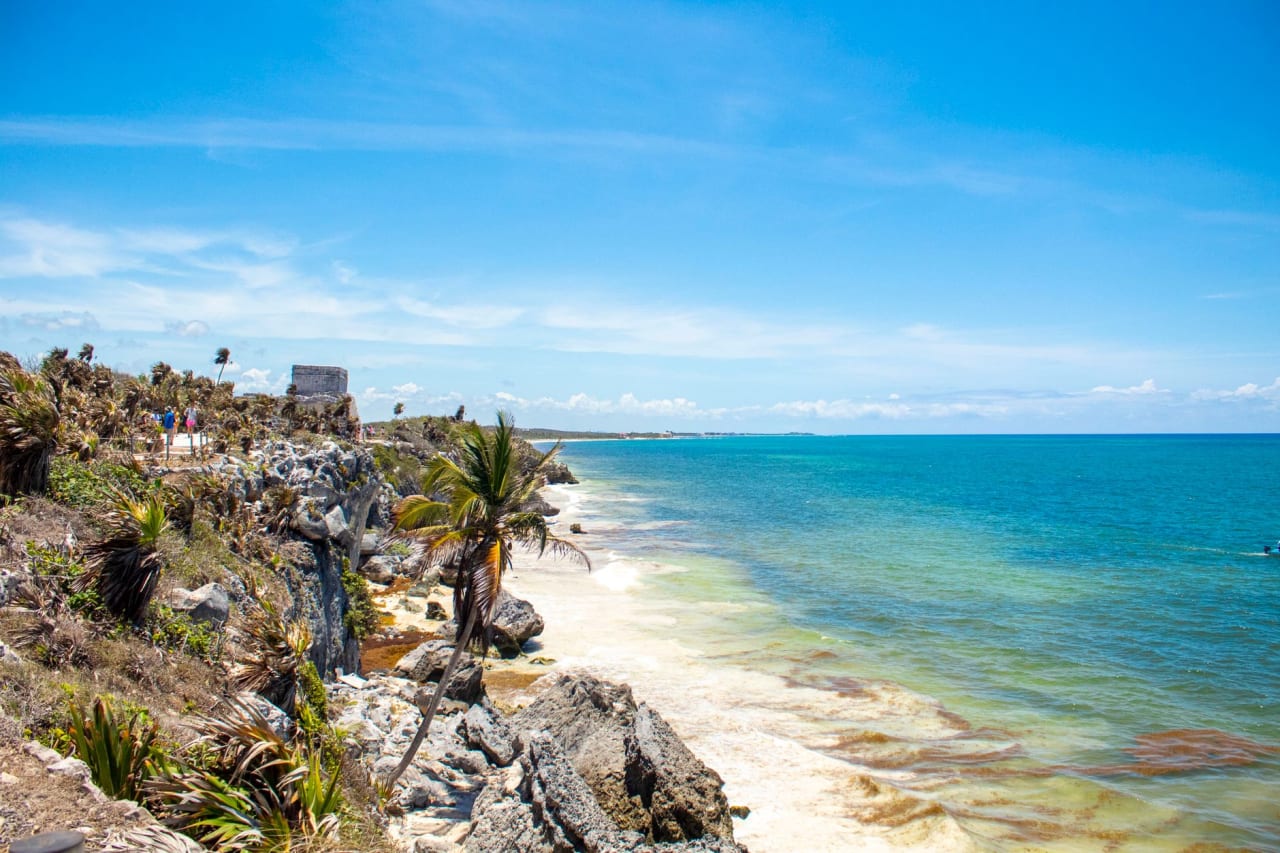
Families particularly appreciate the flexibility of car travel—managing nap schedules, carrying beach gear, and avoiding crowded buses with children becomes infinitely easier. Cenote enthusiasts can hit three or four swimming holes in a single morning before the crowds arrive, couples can slip away to Sac-Be road at golden hour, and photographers can position themselves at Playa Ruinas for sunrise shots with the Mayan ruins silhouetted against the Caribbean. For all the tours and excursions available from Tulum, a rental car gives you the freedom to combine them on your own timeline.
Understanding Tulum’s Road Network
The main artery connecting Tulum with the rest of the Riviera Maya is Highway 307 (Carretera Federal 307), the federal highway running north to Cancún (130 km) and south toward Bacalar. This well-maintained divided highway passes through the town of Tulum Pueblo and gives access to neighborhoods and the coast via perpendicular roads heading east toward the sea.
Within town, Avenida Tulum serves as the primary north–south spine through Tulum Pueblo, connecting the bus terminal, market, and local restaurants. From the pueblo, Calle Osiris and other cross streets lead east into Aldea Zama and eventually to the Zona Hotelera—the beach hotel strip running along the Caribbean coast. The Zona Hotelera road itself (locally called the beach road or carretera costera) runs roughly 10 km from the Tulum Ruins at its northern end down past Playa Paraíso and into the edge of the Sian Ka’an reserve.
Road quality varies significantly. Highway 307 and the main pueblo streets are paved and well-marked. The Zona Hotelera road is paved for most of its length but can flood during heavy rains. Access roads to remote cenotes, jungle properties, and the southern reaches of Sian Ka’an may be cobblestone, dirt, or deeply rutted.
Key Routes and Distances
Destination Distance from Tulum Pueblo Driving Time Road Condition Zona Hotelera / Tulum Beach 5 km 12 minutes Paved, good Playa Ruinas (under Mayan ruins) 6 km 15 minutes Paved, good Gran Cenote 4 km 10 minutes Paved, excellent Cobá Ruins 45 km 50 minutes Highway then local road, good Akumal (sea turtles) 38 km 35 minutes Highway 307, excellent Playa del Carmen 65 km 45 minutes Highway 307, excellent Sian Ka’an entrance 20 km 25 minutes Paved then rough dirt track Bacalar 240 km 3 hours Highway 307 south, goodHighway 307 south of Tulum toward Bacalar and Chetumal passes through lush jungle with relatively few services. Plan fuel stops carefully, as gas stations thin out past Felipe Carrillo Puerto. The scenery is beautiful but the road demands attention—deer cross at dusk and topes appear at every village.

Essential Driving Tips for Tulum
Driving in Mexico requires adapting to local customs and conditions that differ from North American or European norms. Understanding these nuances ensures safer, less stressful navigation and helps you blend with local traffic patterns rather than standing out as an uncertain tourist.
Traffic Rules and Local Customs
Mexican traffic laws officially mirror those in most countries, but enforcement and adherence vary. Speed limits are posted in kilometers per hour—typically 40–60 km/h in town, 80–110 km/h on highways. However, actual traffic speeds depend more on conditions and vehicle capabilities than posted limits.
At intersections, right-of-way isn’t always clearly established or consistently followed. Approach with caution, make eye contact with other drivers, and don’t assume right-of-way even when you technically have it. Roundabouts are increasingly common in the Riviera Maya—traffic already in the circle has priority, but be prepared for drivers who don’t follow this convention.
Turn signals serve multiple purposes beyond indicating turns. A left blinker from the vehicle ahead on a two-lane road may mean “it’s safe to pass me” or “I’m about to turn left”—context and judgment are essential. Hazard lights indicate various situations: emergency stops, slow-moving vehicles, or funeral processions. Colectivos (shared vans) on Highway 307 stop frequently and without much warning—keep a safe following distance.
Navigation and Signage
GPS and smartphone navigation work reliably in and around Tulum, though cellular data becomes spotty in remote jungle areas and inside the Sian Ka’an reserve. Download offline maps before departing, and don’t rely exclusively on navigation apps for cenote or rural destinations. The Secretaría de Comunicaciones y Transportes provides official information about federal highway conditions and construction.

Road signs exist but may be missing, faded, or appear suddenly with little advance warning. Distances are in kilometers, and many cenotes and jungle lodges lack official signage—landmarks and directions from locals become crucial. Learning basic Spanish directions (derecha/right, izquierda/left, derecho/straight) proves invaluable when you ask at a tienda for the turnoff to Dos Ojos cenote.
Topes (Speed Bumps): The Ubiquitous Challenge
Speed bumps (topes) appear frequently throughout Mexico, often without warning or adequate signage. They range from gentle undulations to suspension-testing concrete ridges. Some are painted yellow, others blend into the pavement. Local drivers know their locations; visitors don’t. Watch for brake lights ahead, painted warnings on the road, or “TOPE” signs.
Approach all topes slowly—what looks gentle may be severe, and damaging your rental’s suspension or undercarriage creates expensive complications. In residential areas, near schools, and approaching towns along Highway 307, assume topes exist even if you don’t see them immediately. The Zona Hotelera road has numerous topes protecting pedestrians and cyclists.
Practical Car Rental Information
Several international and local rental agencies operate in Tulum, with offices at Cancún international airport and in the tourist zones of Tulum Pueblo and the Zona Hotelera. Booking in advance, especially during high season (November through April), ensures better vehicle selection and rates. International companies like Hertz, Budget, and Alamo offer familiar processes and insurance options, while local agencies sometimes provide more personalized service and flexibility. You can also browse all available car and scooter rentals to compare your options before arriving.
Documentation and Requirements
- Valid driver’s license: Your home country license is legally sufficient for tourist visits, though an International Driving Permit adds an official Spanish translation that may help with police interactions
- Passport: Required for rental contract and as primary identification
- Credit card: Essential for the security deposit hold (debit cards rarely accepted); must be in the primary driver’s name
- Minimum age: Typically 21–25 years depending on company; drivers under 25 often face surcharges
- Additional driver: Must be present with documentation if sharing driving responsibilities
Insurance Essentials (Critical Information)
Mexican law requires third-party liability insurance, and your home country or credit card coverage does NOT satisfy this legal requirement. Rental companies include basic liability in their rates, but this minimum coverage may prove inadequate for serious accidents.
Understand these insurance options:
- Third-party liability (Responsabilidad Civil): Legally mandatory, covers damage/injury you cause to others; verify adequate coverage limits
- Collision damage waiver (CDW): Reduces your responsibility for rental vehicle damage; typically has a deductible
- Theft protection: Covers vehicle theft; usually includes deductible
- Full coverage: Combines CDW and theft protection, often eliminating deductible
Rental agents will aggressively upsell insurance. Read your contract carefully, understand what coverage you’re accepting or declining, and never drive uninsured. The potential legal and financial consequences of an accident without adequate insurance far exceed any savings from declining coverage.
Vehicle Inspection and Documentation
Before leaving the rental lot, conduct a thorough vehicle inspection with the agent:
- Document all existing damage with photos or video, including scratches, dents, interior wear, and windshield chips
- Verify that damage is noted on the rental agreement
- Check spare tire, jack, and emergency triangle (legally required equipment)
- Test all lights, wipers, air conditioning, and locks
- Ensure you receive the vehicle registration and insurance documents
- Confirm fuel policy (full-to-full is standard) and fuel type
- Program emergency and rental company contact numbers into your phone
This documentation protects you from charges for pre-existing damage and ensures you have everything needed if police request documents during your trip.
Safety Considerations and Recommendations
Driving in Tulum is generally safe with appropriate precautions. Most visitors complete their rental periods without incident, but understanding potential challenges and how to avoid them significantly enhances your experience.
General Safety Guidelines
- Daylight driving: Plan trips to avoid night driving, especially on unfamiliar roads, the southern stretch of Highway 307, or jungle tracks where wildlife and unlit obstacles create hazards
- Defensive driving: Expect the unexpected—motorcycles without lights, cyclists on the beach road, animals on rural tracks, vehicles stopping suddenly without signaling
- Valuables security: Never leave items visible in parked vehicles; use hotel parking or guarded lots when possible; don’t leave rental documents or passports in the car
- Fuel management: Keep tank above half-full; gas stations thin out south of Tulum toward Bacalar, and some rural stations close early or run out of fuel
- Emergency preparedness: Carry water, snacks, basic first aid, phone charger, and the rental company’s emergency contact information
Police Interactions and Traffic Stops
Police checkpoints and random stops occur, particularly on Highway 307 and entering/leaving towns. These are routine, not cause for alarm. Legitimate checkpoints check documents, vehicle registration, and occasionally inspect vehicles for contraband.
If stopped by police:
- Remain calm and courteous
- Keep hands visible
- Provide license, vehicle registration, and insurance documents when requested
- Don’t offer money or bribes—this creates problems rather than solving them
- If issued a ticket, ask for the official infraction paperwork and payment process
- If uncomfortable with the situation, politely request to follow the officer to the station or ask to call your rental company
Legitimate fines can be paid at designated offices, not to officers directly. Understanding this process helps distinguish legitimate enforcement from corruption attempts.
What to Do in Case of an Accident
- Stop immediately and activate hazard lights
- Check for injuries and call emergency services if needed (911)
- Contact your rental company using the emergency number provided
- Do not move the vehicle until authorities arrive (unless blocking traffic dangerously)
- Document everything: photos of damage, vehicle positions, other parties’ information, witness contacts
- Wait for police to file an official report (required for insurance claims)
- Exchange information with other parties but make no statements admitting fault
- Follow rental company instructions regarding vehicle replacement or next steps

Your insurance documentation becomes critical at this point. Never leave the accident scene before police arrive and file a report, as this creates legal complications regardless of fault.
Parking in Tulum
Parking culture in Mexico differs significantly from many countries. Official parking lots exist in tourist areas, but much parking happens on streets, in informal lots, or through agreements with local guardians.
Parking Options and Etiquette
Street parking: Legal where not prohibited by signs or red curb paint. Many streets have informal attendants who “watch” your car—tipping when you return is customary and ensures your vehicle receives attention. Park in well-lit areas and avoid blocking driveways or intersections.
Beach road and cenote parking: Popular spots like Gran Cenote, Playa Ruinas, and the Zona Hotelera access road have designated parking areas. Some are free, others charge minimal fees. Arrive early during high season, as spaces fill quickly—especially at Gran Cenote by 9 a.m.
Hotel and restaurant parking: Many accommodations include parking; restaurants sometimes offer parking for patrons. Confirm whether it’s monitored overnight. If you’re looking for accommodation in Tulum, many hotels and rental properties include secure parking.
Guarded lots (estacionamientos): The safest option for extended parking. Found near the Mayan ruins, the main strip in Tulum Pueblo, and larger beach clubs. Fees are typically hourly or daily with your receipt needed to exit.
Never park blocking traffic, in clearly marked no-parking zones, or in spaces reserved for people with disabilities. Towing and impounding exist, creating significant hassles to retrieve your vehicle.
Best Road Trips from Tulum
A rental car transforms Tulum into an ideal base for exploring the Riviera Maya and the broader Yucatán Peninsula. These routes showcase the region’s diversity, from Caribbean beaches and cenote circuits to ancient Mayan cities and Caribbean lagoons.
Cenote Circuit: Gran Cenote, Dos Ojos, and Jardín del Edén
The cenote circuit west of Tulum Pueblo is the most rewarding short drive you can do with a rental car. Gran Cenote (4 km from town) offers stunning turquoise water and resident turtles; Dos Ojos (17 km) is famous for its cave-diving twin eyes; and Jardín del Edén (also called Ponderosa, 20 km north on Hwy 307) has a spectacular open cenote ideal for snorkelling. Plan a full morning—arrive at Gran Cenote before 9 a.m. to beat the crowds, then work your way outward. While you can join a guided cenote tour, driving yourself allows you to linger at each pool and avoid rigid group schedules.
Sian Ka’an Biosphere Reserve
This UNESCO-listed reserve begins just 20 km south of Tulum Pueblo along the beach road. The paved road turns to packed dirt at the reserve entrance, passing through mangrove channels, bird-rich lagoons, and isolated Caribbean coastline. A high-clearance vehicle is recommended for venturing deep into the reserve, though a standard sedan can reach the main viewpoints. The Comisión Nacional de Áreas Naturales Protegidas manages this protected area. Alternatively, book a Sian Ka’an boat tour that accesses the lagoon systems no road can reach.
Cobá Ruins and Jungle Villages
The 45-minute drive northwest to Cobá takes you through flat jungle on a good paved highway. Arriving before 8 a.m. lets you climb the Nohoch Mul pyramid (42 m tall—still climbable as of our last visit) before the tour buses roll in. The surrounding villages are quiet and authentic—stop for fresh tortillas on the way back. While you can join an organized guided tour to Cobá, your own car means you control the departure time and can combine the ruins with a cenote swim at nearby Cenote Azul.
Alternatives to Car Rental: When NOT to Rent
Despite the advantages, renting a car isn’t always the best choice. Consider these alternatives:
- Staying primarily in the Zona Hotelera: If you’re based on the beach strip and focused on yoga, snorkelling from your hotel beach, and the local wellness scene, bicycles and beach-club shuttles suffice. Check out where to stay in Tulum for centrally located options that put everything within cycling distance.
- Using organized tours: Professional guides handle transportation for Sian Ka’an lagoon experiences, whale shark encounters, and cenote circuits, often including expertise and access that independent travel doesn’t provide
- Short visits: Weekend trips or stays under five days may not justify rental logistics and expenses—colectivos on Highway 307 are cheap, frequent, and reliable
- Uncomfortable with Mexican driving: If the prospect of navigating without clear signage, managing topes, or dealing with different driving customs creates anxiety, taxis and tours offer stress-free alternatives. Browse our full range of private guided experiences for hassle-free transport included.
A traveler named Marcus from Germany shared his experience: “I initially rented a car for my entire two-week trip, but after a few days realized I was spending more time worrying about parking and the rutted beach road than enjoying the Caribbean. I returned it early and booked tours instead. The guides took us to cenotes I never would have found on Google Maps, and I could relax in the crystal water without worrying about driving back. Sometimes the best decision is knowing what doesn’t match your travel style.”
Frequently Asked Questions
Do I need an International Driving Permit to rent a car in Mexico?
Legally, your valid home country driver’s license suffices for tourist visits up to 180 days. An International Driving Permit (IDP) isn’t required but can be helpful, as it provides an official Spanish translation that may ease police interactions or accident situations. Some rental companies request it, though most accept foreign licenses without issue.
Is it safe to drive from Tulum to Chichén Itzá?
The drive from Tulum to Chichén Itzá (approximately 200 km, 2.5 hours) is safe during daylight hours and straightforward on well-maintained highways. Take Highway 307 north to Valladolid, then head west on the federal highway toward the ruins. Start early to arrive before the midday heat and crowds. Avoid driving after dark as deer and other wildlife cross the road frequently. While many visitors take an organized tour to Chichén Itzá, driving yourself allows you to stop at Valladolid's cenotes and colonial architecture along the way.
What should I do if police stop me while driving?

Remain calm and courteous. Pull over safely, keep hands visible, and provide your license, vehicle registration, and insurance documents when requested. These are routine stops, often checking documentation or looking for traffic violations. If issued a fine, ask for official paperwork explaining the infraction and proper payment process. Don’t offer bribes, as this complicates the situation. If uncomfortable, politely request to follow the officer to the station or call your rental company.
Are the roads to remote cenotes safe for standard rental cars?
Most popular cenotes near Tulum are accessible with standard vehicles. Gran Cenote, Dos Ojos, and Jardín del Edén all have good paved or well-maintained access roads. More remote cenotes like Casa Cenote (near Tankah, about 14 km north on the coast road) involve narrow tracks where careful driving is needed. Deep inside the Sian Ka’an reserve, high-clearance vehicles are preferable but not always essential. Check current conditions with locals or your rental company before attempting these routes, especially during rainy season (June–October) when roads can deteriorate quickly.
How can I avoid getting lost without reliable GPS signal?
Download offline maps through Google Maps, Maps.me, or similar apps before departing. These function without cellular data, providing navigation in remote areas. Bring a physical map as backup. Learn key landmarks and directions in Spanish. When exploring rural areas or the Sian Ka’an reserve, fill your tank and inform someone of your destination and expected return. Local people are generally helpful with directions—don’t hesitate to ask at gas stations or small towns along your route.
What’s included in basic rental car insurance in Mexico?
Basic rental rates include minimum third-party liability insurance (Responsabilidad Civil), which is legally required and covers damage or injury you cause to others. However, this doesn’t cover damage to your rental vehicle or theft. Collision damage waiver (CDW) and theft protection are typically additional charges. Full coverage, which eliminates deductibles, costs more but provides peace of mind. Understand exactly what coverage you’re accepting and never drive with inadequate insurance, as the legal and financial consequences of accidents can be severe.
Ready to explore Tulum and the Riviera Maya on your own schedule? Whether you choose the independence of a rental car or scooter or the guided experience of organized tours and excursions, the region’s turquoise Caribbean waters, ancient Mayan ruins, and mystical cenotes await your discovery.
Disclaimer: Information may change; please confirm schedules, regulations, and availability before booking. For legal, environmental, or safety matters, consult local authorities or official sources. For reservations and tour information, visit our adventures page.
Follow us on social media for daily updates, travel tips, and stunning Caribbean photography from our DestinosMX team on the ground in Tulum.
auto_awesome Continue exploring Tulum
You Might Also Like
 article Adventures calendar_today Nov 21, 2025
 Ultimate Tulum Travel Guide 2025: Everything You Need to Know
Tulum has transformed from a quiet Mayan coastal village into one of Mexico’s most captivating destinations, and 2025 is
 article Adventures calendar_today Jan 14, 2026
 Tulum Hurricane Season: What Travelers Should Know
Planning a trip to Tulum means understanding the Caribbean weather patterns that shape this stunning Riviera Maya destin
article Adventures calendar_today Jan 2, 2026 Tulum Packing List: Essential Items for Your Caribbean Adventure
Packing for Tulum requires thoughtful preparation—this isn’t your typical all-inclusive resort destination. This eco-chi