Best Cenotes Near Mérida: Cuzamá, Homún & Santa Bárbara
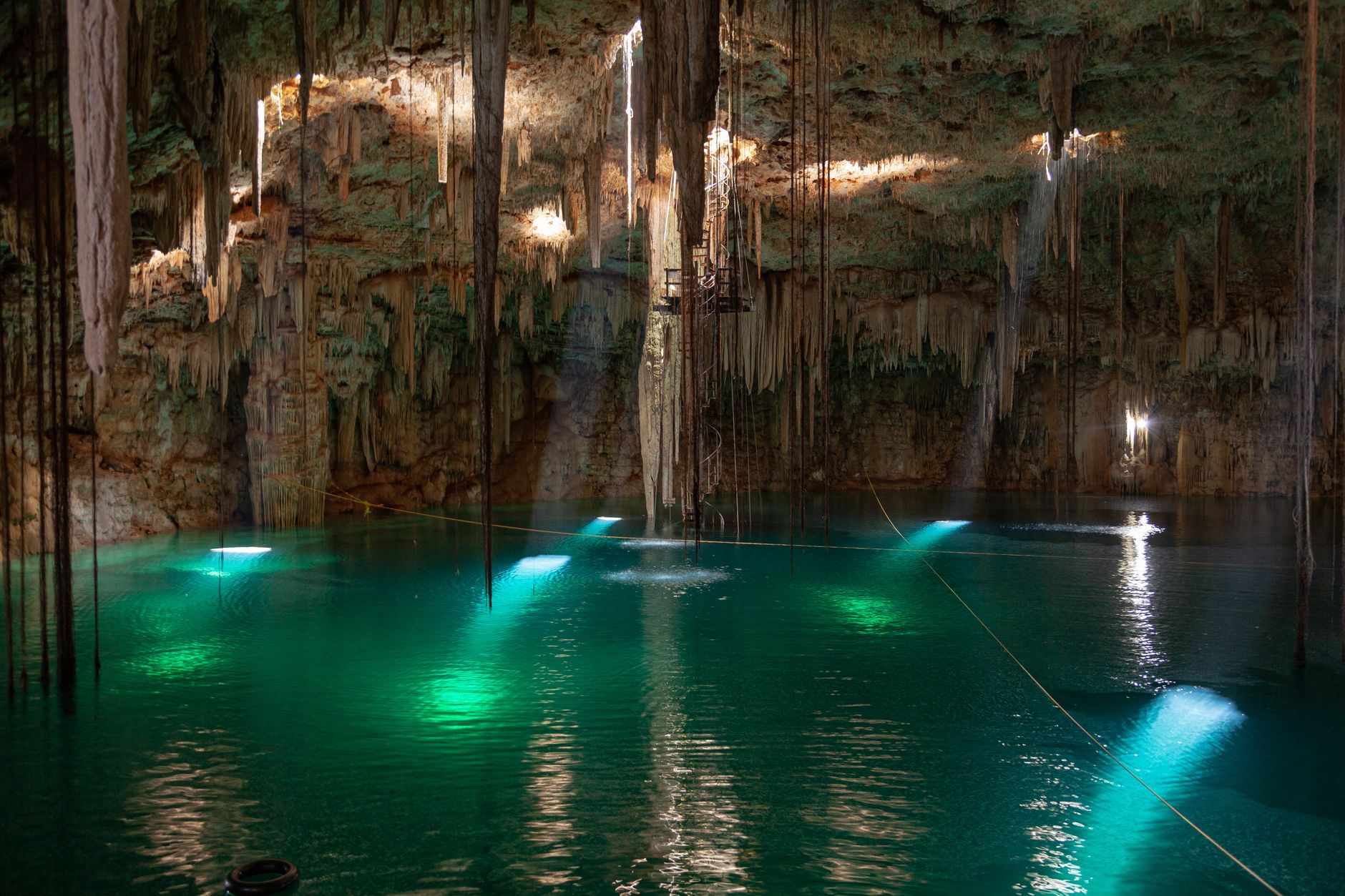
The best cenotes near Mérida are in Cuzamá and Homún, two neighbouring villages roughly an hour's drive southeast of the city, where you can swim in several cenotes in one day: in Cuzamá you reach them on a horse-drawn cart that runs on narrow rails, and in Homún the easiest option is the Santa Bárbara park, with three cenotes on one ticket.
| Place | From Mérida | Type of cenote | Best for |
|---|---|---|---|
| Cuzamá (rail-cart circuit) | About 1 hour by road | Caves and semi-open caverns | The cart ride and a half-day adventure |
| Santa Bárbara, Homún | About 1 hour by road | Three cenotes, caves and semi-open | Families and a first visit, with facilities |
| Other cenotes of Homún | About 1 hour by road | Mostly caves, run by local families | Hopping between several quieter cenotes |
| Xlacah, Dzibilchaltún | About 30 minutes north | Open cenote inside a Maya site | A short trip combined with ruins |
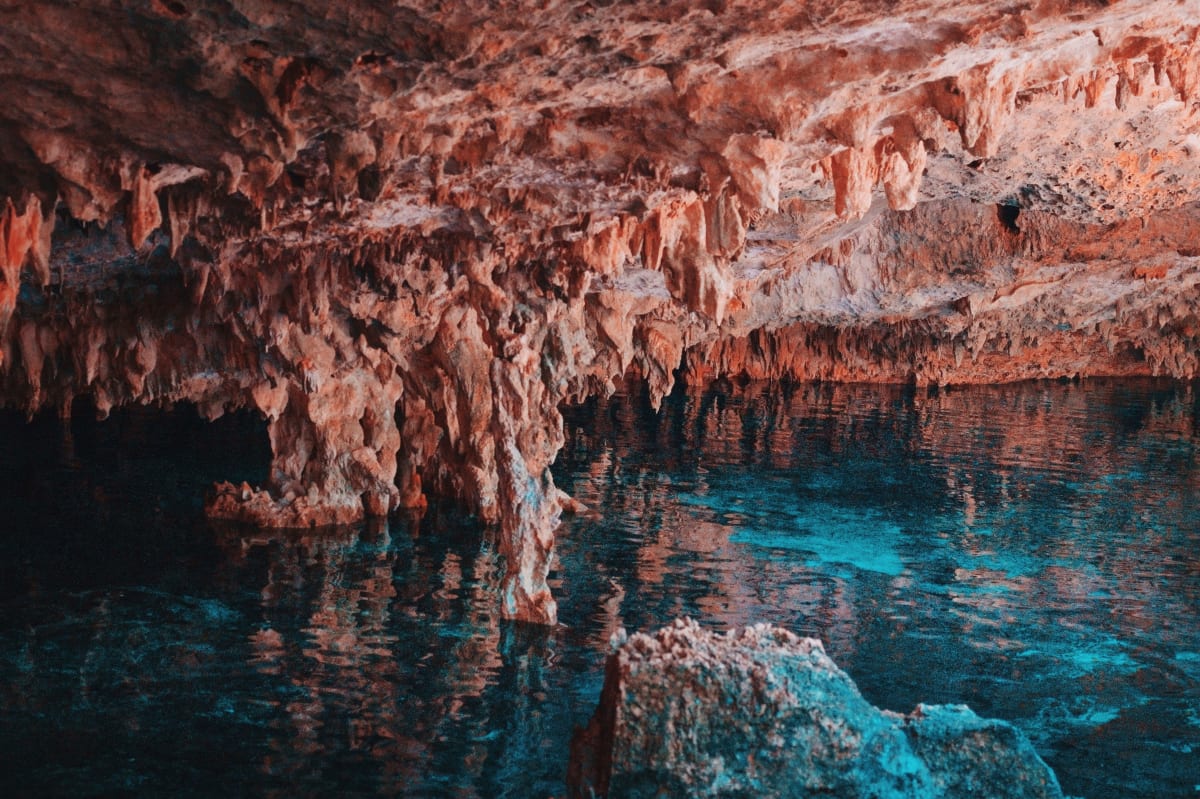
The cenotes of this part of Yucatán follow an arc known as the Anillo de Cenotes (Ring of Cenotes), which traces the buried edge of the Chicxulub crater, left by the asteroid impact about 66 million years ago. The limestone fractured along that rim, groundwater dissolved it, and the roofs of the resulting caves collapsed into the sinkholes the Maya called dzonot. That is why Homún alone has dozens of them within a few kilometres.
Cuzamá: the cenotes you reach by rail cart
Cuzamá is famous less for any single cenote than for the way you reach them. The classic circuit starts at the former henequen estate of Chunkanán, just outside the village, and follows the narrow-gauge tracks once used to move sisal fibre.
How the cart ride works
The carts, called trucks locally, are small wooden platforms with a bench, pulled by a single horse along a single track. When two carts meet head on, one is lifted off the rails to let the other pass. The ride between cenotes is bumpy, shaded in parts and takes most of a morning with the swimming. The cart and its driver are usually paid per cart, not per person, so a group of up to about four people shares one.
What the cenotes are like
The traditional route stops at three cenotes, usually listed as Chelentún, Chacsinic-Che and Bolonchoojol (spellings vary). They are cave or semi-cave cenotes: you go down steep stone steps or a wooden ladder into a chamber with clear, cool water and a beam of light falling through a hole in the roof. Which cenotes are open changes from time to time, so ask your driver before you set off.
Homún and the Santa Bárbara cenote park
Homún sits a few kilometres from Cuzamá and has more cenotes open to visitors than almost any other town in Yucatán. Most are on private or ejido land and are run by the families who own it, each with its own entrance, steps and small fee.
Santa Bárbara
Santa Bárbara is the most organised option in Homún: a park with three cenotes (Cascabel, Chaksikín and Xoch) linked by a track that you cover by bicycle or by horse-drawn cart, plus changing rooms, lockers and a restaurant. It costs more than a single family-run cenote, but the facilities make it the easiest choice with children or on a first visit.
Hopping between Homún's family-run cenotes
At the entrance to Homún, local guides on mototaxis offer to take you around several cenotes in a few hours. It is a good way to see the quieter ones without a car, since the dirt roads between them are not well signposted. Agree on how many cenotes and the total price before you leave, and remember that each cenote charges its own entrance on top of the guide.

How to get to the cenotes from Mérida
You have three ways to reach Cuzamá and Homún, and the right one depends on how many cenotes you want and how much you want to organise yourself.
Guided tour
A tour from Mérida handles transport, the cart or the park entrance and usually lunch. It is the simplest option for a single day and avoids the question of which cenotes are open. You can compare options on our Mérida tours page.
Rental car or taxi
The roads from Mérida are paved and flat, and a car lets you start early, before the tour groups arrive, and combine Cuzamá and Homún in one day. Park only where a cenote or the cart station has a lot, and do not leave valuables in sight.
Colectivo
Shared vans run from Mérida to Homún and Cuzamá and are the cheapest option, though departure points change; ask your hotel for the current one. From the village you still need a mototaxi or a cart to reach the cenotes.
How entrance fees work
There is no single ticket for the cenotes near Mérida. Each cenote charges its own entrance; Santa Bárbara sells one ticket for its three; the Cuzamá cart is charged per cart; mototaxi guides charge per vehicle or per tour; and life jackets are often rented separately. Prices are set locally and change, so check on arrival. Bring cash in pesos and small notes: many family-run cenotes do not take cards and there are few ATMs in the villages.
Cenote safety and etiquette
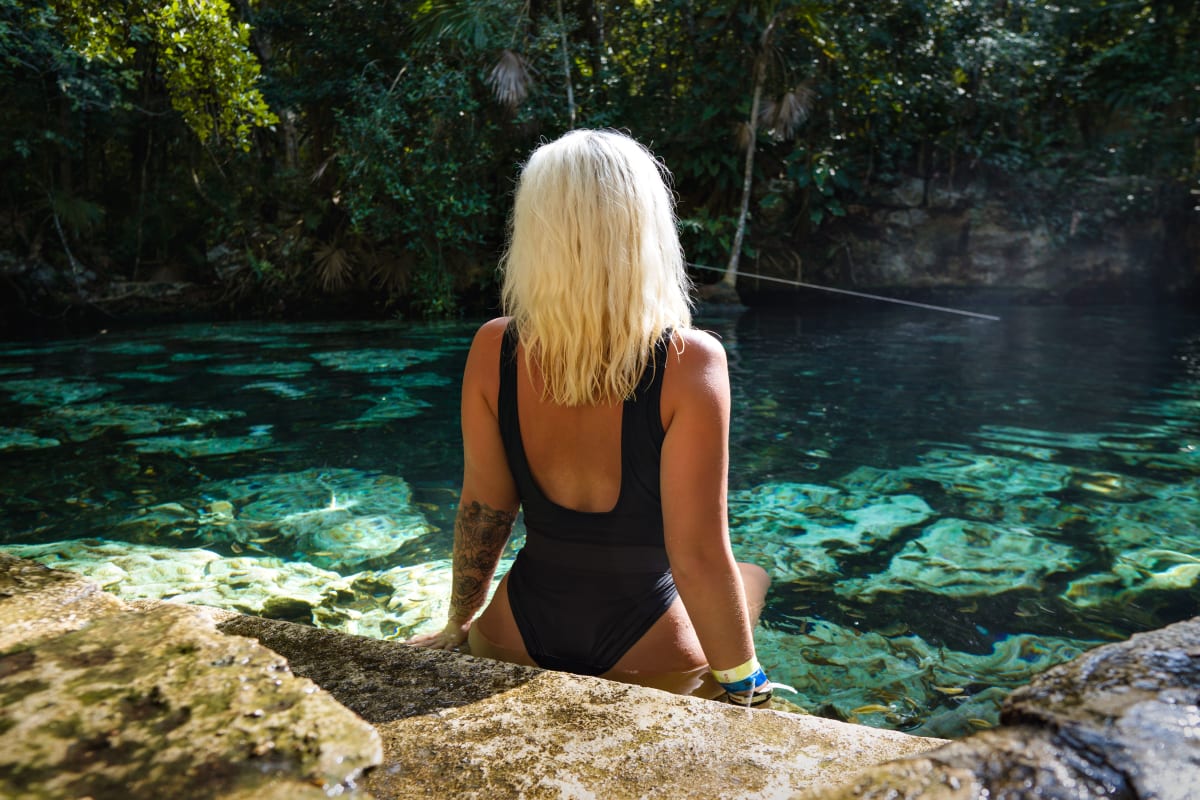
Cenotes are deep, the steps are wet and many have no lifeguard. A few rules make the day safer and protect the water, which is also the region's drinking-water supply.
- Wear a life jacket. Most cenotes are many metres deep, even near the steps. Several require one, and it is wise even for strong swimmers in a cave with no visible bottom.
- No sunscreen or insect repellent. Most cenotes ask you to shower before going in, because creams and oils pollute the water. Put sunscreen on after you get out.
- Watch the stairs. Stone steps and wooden ladders are slippery and often steep and narrow. Use the handrail, wear water shoes and go down slowly.
- Do not jump unless staff say it is allowed. Water levels and rocks are not always visible from above.
- Do not touch the formations. Stalactites grow extremely slowly and break easily.
- Go early on weekends. Families from Mérida fill the best-known cenotes by late morning on Saturdays, Sundays and holidays.

Plan the rest of your Mérida trip
A cenote day pairs well with a quieter day in the city. Our guide to things to do in Mérida covers the museums, markets and weekly events, and if you are heading east, the Chichén Itzá day trip from Mérida includes the cenotes on that route. For more ideas nearby, see the Mérida attractions directory.
Frequently Asked Questions
What are the best cenotes near Mérida?
The cenotes of Cuzamá, reached by horse-drawn rail cart, and those of Homún, including the Santa Bárbara park with three cenotes. Both are about an hour from Mérida and easy to combine in one day.
How far is Homún from Mérida?
Roughly an hour by road to the southeast. Cuzamá is a few kilometres from Homún, so you can visit both in the same trip.
Do I need a life jacket in the cenotes?
Many cenotes require one and rent them on site. Even if it is optional, wear one: the water is deep and there is often no lifeguard.
Can I wear sunscreen in a cenote?
No. Most cenotes ask you to shower and go in without sunscreen or repellent, because they pollute the groundwater. Apply sunscreen after swimming.
auto_awesome Continue exploring Mérida
You Might Also Like
 article Travel Tips calendar_today Oct 12, 2026
 How to Get to Mérida: Airport, ADO Buses & Transfers
The easiest way to get to Mérida is to fly into Mérida airport (MID) or take an ADO bus from Cancún, Playa del Carmen or
 article Exploring calendar_today Oct 11, 2026
 Izamal, the Yellow City: Day Trip from Mérida
An Izamal day trip from Mérida takes about an hour each way and combines a 16th-century convent, a climbable Maya pyrami
 article Adventures calendar_today Oct 10, 2026
 Las Coloradas & Río Lagartos: Pink Lakes and Flamingo Tour Guide
How to see the pink salt ponds of Las Coloradas and the flamingos of Río Lagartos from Mérida: tour or self-drive, the a