
Getting Around Holbox: Golf Carts, Bikes, Taxis & the No-Car Rules

Getting around Holbox is done on foot, by bicycle or in a golf cart: visitors cannot bring cars to the island, the streets are sand, and the compact village around the ferry dock is walkable, so most people only need a golf-cart taxi for luggage, for hotels far along the beach or after dark.
| Option | Best for | Range | How you pay | Watch out for |
|---|---|---|---|---|
| Walking | The village, the main square, the beach in front of town | The centre and nearby beach hotels | Free | Sun at midday, puddles after rain, dark streets at night |
| Golf-cart taxi | Arrival with luggage, outlying hotels, late evenings | Anywhere the sand roads go | Set fare per trip, usually cash | Agree the price before you set off |
| Rented golf cart | Families and groups staying outside the centre | Village and beach roads east and west | Per hour or per day, often cash plus ID | Rental rules have changed over the years; ask locally |
| Bicycle | Couples and solo travellers, sunset rides | Village, Punta Cocos, the hotel strip | Per hour or per day; some hotels lend them | Soft sand and flooded streets in the rainy season |
| Boat | Isla Pasión, Isla Pájaros, the Yalahau spring, whale sharks | The lagoon and open sea | Tour price or private charter | Weather and wind can cancel trips |
Below is how each option works in practice, how the island is laid out and the small details that make the difference between an easy stay and a lot of trudging through sand.
How the no-car rule works
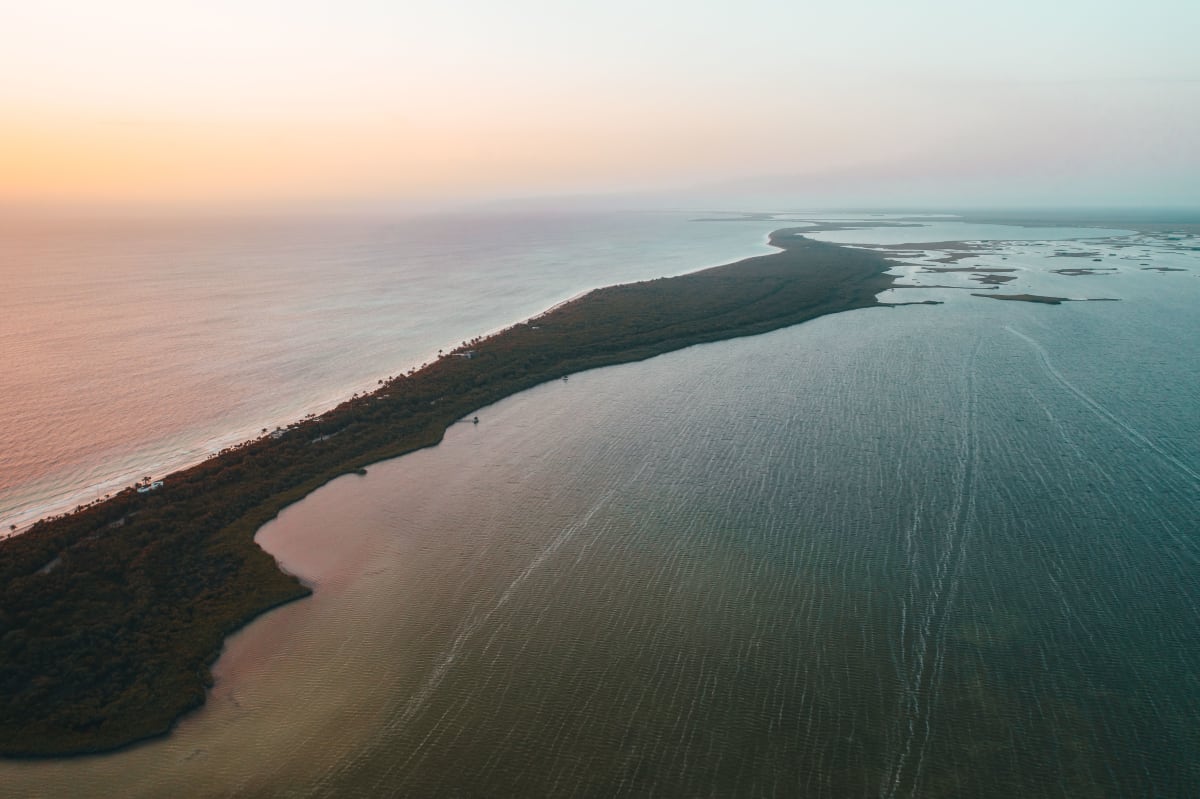
Holbox is a long, narrow island inside the Yum Balam protected area, separated from the mainland by the shallow Yalahau lagoon. There is no bridge and no car ferry for visitors, so the island has kept a village scale: the streets are packed sand rather than asphalt, and the traffic is mostly golf carts, bicycles and people on foot. The general background on the island and the protected area is on Wikipedia.
What you will see on the streets
Residents get around in golf carts, which double as taxis, delivery vans and family transport. You will also see some motorbikes and a few service vehicles for rubbish collection, water and construction, but no rental cars and no private cars brought over by visitors. The practical result is that the streets are slow and quiet, and that you share them with carts: keep to the side when one comes up behind you, especially in the narrow lanes near the square.
Bringing a car to Chiquilá
If you drive to the coast, the car stays on the mainland in one of the paid car parks in Chiquilá, near the pier where the passenger ferry leaves. Bring only what you need for the stay, because you will carry your bags onto the boat and from the dock to a taxi. The full route, from Cancún or Tulum, is in our guide on how to get to Holbox.
Walking around the village
The village sits at the western end of the island. The ferry dock is on the lagoon side, and the beach is on the north side, a walk of roughly ten to fifteen minutes straight through town past the main square. Restaurants, shops, the church and most budget hotels are inside that small grid, so if you stay in the village you can do almost everything on foot.
- Go barefoot or in sandals. Closed shoes fill with sand within minutes.
- Expect puddles after rain. In the rainy season, roughly June to November, a heavy storm can leave streets under water for a day or more. Walk around the deepest ones; they hide potholes.
- Carry a small torch at night. The square is lit and busy, but streets a few blocks away and the paths towards the outlying hotels are dark.
- Use the beach as a path. At low tide the firm sand along the water is often easier walking than the soft streets behind it.
Hotels stretch east along the beach from the village for a few kilometres. The further out you stay, the quieter it is and the more you will rely on taxis or a bicycle; our guide on where to stay in Holbox compares the areas.
Golf-cart taxis
Golf-cart taxis are Holbox’s public transport. They wait at the ferry dock when boats arrive and around the main square, and your hotel can call one. They carry luggage, can take a board bag or a pushchair, and run along every sand road on the island.
- Fares are per trip, generally a set amount for short runs inside the village and more for hotels at the edge of town or beyond. Ask the price before you get in.
- Pay in cash, ideally with small notes. Card terminals are rare in taxis, and the island has very few ATMs; see our guide to money in Holbox.
- Have your hotel’s name ready. Many places have no clear street number, so the name and the nearest landmark work better than an address.
- Late at night there are fewer taxis. If you are eating in town and staying far out, ask the restaurant or your hotel to arrange the ride back.
Renting a golf cart
A rented cart gives you freedom to ride to the far end of the hotel strip or west towards Punta Cocos for sunset, and it is the easiest way to move a family with beach gear. Rental shops in the village and some hotels offer them by the hour or by the day.
The rules have changed over time. The local authorities have, at different points, tightened, limited or paused the rental of golf carts to visitors to ease congestion on the narrow streets, and the number of permitted rental carts is regulated. Before you plan your stay around a cart, ask your hotel whether rentals are currently available and on what terms. Where they are, expect to show a driving licence or ID, leave a deposit and pay in cash. Drive slowly, give way to pedestrians and cyclists, keep off the beach itself and park where you will not block a lane.
For many visitors a cart is not needed at all: a bicycle covers the same ground at a fraction of the cost, and taxis fill the gaps.
Cycling around Holbox
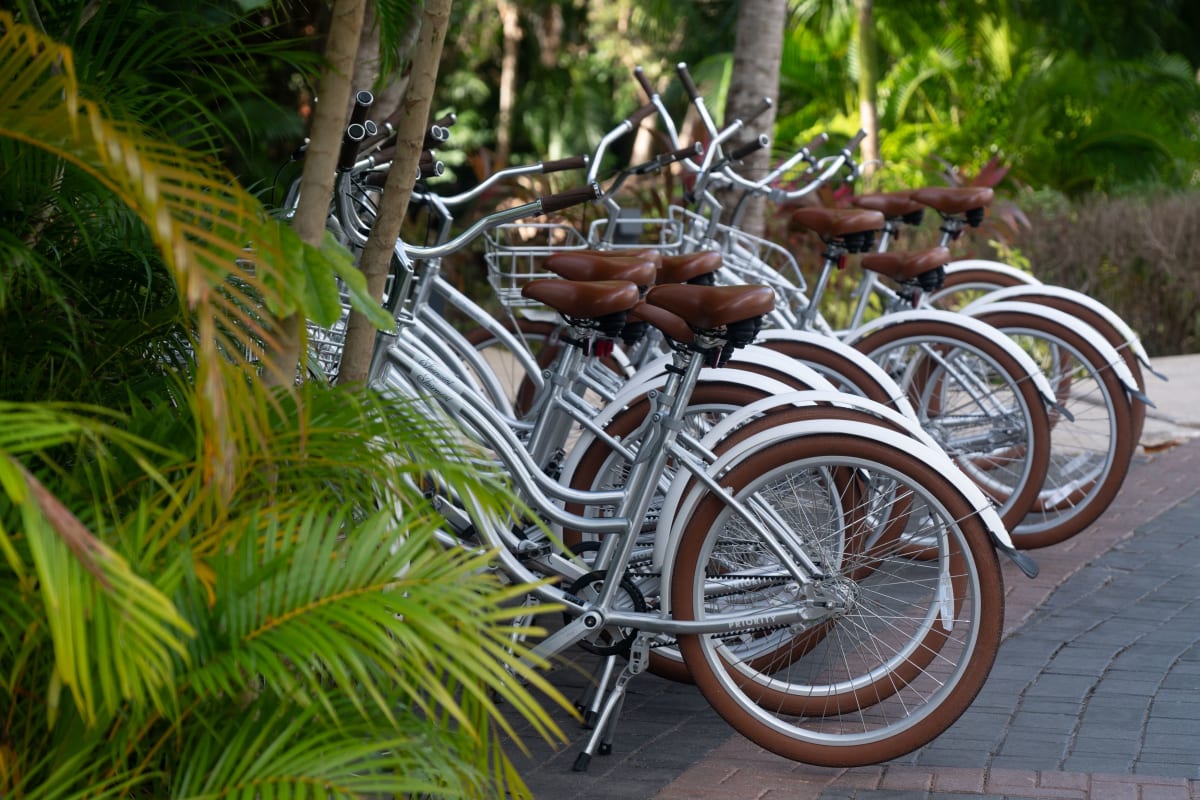
Bicycles are the most popular way of getting around Holbox after walking. Rental places in the village hire simple beach cruisers by the hour or by the day, and several hotels lend bikes to guests, so ask before you rent.
- Choose wide tyres. Thin tyres sink in soft sand; a cruiser with fat tyres rolls over it.
- Ride the firm sand. The streets in the centre are usually packed hard, while the edges and the beach above the tide line are soft.
- Check the lights and the lock. If you will ride back after sunset, a front light matters more than gears.
- Ride to Punta Cocos for sunset. The western end of the island is the classic sunset spot, and it is an easy flat ride from the village.
Getting around by boat
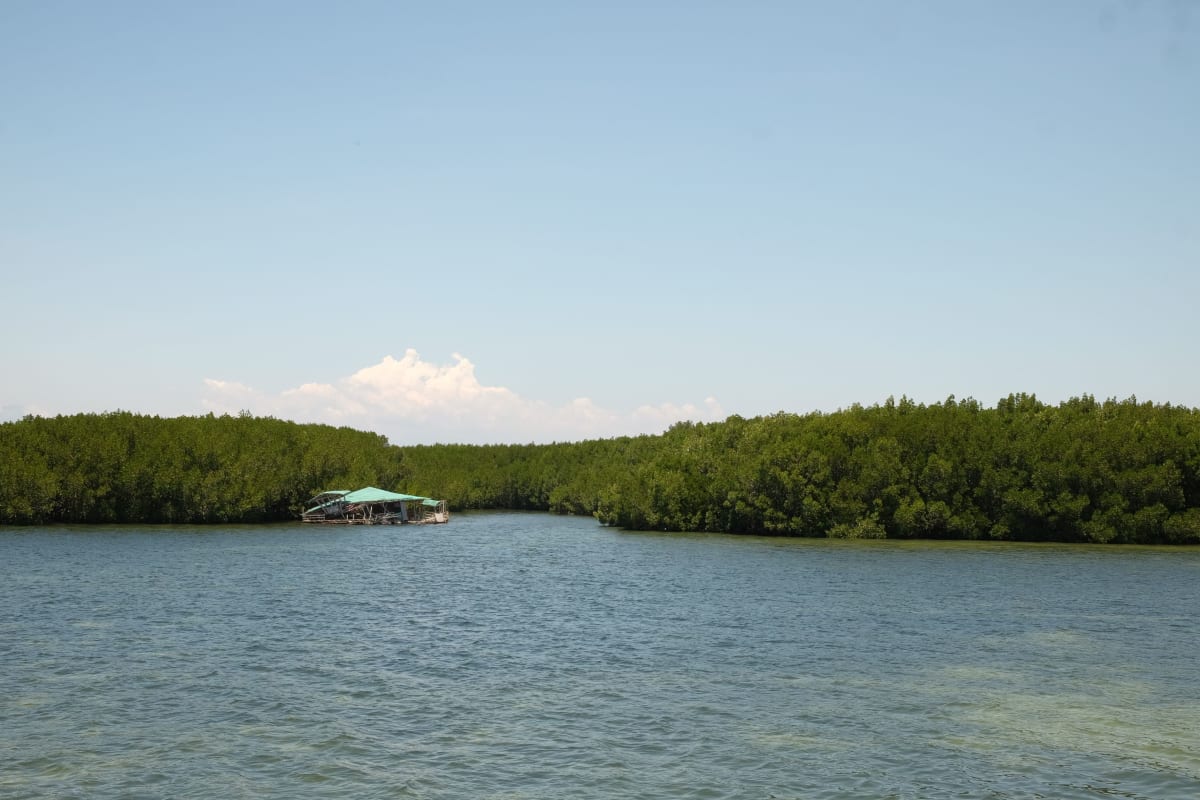
Much of what visitors come for is off the island. The lagoon trip to Isla Pájaros, Isla Pasión and the freshwater spring at Yalahau, the whale shark season and the fishing trips all leave by boat from the village shore, usually with a pickup from your hotel or a meeting point on the beach. Departure times depend on the tide, and strong wind, particularly during winter cold fronts, can cancel trips on short notice.
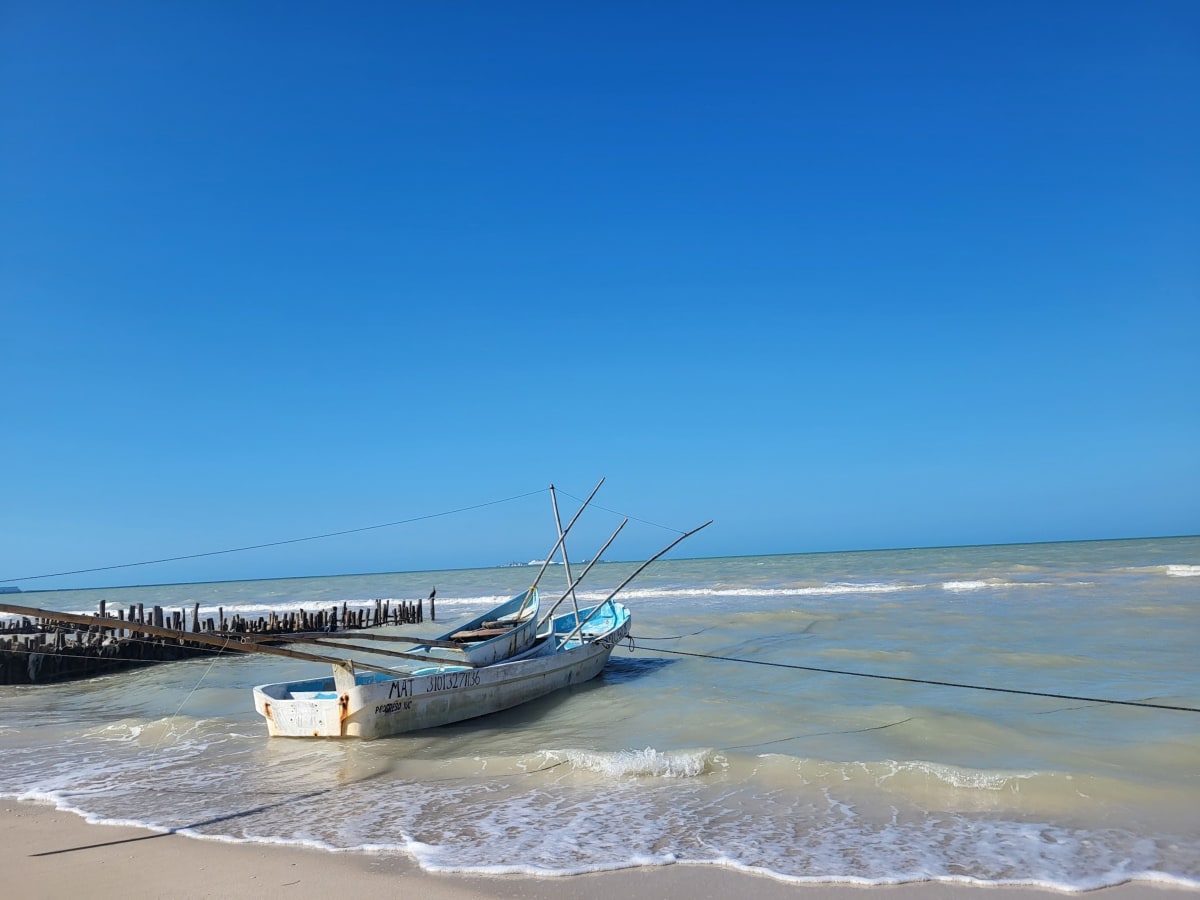
Boats are also how you reach the far ends of the island quickly. A walk from town to the sandbars at either end takes time in the heat, and some excursions combine a ride along the coast with a stop on a sandbar. You can compare boat trips, including the whale shark and three islands tours, on our Holbox tours page.
Frequently Asked Questions
Can you drive a car on Holbox?
Visitors cannot bring cars to Holbox. You leave the car in a paid car park in Chiquilá and get around the island on foot, by bicycle, by golf-cart taxi or in a rented golf cart where rentals are available.
Do you need a golf cart in Holbox?
Not if you stay in or near the village, which is walkable. A cart or regular taxis make sense for hotels far along the beach, for families with gear and for evenings out when you are staying outside the centre.
How do taxis work in Holbox?
Taxis are golf carts that wait at the ferry dock and around the main square. They charge a set fare per trip that depends on the distance, usually in cash. Ask the price before you get in.
Is Holbox easy to get around by bike?
Yes, for most of the year. The island is flat and the village streets are packed sand. Choose a bike with wide tyres, and expect flooded streets for a day or two after heavy rain in the rainy season.
Continue exploring Holbox
You Might Also Like
 ExploringNov 16, 2026
How Many Days in Holbox? Day Trip vs 2 Nights vs a Week
Three nights is the right answer for most people asking how many days in Holbox: enough for a boat tour, a sandbar walk
 ExploringOct 28, 2026
Holbox vs Bacalar: Island Sandbars or Lagoon of Seven Colors?
Holbox vs Bacalar: choose Holbox for a car-free sand island with whale sharks, flamingos and sea sunsets; choose Bacalar
 ExploringOct 26, 2026
10-Day Riviera Maya & Holbox Itinerary
A 10-day Riviera Maya and Holbox itinerary that runs in one line from Cancún airport: Playa del Carmen, three nights in