
Where to Stay in Holbox: Downtown, Beachfront or Punta Cocos
Deciding where to stay in Holbox comes down to three areas: the village (downtown, around the main square), the beachfront hotels that line the north shore on either side of it, and the quiet western end towards Punta Cocos. The island is small and car-free, so none of them is far from the others, but the choice changes how you spend your days: whether you walk to dinner or call a golf cart, fall asleep to music or to the sea, and how dark the beach is at night.
| Area | Best for | Getting around | Trade-offs |
|---|---|---|---|
| Downtown (the village) | Budget trips, short stays, first-timers, food lovers | On foot; the ferry dock and the beach are a short walk | Music and street noise at night, few sea views |
| Beachfront near the village | Couples, families, a classic beach holiday | Walk or cycle into town | Higher rates, busier stretch of sand |
| Beachfront further out | Longer stays, people who want space | Bike or golf cart for most trips | Fewer restaurants nearby, transport adds up |
| Punta Cocos and the west end | Sunsets, dark skies, total quiet | Golf cart or bike; too far to walk to dinner every night | Fewer places to stay, more mosquitoes, isolated after dark |
Holbox is a long, narrow island, and almost everything visitors need is packed into the village at its western end, between the lagoon and the open sea. Below is what each area is like, who it suits and what to check before you book.
Downtown Holbox: the village
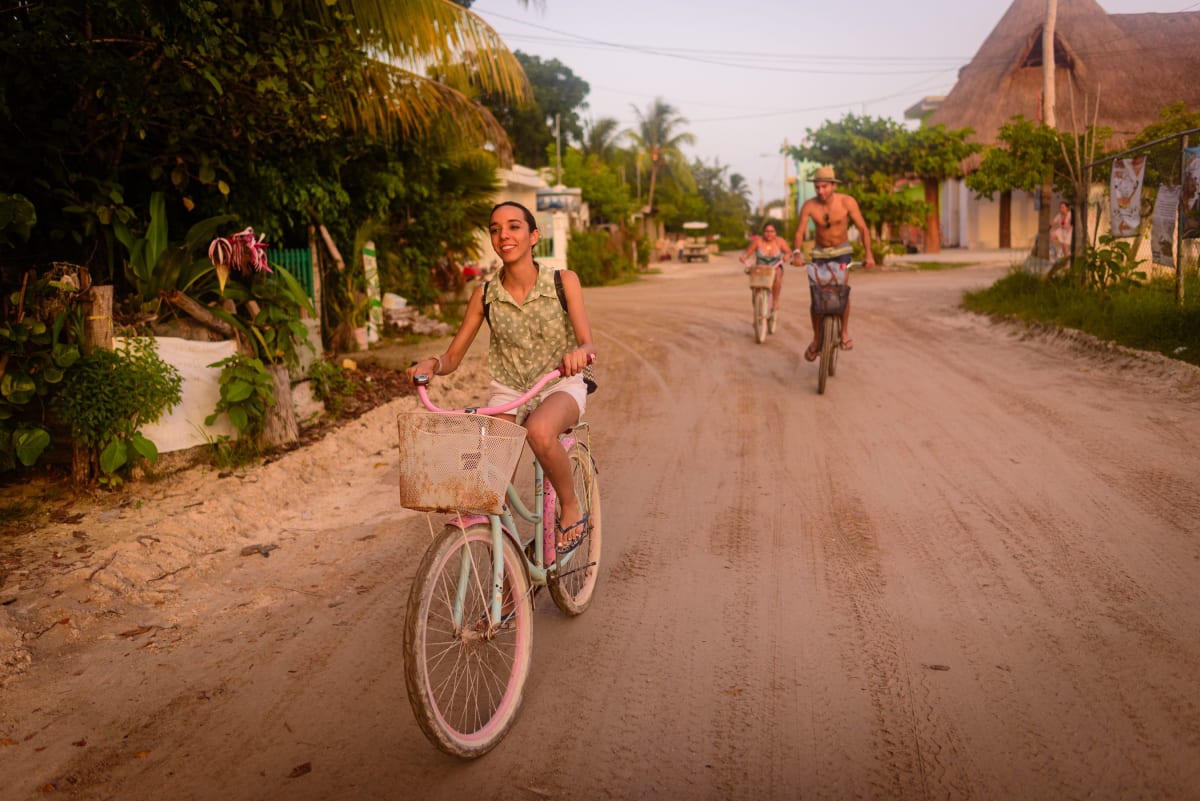
The village is a grid of sand streets around a small central square ringed by the island's busiest restaurants. The ferry from Chiquilá docks on the lagoon side, a few blocks south of the square, and the beach is a few blocks north of it. Staying here means you can do the whole island on foot: off the boat, to your room, to dinner and to the beach without ever calling a golf-cart taxi.
Who it suits
Downtown has most of the island's hostels, guesthouses and small hotels, so it is where the cheaper rooms are. It suits backpackers, anyone staying only one or two nights, and travellers who want to eat somewhere different every evening; the square is liveliest after sunset, and that is where you will find lobster pizza, ceviche and street snacks. It is also the easiest base if you are coming by ferry with luggage, since you can walk from the dock. Our guide on how to get to Holbox covers that crossing.
Noise and what to check
The trade-off is sound. Bars around the square and on the streets towards the beach play music late, especially on weekends and in high season, and golf carts run on the sand streets all day. Rooms are often simple and some face the street rather than a garden. Before you book, check whether the room is at the back of the building, whether it has air conditioning (useful from April to October) and how many blocks it is from the square: two or three streets away is usually much quieter than one.
Beachfront hotels along the north shore
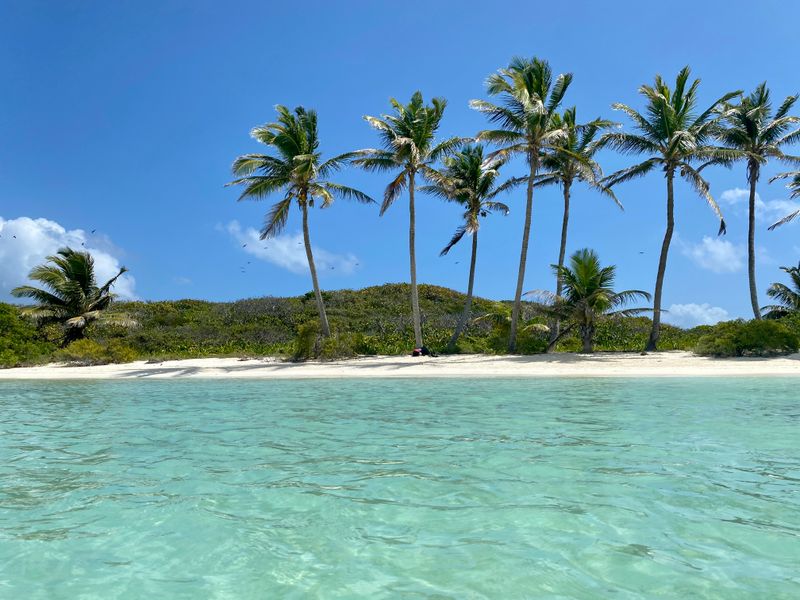
Most of the island's beach hotels sit on the north shore, facing the open sea, on both sides of the village. The water here is very shallow and calm on most days, the sand is fine and pale, and many hotels are low buildings with palapa (thatched) roofs set back behind the beach. This is where you stay if you want to step out of your room onto the sand.
Close to the village or further out
The beachfront closest to the village gives you the best of both: the sea in front of you and restaurants a short walk away. It is also the busiest stretch, with beach clubs, kite schools and boats pulled up on the sand. The further you go from the village, the fewer buildings there are and the more space you get, but every dinner, ATM run or tour pick-up becomes a bike ride or a golf-cart trip. Heading east, the hotels thin out towards the Punta Mosquito sandbar, the walk described in our list of things to do in Holbox.
What the beachfront costs you
Rooms with a sea view are the most expensive on the island, and in high season the best ones go early. Beachfront rooms also catch more wind, which is pleasant in the heat but noticeable during the winter cold fronts. If a hotel says it is beachfront, check on a map whether it is actually on the sand or across a street from it; on Holbox both are common and both are described the same way.

Punta Cocos and the quiet west end
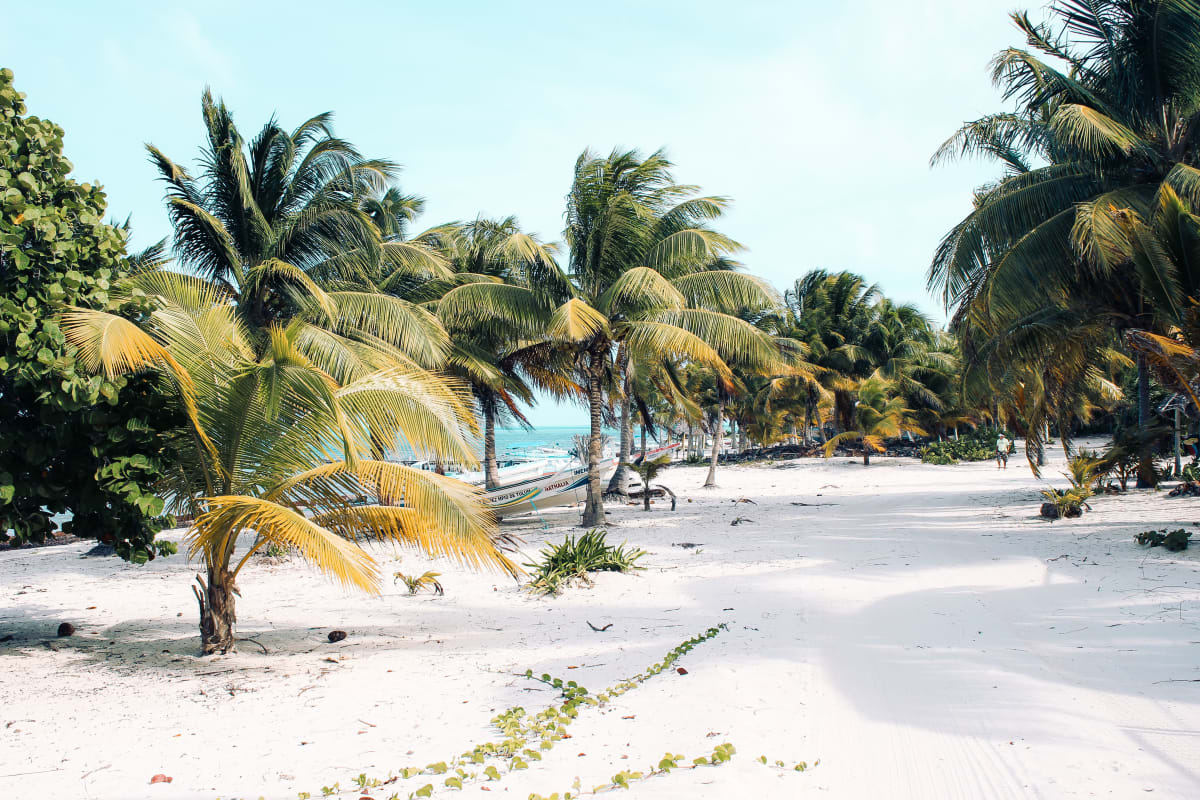
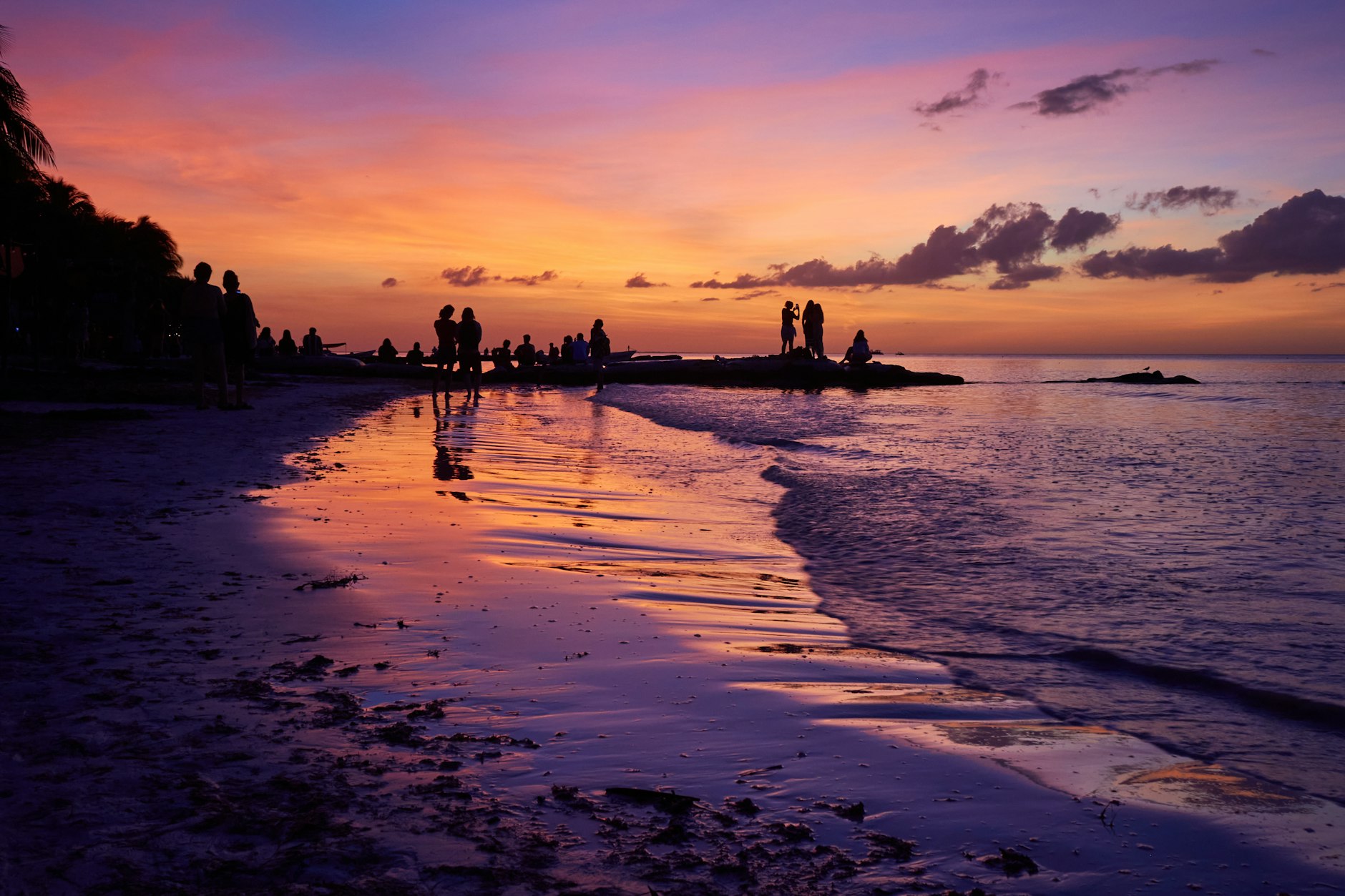
Punta Cocos is the western tip of the island beyond the village, known for its sunsets and for being one of the darkest parts of the shore at night. There are fewer places to stay out here, and they tend to be small and spread out, from simple cabins to a handful of more upmarket hideaways.
Why stay out there
Quiet and darkness. With little artificial light, Punta Cocos is the spot most often mentioned for seeing bioluminescence on moonless nights; our guide to Holbox bioluminescence explains when and how. You also have the sunset on your doorstep instead of riding out for it, and the beach is far less busy than in front of the village, even in high season.
The downsides
Everything else is further away. Expect to need a golf cart or a bicycle for restaurants, shops and tour departures, and remember that the sand road back can be dark at night. Mosquitoes are more noticeable at the edges of the island, especially near mangroves and in the rainy months, so a room with screens or a mosquito net matters. If you plan to eat in the village every night, the cost of golf-cart taxis adds up quickly, and a hotel that offers bikes or its own transport is worth a lot.
How to choose where to stay in Holbox
Holbox sits inside the Yum Balam protected area off the northern tip of Quintana Roo, and building is limited compared with the resort coast further south. Supply is small, so the right area matters less than booking early enough to get a good room in it.
By type of trip
- One or two nights: stay downtown. You will not waste time on transport, and you can walk to the ferry on the way out.
- Couples: beachfront close to the village gives sea views and an easy walk to dinner.
- Families: beachfront, where the shallow water in front of the hotel is ideal for children; check for air conditioning and whether the hotel arranges golf-cart transport.
- Long stays and remote workers: further along the beach or towards Punta Cocos, after checking the Wi-Fi and whether there is a backup for power cuts.
- Kitesurfers: the beachfront near the village, where the kite schools work in the windier months.
By season
The busiest periods are Christmas to New Year, Semana Santa (the week before Easter) and the summer whale shark season, roughly June to August, when Mexican school holidays add to the crowds. Book these dates well ahead, whatever the area. From June to November it is also the Atlantic hurricane season, so flexible bookings and travel insurance are sensible. In the rainy months, a room with screens and air conditioning is worth more than a sea view.
Practical checks before you book
- Cash. Not every hotel accepts cards for the balance, and the island has very few ATMs.
- Transport from the dock. Ask whether the hotel collects you or how far it is by golf-cart taxi.
- Power and water. Supply can be interrupted on the island; ask whether there is a generator and a water tank.
- Screens and nets. Mosquitoes are part of island life, more so near the mangroves on the lagoon side.

When you know which area suits you, compare places on our Holbox stays page.
Frequently Asked Questions
Is it better to stay in downtown Holbox or on the beach?
Downtown is cheaper, walkable and close to the ferry and restaurants, but noisier at night. The beachfront gives you sea views and quieter nights at a higher price. For a first visit of three nights or more, the beachfront close to the village is a good compromise.
Is Punta Cocos a good area to stay in Holbox?
Yes, if you want quiet, sunsets and dark skies, and you do not mind using a bike or a golf cart to reach the village. It is less convenient for short stays or for eating out every night.
Do I need a golf cart in Holbox?
Not if you stay downtown or on the beach close to it. If you stay further out, plan on golf-cart taxis, a rented cart or a bike, and choose a hotel that helps with transport.
How far in advance should I book a hotel in Holbox?
For Christmas, Easter and the summer whale shark season, book as early as you can, because the island has a limited number of rooms. Outside those periods, a few weeks ahead is usually enough.
auto_awesome Continue exploring Holbox
You Might Also Like
 article Exploring calendar_today Oct 12, 2026
 Is Holbox Worth It? Honest Pros, Cons and Who Should Skip It
Holbox is worth it if you want a slow, car-free island with whale sharks, flamingos and calm shallow water, and can give
 article Exploring calendar_today Oct 10, 2026
 Best Time to Visit Holbox: Sargassum, Whale Sharks & Rain by Month
The best time to visit Holbox is December to April for dry weather and wind, or June to August for whale sharks. Here is
 article Adventures calendar_today Oct 8, 2026
 Holbox Bioluminescence: When and Where to See It
Holbox bioluminescence shows up on dark, moonless nights, most often in the warmer months, but it is never guaranteed. H