
Best Time to Visit Holbox: Sargassum, Whale Sharks & Rain by Month
The best time to visit Holbox depends on what you come for: December to April is the dry season, with the most comfortable weather and the steadiest wind for kitesurfing, while June to August is hot, humid and stormy but is the heart of whale shark season. Sargassum seaweed can arrive in any warm month and varies a lot from year to year.
| Month | Weather | On the water | Sargassum | Crowds |
|---|---|---|---|---|
| January | Dry, warm days, cooler nights; some windy nortes | Kitesurf season | Usually low | Medium |
| February | Dry and warm | Kitesurf season | Usually low | Medium to high |
| March | Dry, warming up | Kitesurf; calmer days for the sandbars | Low to rising | High at Easter |
| April | Dry and hot | Last of the windy season | Can start to arrive | High at Easter, then medium |
| May | Hot; humidity building | Whale shark season may open late in the month | Possible | Low |
| June | Hot, rainy season starts | Whale sharks; bioluminescence on dark nights | Often the highest risk period | Medium |
| July | Hot, humid, afternoon storms | Whale sharks; bioluminescence | Often high risk | High (Mexican school holidays) |
| August | Hot, humid, storms | Whale sharks; warmest sea | Often high risk | High |
| September | Wettest stretch, hurricane peak | Whale shark season closes | Variable | Lowest |
| October | Rain easing, still humid | Quiet; boats depend on weather | Usually falling | Low |
| November | Drier, first nortes | Wind picks up for kitesurf | Usually low | Low to medium |
| December | Dry, pleasant, some windy days | Kitesurf season | Usually low | Very high at Christmas–New Year |
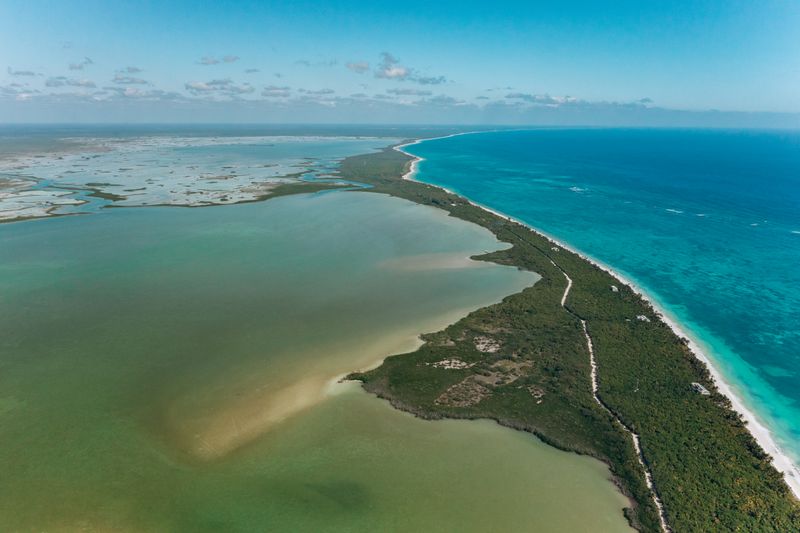
Holbox is a flat sand island off the northern tip of Quintana Roo, inside the Yum Balam protected area, where the Caribbean meets the Gulf of Mexico. It has no hills, no high-rise hotels and a village of sand streets, so weather shapes a visit more than on the mainland: a windy day closes the lagoon tours, a calm night brings out the glow in the shallows and a storm can stop the ferry. The table above is a guide; below is what each season really means.
December to April: the dry season and the best time to visit Holbox
For most travellers this is the best time to visit Holbox. Rain is rare, the air is less humid, the evenings are pleasant for walking the sand streets and mosquitoes are far less of a problem than in summer. Days are warm rather than hot, and the sea is still warm enough to swim.
Nortes: the windy days
From November to February, cold fronts from the north, called nortes, reach the island a few times a month. They bring a day or two of strong wind, cloud and cooler air, and they stir up the shallow sea, so the water near the beach turns milky and the boat tours to the lagoon may not run. Pack a light jacket for the evenings and leave a spare day in your plans.
Kitesurf season
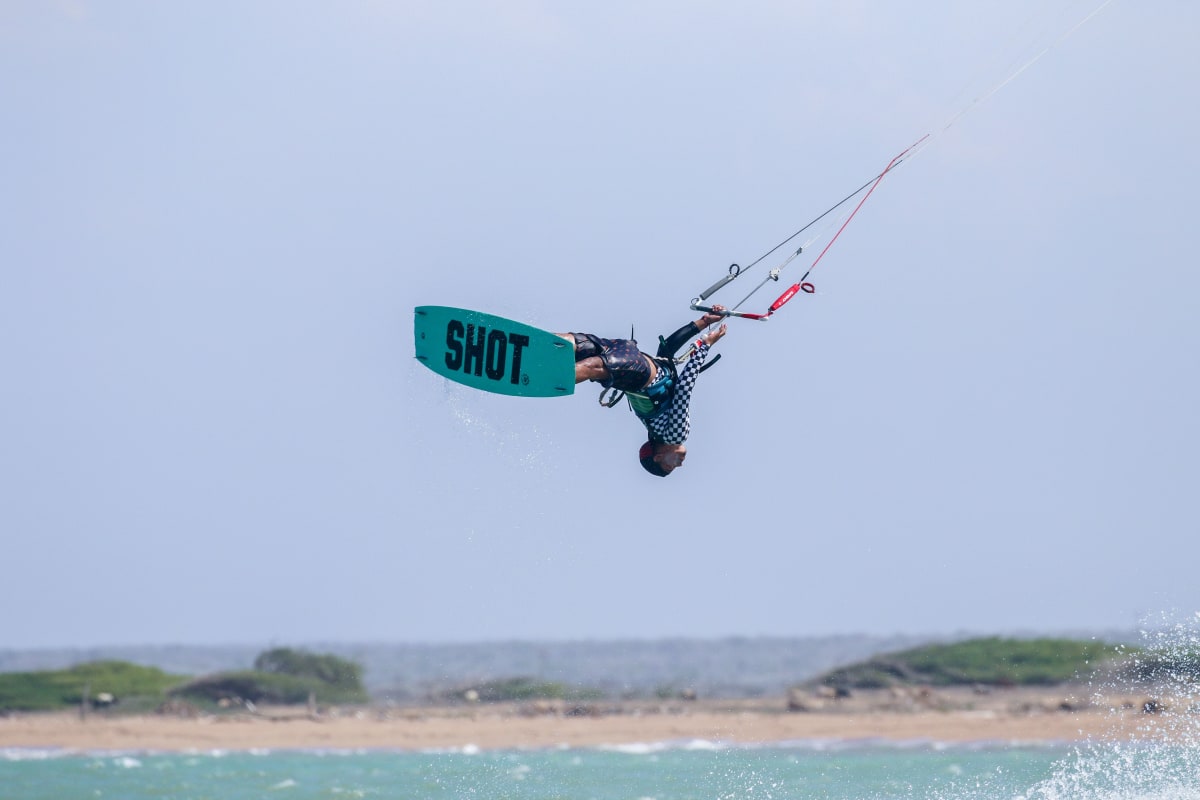
The wind that spoils a boat trip is exactly what kitesurfers want. The windiest months are mainly in winter and spring, and the wide, shallow water off the beach makes Holbox a good place to learn: you can stand up in much of it. Kite schools on the island run lessons and courses through these months. Easter week and the Christmas–New Year fortnight are the busiest times of the year, so book your room early if your dates fall there.
June to September: whale sharks, heat and storms
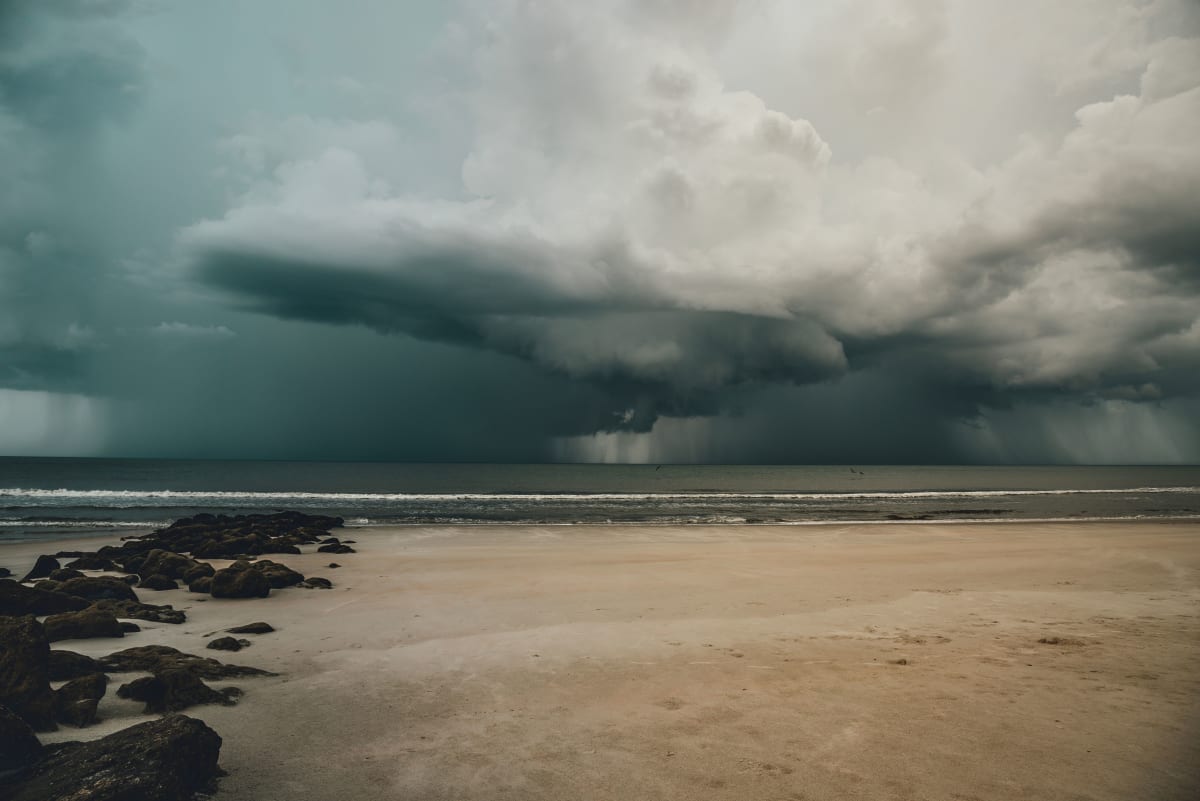
Summer is the opposite trade-off. It is hot, humid and wet, with highs often in the low to mid 30s °C, and the rainy season brings heavy afternoon or evening storms. It is also when Holbox has its two great natural spectacles, and the reason many visitors come precisely in these months.
Whale shark season
Whale sharks gather in the plankton-rich water off the north of the peninsula every summer. The Mexican authorities set the official season each year; it has usually opened between mid-May and June and closed in September, with the most reliable sightings from June to August. Our guide to the Holbox whale shark tour explains the rules in the water and what to check before you book.
Bioluminescence
The glowing plankton in the shallows is reported most often in the warmer months, on dark nights around the new moon. If you come for whale sharks, check the moon calendar too: a few nights either side of the new moon give you the best chance of both. The Holbox bioluminescence guide covers where to look and how to see it well.
Rain, mosquitoes and Mexican holidays
Storms rarely last all day, but the sand streets flood after heavy rain and mosquitoes are at their worst, especially near the mangroves and at Punta Mosquito. Bring a strong repellent for land (never in the water) and long sleeves for the evenings. July and August are also Mexican school holidays, so the island is busy despite the weather.

Sargassum in Holbox
Sargassum is a floating brown seaweed that drifts across the Atlantic and, since the early 2010s, has reached the Mexican Caribbean in large quantities in many years. It is not dangerous to touch at sea, but when it piles up on the shore and rots it smells, stains the water brown and makes swimming unpleasant.
When and how much
No month is guaranteed free of it and no month is guaranteed to be bad. In general, more arrives in the warmer months, roughly spring to late summer, and the amount changes a great deal from one year to the next. Holbox’s beaches face north, away from the main Caribbean coast, and in many years they receive less than the Riviera Maya around Tulum and Playa del Carmen. That is a tendency, not a rule: in some years Holbox has had heavy arrivals too, and wind can push it onto one stretch of beach and leave another clean.
How to check before you go
Quintana Roo publishes a sargassum traffic-light map (semáforo de sargazo) through its state monitoring network, and the Mexican Navy (SEMAR) also issues sargassum reports. Search for the current edition in the days before you travel and check whether it covers Holbox, since coverage of the north coast is not always as detailed as for Cancún and the Riviera Maya. Recent photos from your hotel or from local social media are often the quickest way to see the beach as it is now.

Hurricane season and the shoulder months
Hurricane season
The Atlantic hurricane season runs from 1 June to 30 November, with the highest risk from August to October. Most weeks pass without a storm, but when one approaches, the port authority closes the sea to small boats: the Chiquilá ferry stops and whale shark and lagoon tours are cancelled. If you travel in these months, keep bookings flexible, buy insurance that covers weather and follow official forecasts. Our guide on how to get to Holbox explains the ferry crossing.
May, October and November
These are the quiet months. May is hot and dry before the rains, with fewer visitors and, in some years, the first days of whale shark season. October and November bring lower prices and empty beaches, but also the end of the rains and the first nortes, so the weather is less predictable. They suit flexible travellers who mainly want calm, cheaper days.
The best time to visit Holbox for your kind of trip
- Comfortable weather, first visit: December to April, avoiding Easter week if you want it quiet.
- Whale sharks: June to August, inside the season set each year.
- Bioluminescence: the warmer months, on nights around the new moon.
- Kitesurfing: winter and spring.
- Lowest sargassum risk: usually late autumn and winter, though no month is guaranteed.
- Lowest prices: May, September and October, if you accept heat, rain and storm risk.
Whatever month you choose, plan at least three nights so one windy or stormy day does not cost you the trip. Our list of things to do in Holbox gives the season for each activity, and licensed whale shark trips and lagoon tours are on the Holbox tours page.
Frequently Asked Questions
What is the best month to visit Holbox?
For weather, February to April: dry, warm and with steady wind. For whale sharks, July is often a good bet, in the middle of the season. Avoid the Christmas–New Year and Easter weeks if you want a quiet island.
When is sargassum season in Holbox?
There is no fixed season. More tends to arrive in the warmer months, roughly spring to late summer, and the amount varies from year to year. Check the Quintana Roo sargassum traffic-light map and recent local photos before you travel.
Is it worth visiting Holbox in the rainy season?
Yes, if you come for whale sharks or bioluminescence and accept heat, storms and mosquitoes. Leave spare days, because boats do not go out when the port is closed.
When is the windiest time in Holbox?
Mainly winter and spring, which is kitesurf season. Northern cold fronts from November to February also bring a few days of strong wind each month.
auto_awesome Continue exploring Holbox
You Might Also Like
 article Exploring calendar_today Oct 12, 2026
 Is Holbox Worth It? Honest Pros, Cons and Who Should Skip It
Holbox is worth it if you want a slow, car-free island with whale sharks, flamingos and calm shallow water, and can give
 article Travel Tips calendar_today Oct 9, 2026
 Where to Stay in Holbox: Downtown, Beachfront or Punta Cocos
Where to stay in Holbox depends on what you want from the island: the village for restaurants and the ferry, the beachfr
 article Adventures calendar_today Oct 8, 2026
 Holbox Bioluminescence: When and Where to See It
Holbox bioluminescence shows up on dark, moonless nights, most often in the warmer months, but it is never guaranteed. H