
Holbox Bioluminescence: When and Where to See It
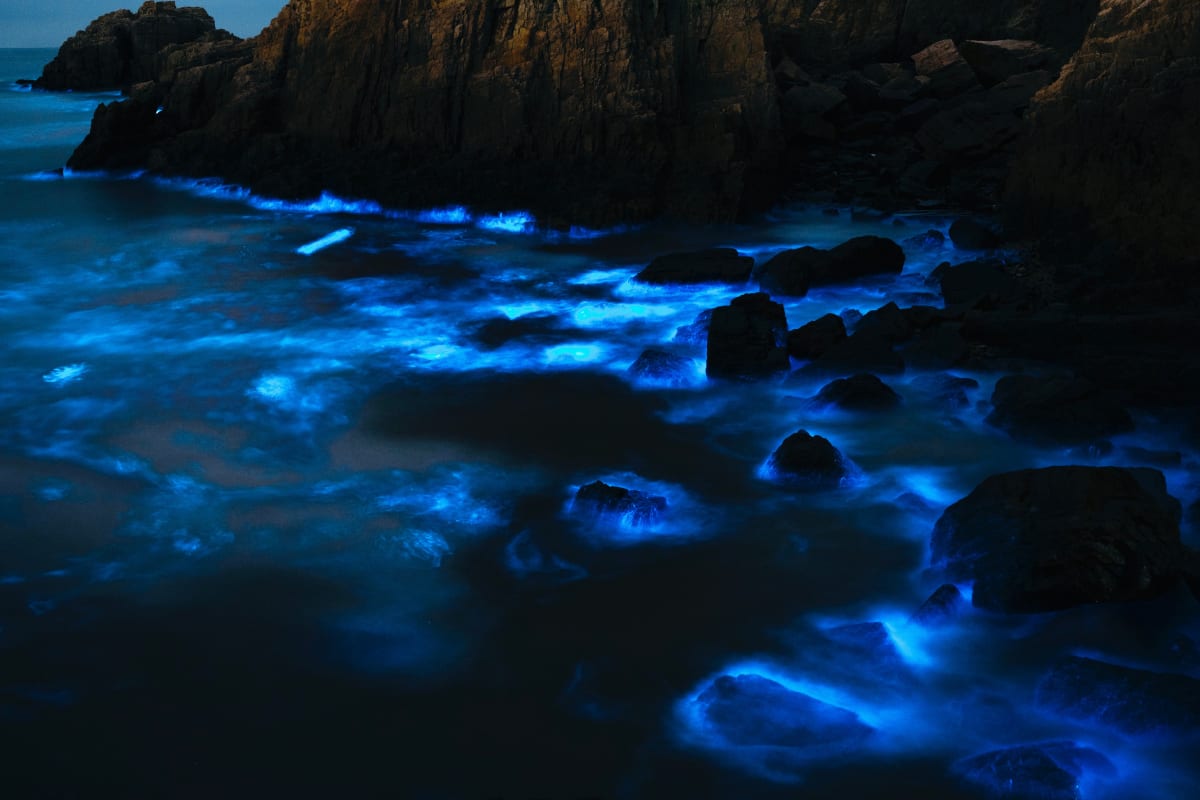
You can see Holbox bioluminescence on dark, moonless nights, most often in the warmer months, when tiny plankton in the shallows give off a blue glow every time the water is moved. It is a natural event, not a show: some nights it is bright, some nights faint and some nights absent, so plan for the best odds rather than a sure thing.
| Factor | Better odds | Worse odds |
|---|---|---|
| Moon | New moon and the nights either side; the hours before moonrise | Full moon and the nights around it |
| Season | Warmer months, roughly late spring to early autumn | Cooler months, when it is reported less often |
| Weather | Calm, warm nights after a run of settled days | Strong wind, choppy water, heavy rain |
| Light | Beaches and water away from the village | Near piers, bars and hotel lights |
| Time | At least an hour after sunset, once the sky is fully dark | Dusk, while the sky still glows |
The light comes from dinoflagellates, single-celled plankton that flash when the water around them is disturbed, by a hand, a paddle, a fish or a breaking ripple. Holbox has the conditions they like: warm, shallow, sheltered water on the edge of the Yum Balam protected area, where the Caribbean meets the Gulf of Mexico. What changes from night to night is how many of them there are and how dark it is around you.
When to see bioluminescence in Holbox
Three things decide whether you will see it: the moon, the season and the weather. You can plan the first exactly, the second roughly and the third only a day or two ahead.
Moon phase: the factor you can plan
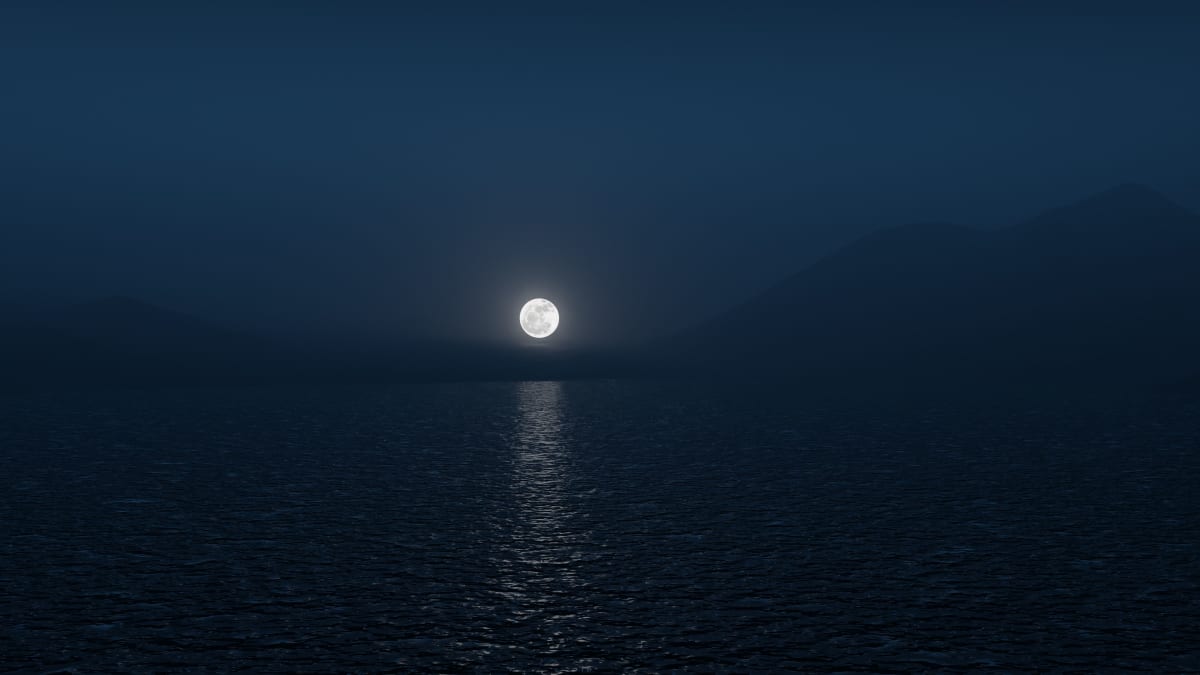
The glow is faint, and moonlight drowns it. The best nights are the few around the new moon. Timing within the night also matters: after the full moon, the moon rises later every night, so in the week of the waning moon the evening hours stay dark until it comes up. Before the new moon, a thin crescent sets soon after the sun, which leaves the rest of the night dark. Check a moon calendar for moonrise and moonset times before you book your nights on the island, and avoid the four or five nights around the full moon.
Season: the warmer months
Most sightings are reported in the warmer part of the year, roughly from late spring to early autumn, when the water is at its warmest. That overlaps with the summer whale shark season, so a single trip can combine both. It is not a fixed calendar, though: plankton blooms come and go with water temperature, nutrients and currents, and a bright week in one year does not mean the same week will be bright the next. Outside those months it can still appear, just less reliably.
Weather and water
Calm water is easier to read: the glow shows up as sparks around your legs or hands instead of being lost in chop. Strong wind and heavy rain tend to stir up and scatter the plankton, and cloud cover can help by blocking moonlight but also blocks the starlight that lets you see where you are walking. If the first night is disappointing, try again the next: conditions change quickly.
Where to look on the island
There is no single bioluminescence beach. The glow can appear anywhere the water is shallow and calm; what makes a spot good is darkness. The village of Holbox is small, but its piers, beach bars and hotels throw a lot of light onto the water in front of them.
Punta Cocos and the darker beaches
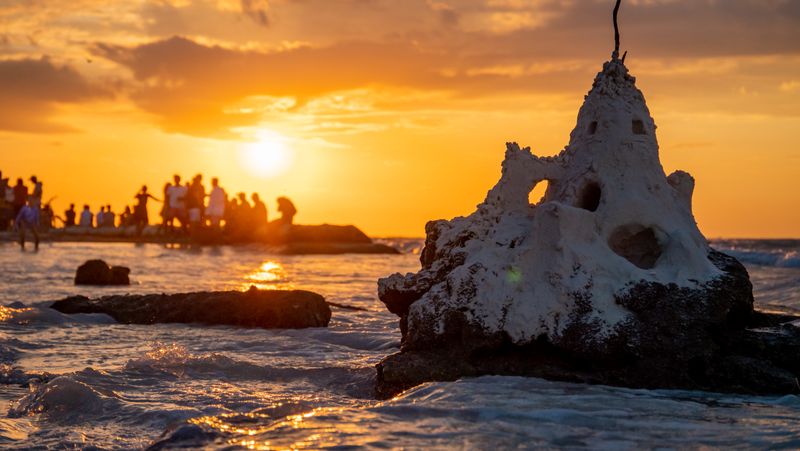
Punta Cocos, at the western end of the island, is the place most often mentioned. It is already the island's sunset spot, it is far enough from the centre of the village to be properly dark and the water there is shallow. In general, the further you walk or ride from the main strip of hotels, the better your chances. The things to do in Holbox guide shows how Punta Cocos fits into a day on the island.
Boat and kayak trips to darker water
Guided night trips usually head away from the village by boat or kayak, to sheltered water or the mangrove edges where there is almost no artificial light. Guides follow where the glow has been showing in recent nights, which is the main advantage over going alone. Routes change with conditions, so do not hold an operator to a particular spot.
Going with a guide or on your own
Both are possible. Which one makes sense depends on how much the sighting matters to you and how comfortable you are in the dark on an unfamiliar shore.
What a guided night trip usually involves
Trips leave after dark and last around one to two hours. They are usually small groups, and you may wade, swim or simply trail your hand over the side of a kayak or boat. Ask before booking what happens if there is little or no glow that night, whether the trip runs close to the full moon and what you need to bring. A responsible guide will tell you honestly that the glow cannot be guaranteed. You can compare the night and nature trips listed on our Holbox tours page.
Going on your own
Walking to a dark beach on a moonless night is free and often works. Go with someone, take a small torch for the walk (switched off once you arrive), tell your hotel where you are going and stay in shallow water you can see the bottom of in daylight. Do not wade into the mangroves or the channels alone at night: they are part of a protected area, the bottom is soft and you cannot see what is in the water.

How to see it well, and protect it
Let your eyes adjust
Your eyes need around 20 to 30 minutes in real darkness to adapt fully, and one look at a phone screen resets much of that. Turn screens down or off, use a red light if you need one, and then move the water slowly with your hands or feet. The sparks are often more visible when you look slightly to the side of them rather than straight at them.
Photographing it
Most phones record black water. To capture the glow you need a camera or phone with a long-exposure night mode on a steady surface or tripod, and even then the result usually looks different from what you saw. Many people find it is better simply to watch. Flash and torches ruin both the photo and other people’s night.
Leave no trace
Do not get into the water wearing sunscreen or insect repellent: the chemicals wash off into a shallow, protected ecosystem. Do not scoop water into bottles or take it away, and do not throw anything into the water to make it light up. Holbox is inside the Yum Balam protected area, and the rules there apply at night too.

To plan the rest of the trip, read how to get to Holbox by ferry from Chiquilá, and if you come in summer, our guide to the Holbox whale shark tour. More background on how marine light works is on the bioluminescence page of Wikipedia.
Frequently Asked Questions
Is bioluminescence in Holbox guaranteed?
No. It depends on how much plankton is in the water, the moon and the weather. Dark, calm nights in the warmer months give the best odds, but even then some nights are faint.
What is the best time of month to see it?
The nights around the new moon. In the days after a full moon, the early evening stays dark until the moon rises, which can also work. Avoid the nights around the full moon.
Can you swim in the bioluminescence?
Yes, in shallow, calm water, and moving through it is what makes it glow. Do it with someone else, without sunscreen or repellent, and stay out of the mangroves and channels at night.
Do I need a tour to see it?
No, but a local guide knows where it has been showing and takes you to darker water. On your own, a dark beach away from the village on a moonless night is your best chance.
auto_awesome Continue exploring Holbox
You Might Also Like
 article Exploring calendar_today Oct 12, 2026
 Is Holbox Worth It? Honest Pros, Cons and Who Should Skip It
Holbox is worth it if you want a slow, car-free island with whale sharks, flamingos and calm shallow water, and can give
 article Exploring calendar_today Oct 10, 2026
 Best Time to Visit Holbox: Sargassum, Whale Sharks & Rain by Month
The best time to visit Holbox is December to April for dry weather and wind, or June to August for whale sharks. Here is
 article Travel Tips calendar_today Oct 9, 2026
 Where to Stay in Holbox: Downtown, Beachfront or Punta Cocos
Where to stay in Holbox depends on what you want from the island: the village for restaurants and the ferry, the beachfr