Is Holbox Worth It? Honest Pros, Cons and Who Should Skip It
Is Holbox worth it? Yes, if you want a slow, car-free island with calm shallow water, whale sharks in summer and flamingos in the lagoon, and you can stay at least three nights; no, if you want nightlife, resort comforts or a quick day trip from Cancún. The trip is long, cash still matters and the weather decides a lot.
| Factor | Why it is worth it | The honest downside |
|---|---|---|
| Getting there | The ferry ride sets the pace: no cars, no highway noise | About 3–4 hours door to door from Cancún, 4–5 from Tulum |
| Beaches | Shallow, usually calm water and long sunsets | No reef off the beach; water turns milky on windy days |
| Wildlife | Whale sharks (roughly June–August), flamingos, pelicans, herons | Tours depend on the season and the weather |
| Getting around | You can walk or cycle the whole village | Sand streets that flood after heavy rain; golf-cart taxis add up |
| Money | Small, independent places to eat and sleep | Very few ATMs; not everyone takes cards; prices above the mainland |
| Weather | Dry, pleasant winters and spring | Mosquitoes, storms and hurricane risk in summer and autumn; sargassum some years |
Holbox is a long, narrow sand island off the northern tip of Quintana Roo, inside the Yum Balam protected area, where the Caribbean meets the Gulf of Mexico. It gets compared with Tulum and Isla Mujeres, but it is a different kind of trip: smaller, quieter, more rustic and more dependent on wind and season. Here is what makes it worth the effort, what wears people down, and how to tell which group you are in.
What makes Holbox worth it
People who love Holbox tend to describe the same three things, and none of them is luxury.
A car-free island with a slow pace
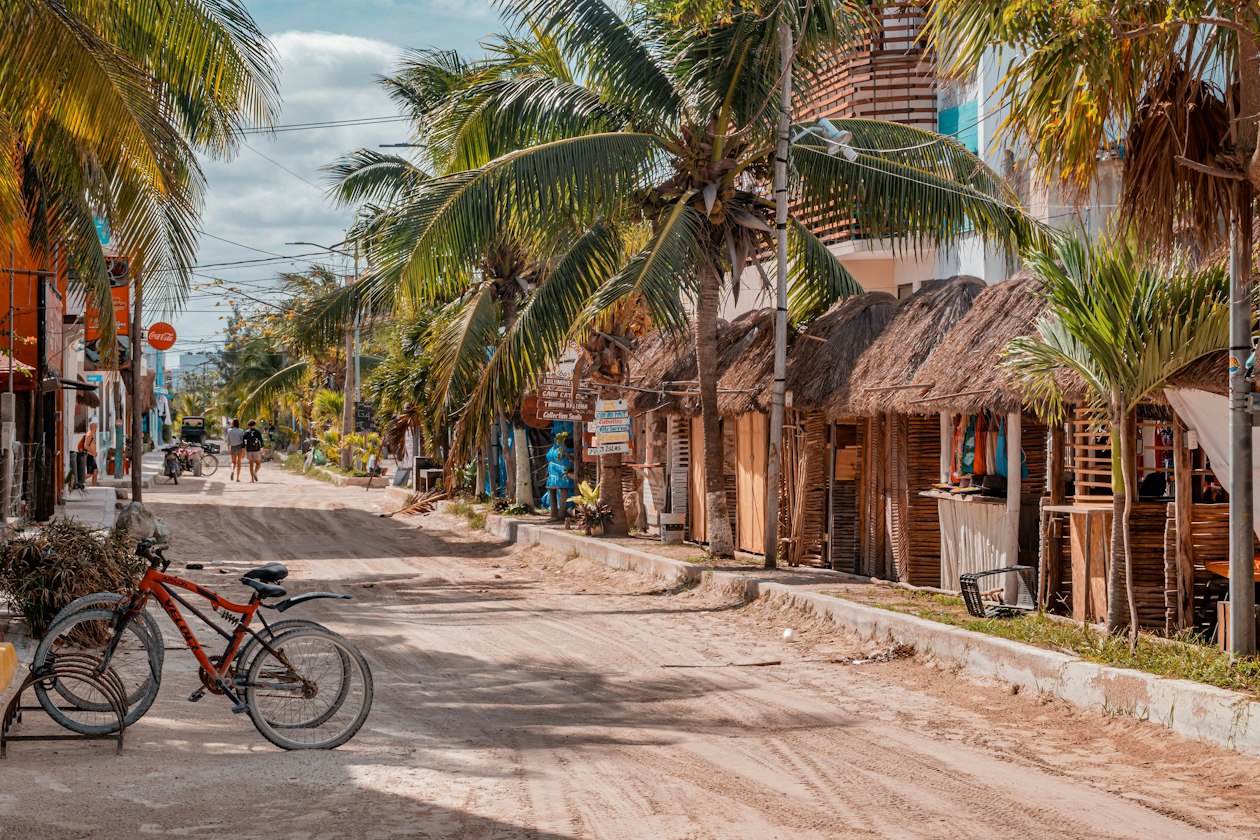
Visitors cannot bring cars, so the village is a grid of sand streets used by bicycles, pedestrians and golf carts. There are no high-rise hotels and no big resort chains. You walk barefoot to dinner, the main square is the busiest place on the island, and by mid-evening the beach is mostly dark. If what tires you about the Riviera Maya is traffic, construction and crowds, this is the strongest argument for going.
Wildlife you do not see from a resort strip
Summer brings whale sharks to the plankton-rich water north of the island, inside a season the Mexican authorities set each year; our guide to the Holbox whale shark tour covers the rules. The lagoon behind the island has flamingos, pelicans, herons and frigatebirds for most of the year, and the classic three-island boat trip stops at Isla Pájaros, the Ojo de Agua spring and the Isla Pasión sandbar. On dark nights in the warmer months the shallows can glow with bioluminescent plankton.
Shallow water and long sunsets
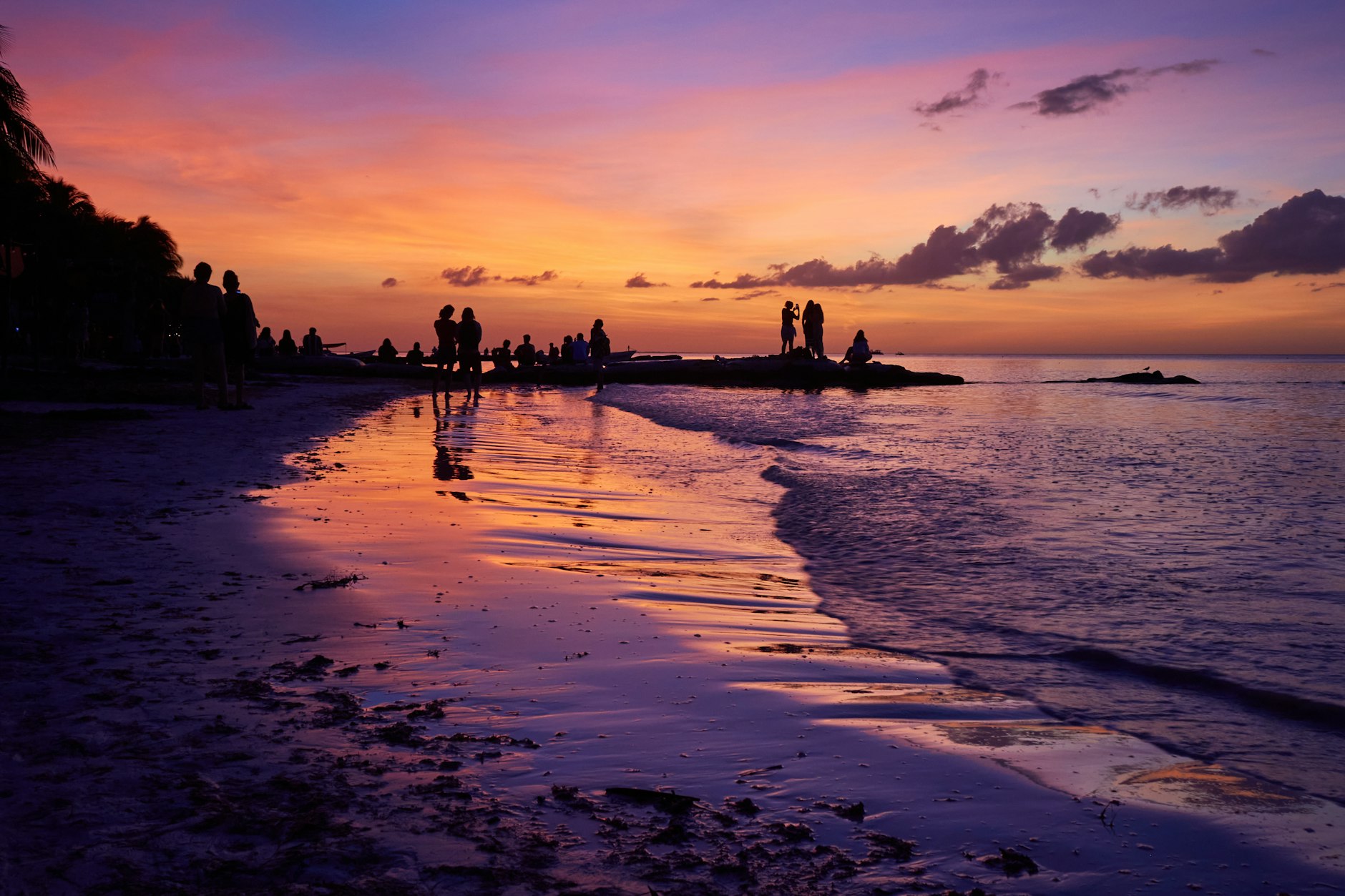
The north shore is pale sand and very shallow water, often calm enough for small children to wade far out. You can walk at low tide towards the Punta Mosquito sandbar in the east, and the western end at Punta Cocos is where people gather for sunset. It is a beach for floating and walking rather than surfing or snorkelling.
The honest downsides of Holbox
Most disappointed visitors did not dislike the island; they arrived expecting something it is not, or in conditions they had not checked.
Getting there takes most of a day
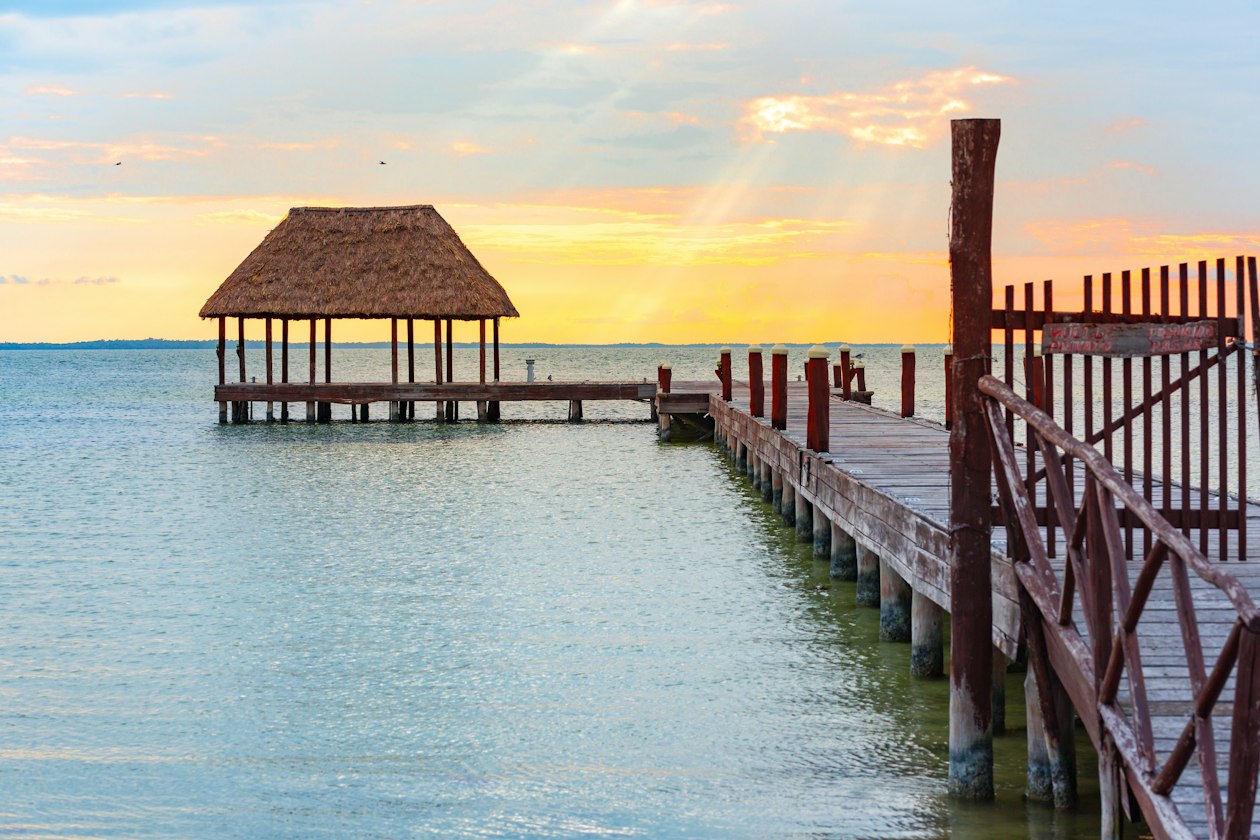
There is no bridge. You travel by road to the port of Chiquilá, around two and a half to three hours from Cancún airport and three and a half to four from Tulum, then take a passenger ferry of about 20–30 minutes. Add waiting time and the trip easily fills half a day each way, and a strong wind can suspend crossings. Our guide on how to get to Holbox explains every option, from the ADO bus to a private transfer. This is why a day trip from Cancún is rarely worth it: you spend more time on the road than on the island.
Cash, ATMs and prices
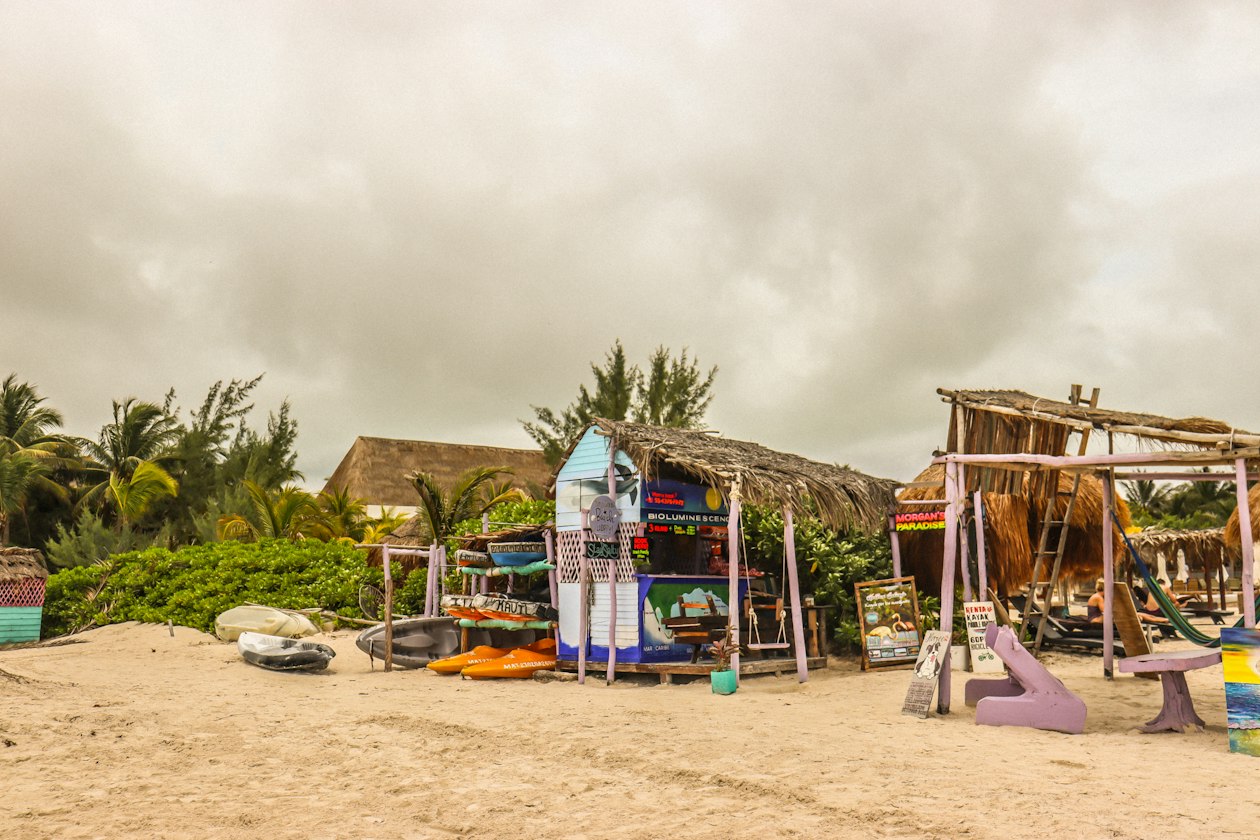
The island has very few ATMs, and they can run out or stop working at busy times. Many restaurants, golf-cart taxis and small shops prefer cash, and not every hotel accepts cards for the balance. Bring enough pesos from the mainland. Expect to pay more than in a comparable mainland town: room supply is limited, building is restricted inside the protected area and most supplies arrive by boat. Holbox is not a budget-backpacker bargain, even if its hostels are cheaper than its beach hotels.
Mosquitoes, rain and sand streets
Mosquitoes and tiny biting sandflies are part of island life, worst in the rainy months and near the mangroves on the lagoon side; Punta Mosquito did not get its name by accident. Pack a strong repellent for land and long sleeves for the evenings. From June to October heavy storms turn the unpaved streets into wide puddles, and power and water cuts can happen. The Atlantic hurricane season runs from June to November, when the port can close to small boats.

Sargassum in some years
Floating sargassum seaweed has reached the Mexican Caribbean in large amounts in many years since the early 2010s. Holbox faces north and in many years gets less of it than the Riviera Maya, but not always, and wind can pile it on one stretch of beach and leave another clean. There is no fixed sargassum month; our best time to visit Holbox guide explains how to check the state monitoring map before you travel.
Who should skip Holbox
Holbox is a poor fit, or at least a poor fit for this trip, if any of these describes you:
- You only have one day. The round trip by road and ferry eats most of it.
- You want nightlife. There are bars around the square and the odd beach party, but nothing like Playa del Carmen or Cancún.
- You want an all-inclusive resort with big pools, spas and room service at every hour.
- You want reef snorkelling or diving from the beach. The sea here is shallow sand; head to Cozumel or the Riviera Maya instead.
- You have limited mobility. Deep sand streets are hard work for wheelchairs, strollers and heavy suitcases.
- You need medical care close by. Anything serious means getting back to the mainland.
Who will love Holbox
- Couples and slow travellers who want to read, swim and watch the sunset without a schedule.
- Families with young children, thanks to the calm, shallow water in front of the beach hotels.
- Wildlife fans, especially in whale shark season or for birdwatching in the lagoon.
- Kitesurfers, in the windier winter and spring months, when the shallow water is a good place to learn.
- Travellers who already know Tulum and want a quieter, simpler side of Quintana Roo.
How to make Holbox worth it
Most of the downsides can be managed with a little planning:
- Stay three nights or more. One windy or stormy day will not cost you the whale sharks or the lagoon tour.
- Pick your season on purpose. December to April for dry weather and wind; June to August for whale sharks, accepting heat, storms and mosquitoes. Avoid Christmas and Easter week if you want quiet.
- Arrive with cash and reach Chiquilá in daylight, well before the last ferry.
- Choose your area carefully. The village is walkable but louder; the beachfront is quieter and costs more. Our guide on where to stay in Holbox compares them.
- Book wildlife trips with licensed operators; you can compare whale shark and lagoon trips on our Holbox tours page.
For background on the island and the protected area around it, see the Holbox entry on Wikipedia.
Frequently Asked Questions
Is Holbox worth it for a day trip from Cancún?
Rarely. With about three hours each way by road plus the ferry, you get only a few hours on the island. Spend at least one night, and ideally three.
Is Holbox better than Tulum?
They are different trips. Tulum has Mayan ruins, cenotes, more restaurants and nightlife; Holbox is smaller, car-free and quieter, with whale sharks in summer and calmer, shallower water. Many travellers combine both.
Is Holbox expensive?
It costs more than most mainland towns of its size, because rooms are limited and supplies come by boat. Hostels and simple guesthouses in the village are the cheapest options; beachfront hotels are the most expensive.
What is the worst time to visit Holbox?
September and October bring the most rain and the highest hurricane risk, and the whale shark season closes in September. They are also the cheapest, quietest months, so they suit flexible travellers.
auto_awesome Continue exploring Holbox
You Might Also Like
 article Exploring calendar_today Oct 10, 2026
 Best Time to Visit Holbox: Sargassum, Whale Sharks & Rain by Month
The best time to visit Holbox is December to April for dry weather and wind, or June to August for whale sharks. Here is
 article Travel Tips calendar_today Oct 9, 2026
 Where to Stay in Holbox: Downtown, Beachfront or Punta Cocos
Where to stay in Holbox depends on what you want from the island: the village for restaurants and the ferry, the beachfr
 article Adventures calendar_today Oct 8, 2026
 Holbox Bioluminescence: When and Where to See It
Holbox bioluminescence shows up on dark, moonless nights, most often in the warmer months, but it is never guaranteed. H