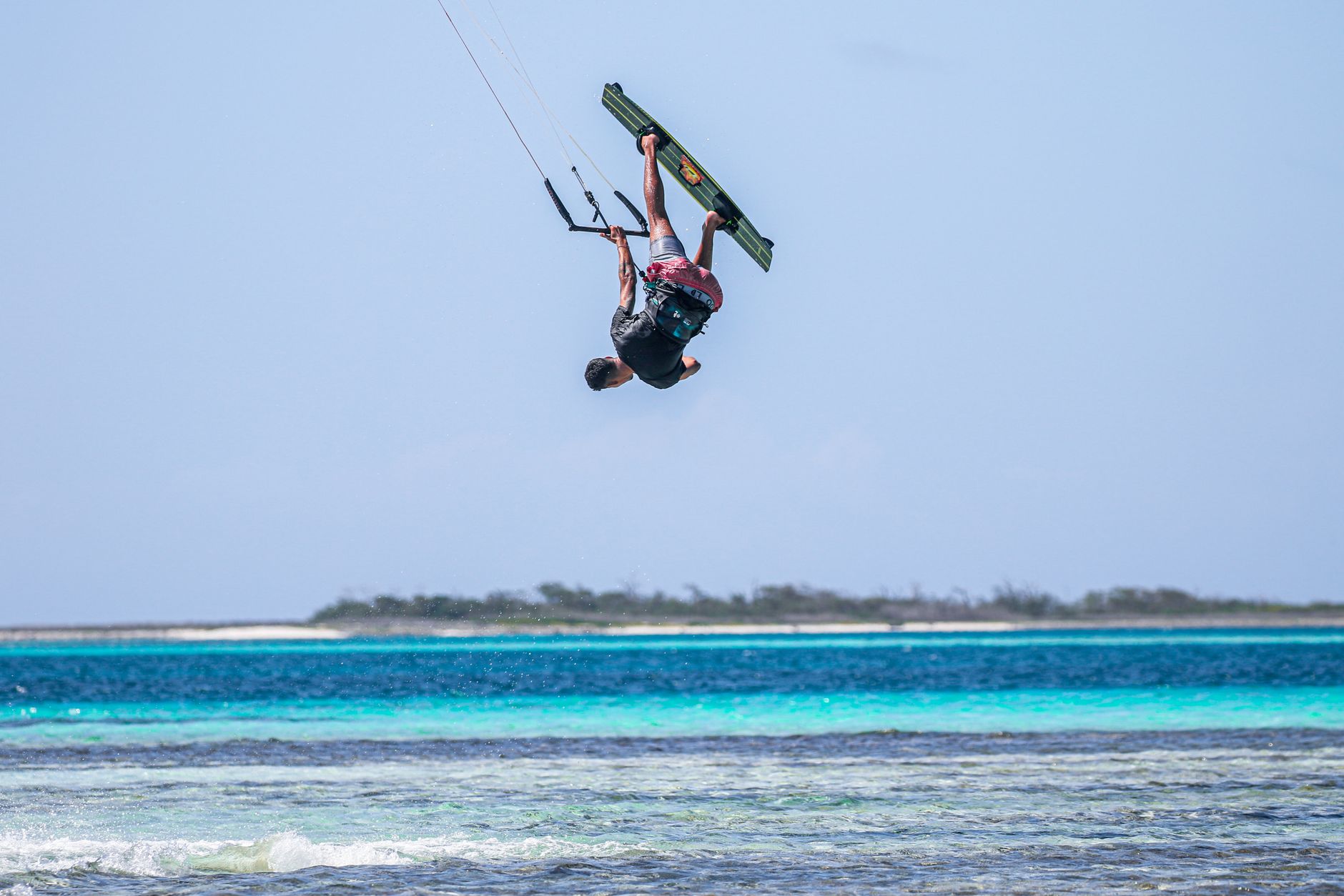
Kitesurfing in Holbox: Wind Season, Spots & Lessons

Holbox kitesurfing is a winter and spring activity: the wind season runs roughly from November or December to April, when cold fronts and steady easterly breezes blow across the island. What makes Holbox special is the water rather than the wind. The sea off the north shore is wide, shallow and mostly flat, so in much of it you can stand, which is exactly what a beginner needs and what freestyle riders enjoy.
The island is a strip of sand off the northern tip of Quintana Roo, inside the Yum Balam protected area, with the Gulf of Mexico on one side and the Yalahau lagoon on the other. There are no cars in the village, no reef to crash into and no big surf. Below: when the wind blows, where people ride, how lessons work and the rules that come with kiting in a nature reserve.
When is the kitesurf season in Holbox?
The windiest months are mainly in winter and spring. Our guide to the best time to visit Holbox covers the rest of the year month by month; for kiting, the season breaks down into two quite different kinds of wind.
November to February: the nortes
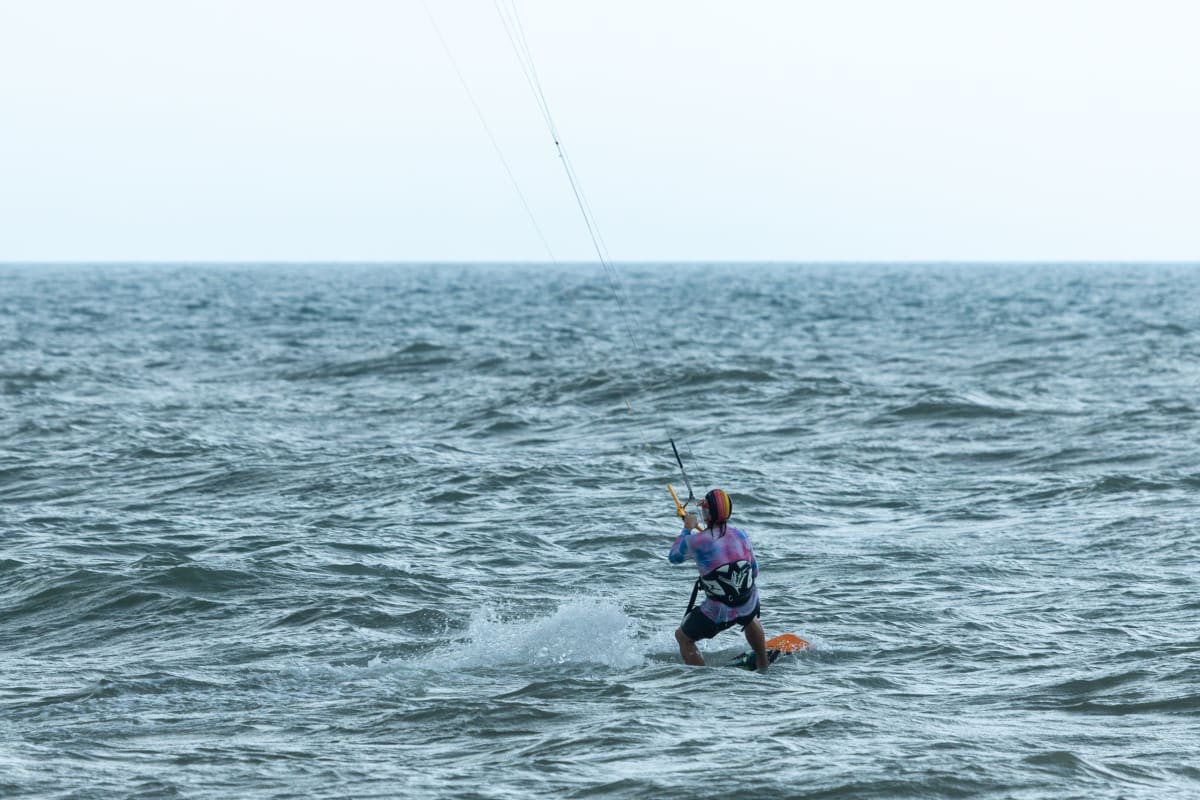
Cold fronts from the north, which locals call nortes, reach the island a few times a month in these months. They bring one to three days of strong, gusty wind, cloud and cooler air. These are exciting days for experienced riders, but the wind comes from the north and blows onto the north-facing beach, the water turns choppy and milky, and the strongest fronts are no day for a first lesson. Between fronts there can be several calm days in a row.
March and April: steadier breezes
As the fronts fade, the wind becomes more regular and blows more from the east, along the beach rather than straight onto it. Many riders consider this the most reliable stretch for lessons and long sessions, and the weather is dry and warm. Easter week is one of the busiest times of the year on the island, so book rooms early if your dates fall then.
May to October: mostly too light
Summer and early autumn bring hot, humid days, afternoon storms and generally lighter wind. There are occasional kiteable days, but this is whale shark and hurricane season, not kite season, and schools often run a reduced schedule or close. If you only have summer dates, plan to paddle or snorkel instead and treat any wind as a bonus.
Holbox kitesurfing spots
Holbox has no single famous kite beach. People ride from several stretches of the shore depending on the wind direction and the tide, and a school will choose the spot of the day for you.
| Area | Water | Best for | Keep in mind |
|---|---|---|---|
| Beach in front of the village | Shallow, flat to light chop | Easy access from hotels | Swimmers, boats and moored launches |
| Toward Punta Mosquito (east) | Very shallow, flat behind sandbars | Beginners and freestyle | Bird areas, low-tide sandbars, long walk |
| Lagoon side (south) | Flat, shallow | Flat-water practice on the right wind | Mangroves, ferry and boat traffic |
| Toward Punta Cocos (west) | Shallow, more open | Riders who want space | Fewer people around if you need help |
The beach in front of the village
The north shore in front of the village is the most convenient place to launch, and on an easterly breeze the wind runs along it. It is also where people swim and where tour boats come and go, so the busy central stretch is not the place for a beginner. Most riders walk or ride a cart a little east or west of the centre to find more room.
Punta Mosquito and the sandbars
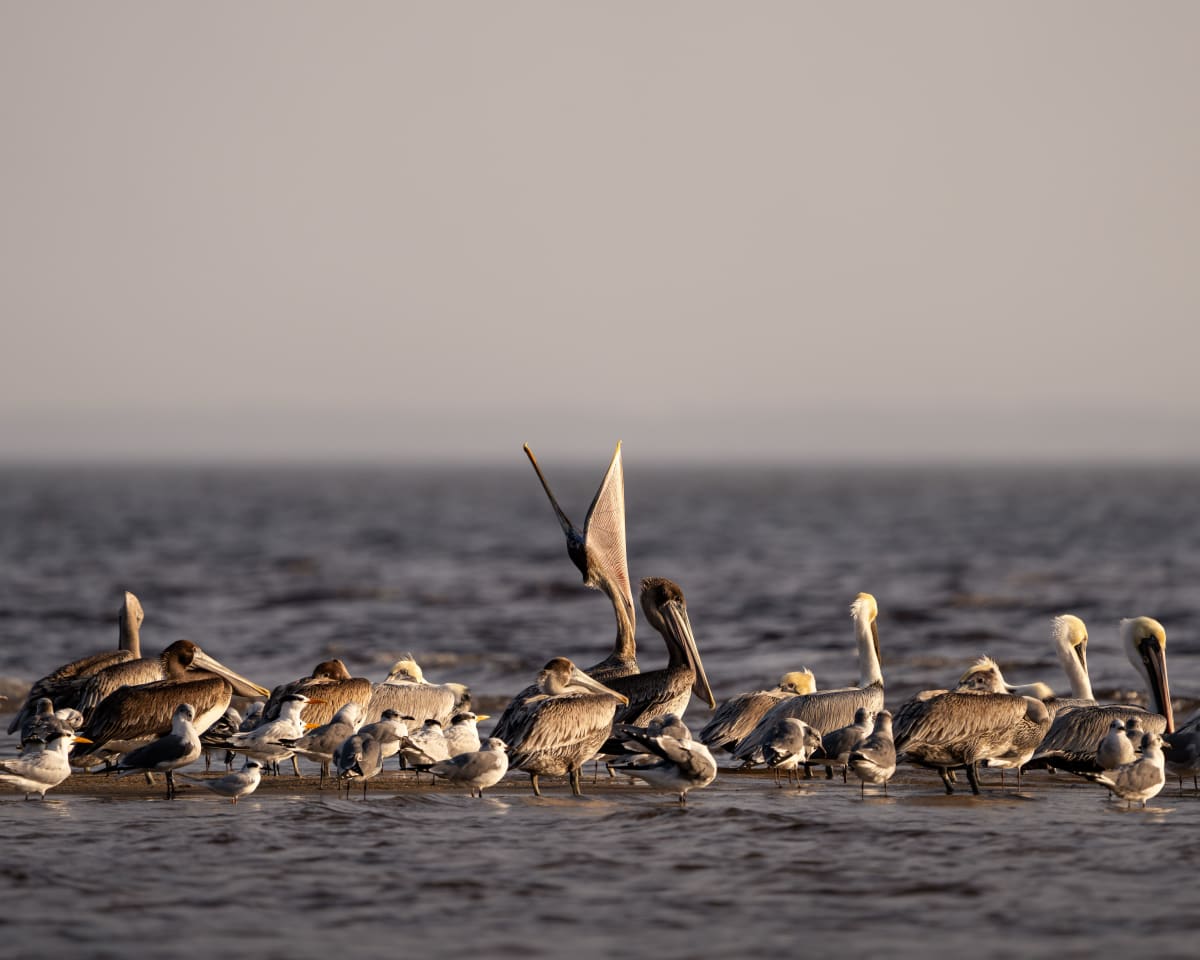
East of the village, toward Punta Mosquito, sandbars appear at low tide and leave pools of flat, knee- to waist-deep water behind them. This is the kind of water that makes Holbox well known among kiters. It is also an area where flamingos, pelicans and shorebirds feed and rest, so ride well away from them and follow any signs or instructions from the reserve.
The lagoon side
The south of the island faces the Yalahau lagoon, the stretch of water crossed by the ferry from Chiquilá. On the right wind it offers flat water, but it is bordered by mangroves and has regular boat traffic. Go there with someone who knows the area rather than on your own.
Kitesurfing lessons in Holbox
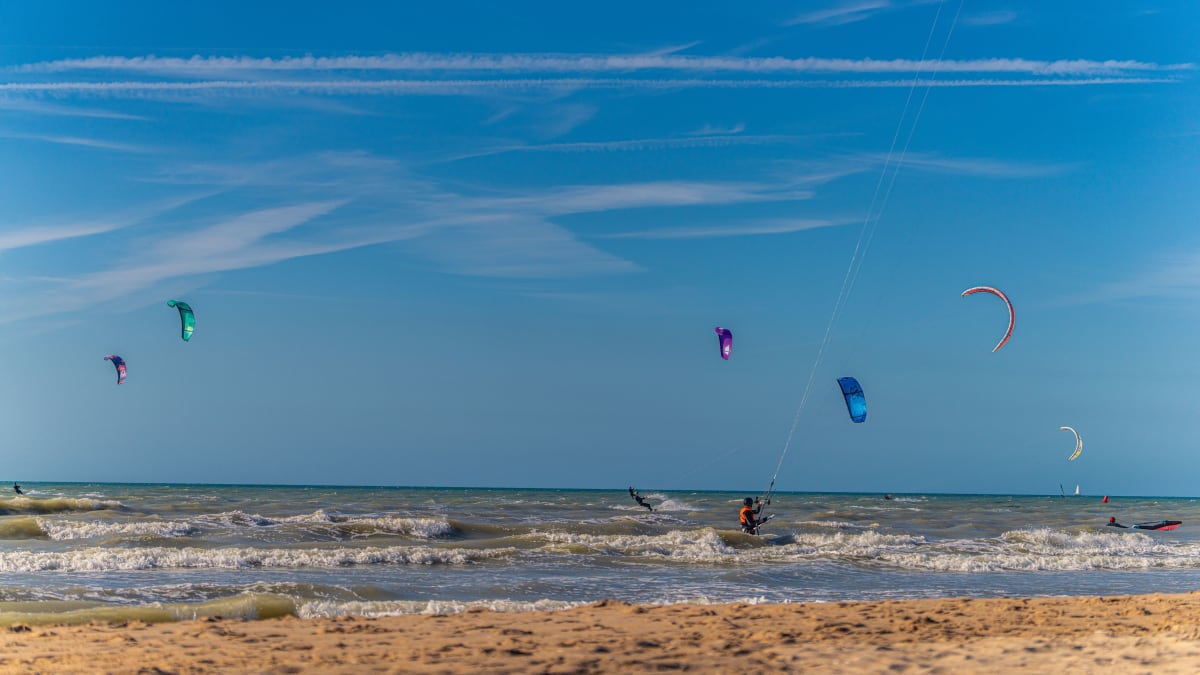
Several kite schools work on the island during the season. Shallow, warm water is a real advantage for learning: you can stand up between attempts, recover the board on foot and practise body-dragging without being swept out of your depth.
What a beginner course covers
- Wind and safety theory: the wind window, reading the weather and the right-of-way rules.
- Flying a trainer kite on the beach before using a full-size kite.
- Body-dragging in the water, with and without the board.
- Safety systems: how to depower, release the kite and self-rescue.
- Water starts and your first short rides.
Most people need several sessions over a few days before they ride on their own, and progress depends heavily on the wind you get. Build some spare days into your stay so a calm day does not cost you the course.
How to choose a school
Ask whether the instructors hold a recognised certification such as IKO, whether lessons use radio helmets, how many students share one instructor and kite, and whether a boat is available for rescue. Agree in advance what happens if there is no wind: a good school reschedules or credits the hours rather than running a lesson in conditions that will not teach you anything. Prices and course lengths vary between schools and change each season, so compare a few directly.
Renting gear and riding on your own
If you already ride independently, schools on the island usually rent equipment and offer supervision for riders who do not know the spot. Many experienced kiters bring their own kite and board. The ferry from Chiquilá takes it as luggage, and golf-cart taxis on the island can carry a board bag to your hotel. A light wetsuit or a long-sleeved lycra is enough for most days, with something warmer for windy days during a norte.
Rules, nature and safety
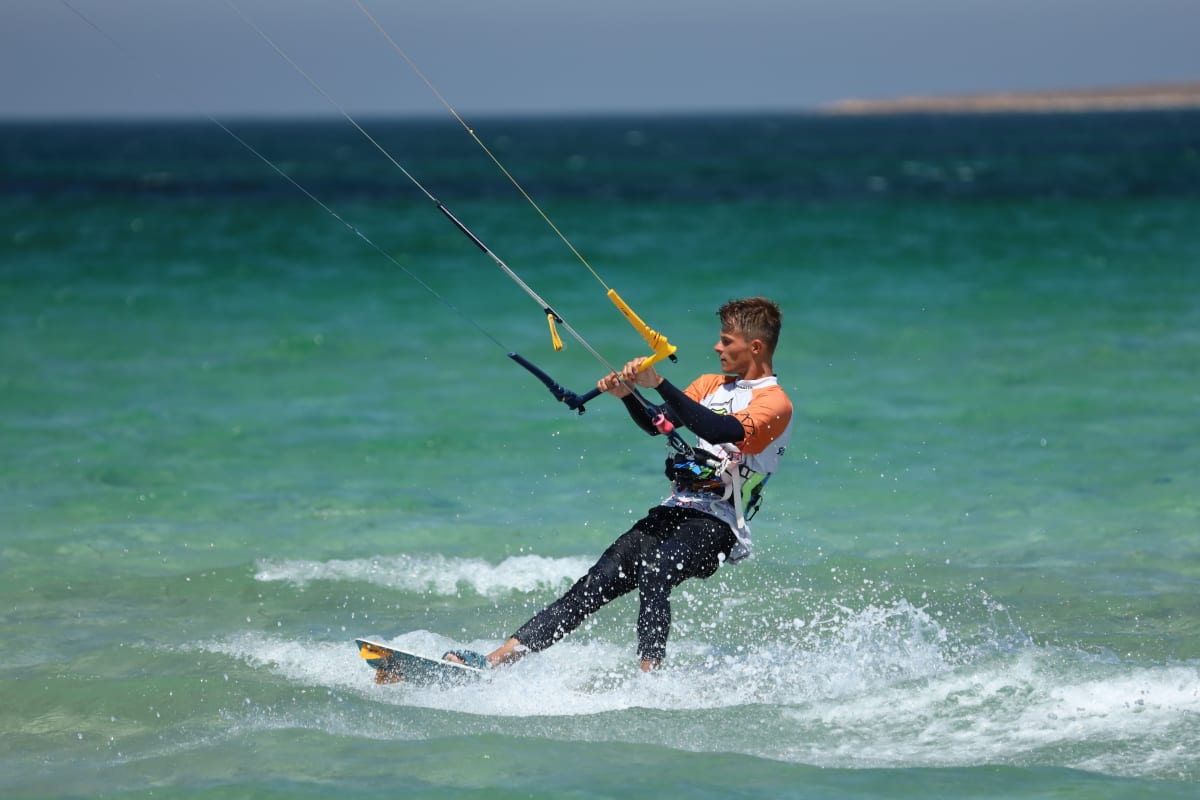
Holbox is part of a protected area, and kiting here comes with responsibilities that a city beach does not have.
- Keep away from birds. Do not ride over or near flocks on the sandbars; a kite overhead looks like a predator to them.
- Watch the tide. Sandbars that you ride around at high tide are exposed at low tide, and a fin can hit the bottom without warning.
- Avoid offshore wind. Wind blowing from the land out to sea can carry you away from the island; do not ride in it without boat support.
- Give way to swimmers and boats. Launch and land away from people, and never ride through a swimming area.
- Protect your skin. Use reef-safe sunscreen or cover up with lycra; the sun reflects strongly off the shallow water.
For background on the sport itself, its equipment and its history, see the Wikipedia article on kitesurfing. For the island's other activities, including the whale sharks and the lagoon tours that run on calm days, read our list of things to do in Holbox.
Planning a kitesurf trip to Holbox
Plan for a week if you want to learn, and at least four or five days if you already ride, so that one or two days without wind do not spoil the trip. For the journey, our guide on how to get to Holbox explains the road to Chiquilá and the ferry. Staying near the beach saves carrying gear through the sand streets, and booked boat trips, the whale shark season and lagoon tours are listed on the Holbox tours page for your days off the water.
Frequently Asked Questions
When is the best time for kitesurfing in Holbox?
Roughly November or December to April. The winter months bring strong wind with the northern cold fronts, while March and April usually have steadier, more regular breezes that suit lessons.
Is Holbox good for learning to kitesurf?
Yes. The water off the north shore and around the sandbars is shallow and mostly flat, so beginners can stand up, which makes the first sessions easier and safer than in deep water or waves.
Can you kitesurf in Holbox in summer?
Only occasionally. From May to October the wind is usually too light, and many schools reduce their schedule. Summer is the season for whale sharks rather than kiting.
Do I need to bring my own kite equipment?
No. Kite schools on the island include equipment in their lessons and usually rent gear to independent riders. Bring your own only if you prefer your setup.
Continue exploring Holbox
You Might Also Like
 ExploringNov 16, 2026
How Many Days in Holbox? Day Trip vs 2 Nights vs a Week
Three nights is the right answer for most people asking how many days in Holbox: enough for a boat tour, a sandbar walk
 ExploringOct 28, 2026
Holbox vs Bacalar: Island Sandbars or Lagoon of Seven Colors?
Holbox vs Bacalar: choose Holbox for a car-free sand island with whale sharks, flamingos and sea sunsets; choose Bacalar
 ExploringOct 26, 2026
10-Day Riviera Maya & Holbox Itinerary
A 10-day Riviera Maya and Holbox itinerary that runs in one line from Cancún airport: Playa del Carmen, three nights in