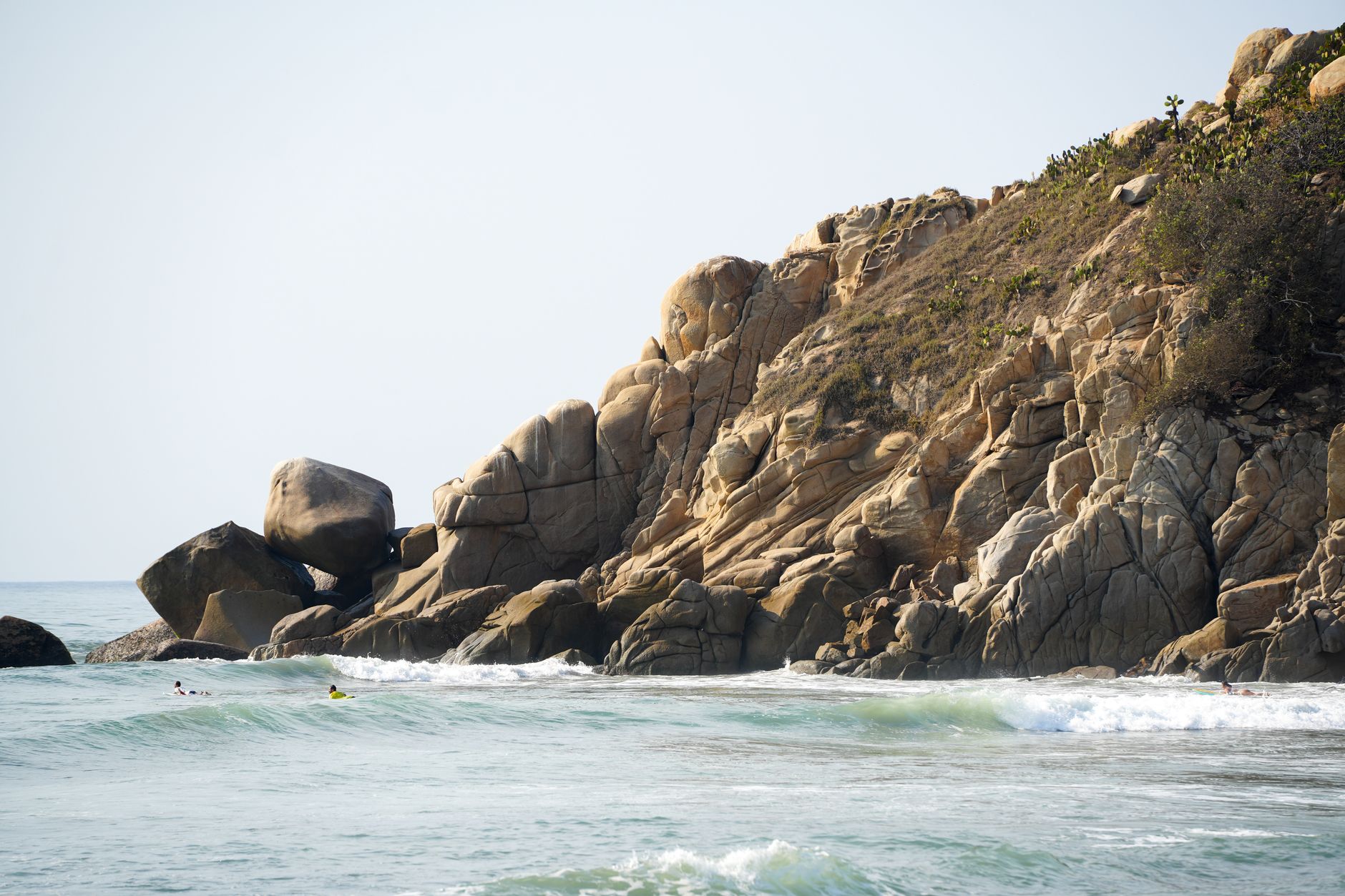
Mazunte on a Budget: Where the Money Goes and Cash Tips

A Mazunte budget trip works if you do three things: travel outside the holiday peaks, sleep in a simple cabaña or hostel, and arrive with enough pesos, because most small places take only cash and the village has almost no ATMs. Mazunte, on the Pacific coast of Oaxaca, is a small village with no big hotels, so the same beach can be a backpacker trip or a comfortable stay in a cabin on the hill. The table shows where the money goes.
| Expense | What pushes it up | How to keep it down | Rough guide (approximate, check current prices) |
|---|---|---|---|
| Accommodation | Christmas–New Year, Easter week, summer school holidays, sea views | Travel in the quieter months, hostels and cabañas with a shared bathroom, longer stays | The biggest line; rates change sharply by season |
| Food | Restaurants on the beach road aimed at visitors | Fondas, set lunches, street snacks, fruit from the shops | Street snacks in Mexico often cost around MXN 20–40 (about US$1–2) each |
| Getting there | A private car from the airport for one person | Bus or shared van to Pochutla, then a colectivo | Shared transport is far cheaper; a private car costs the same for one or four |
| Local transport | Taxis for every short hop | Walking, colectivos and pick-up trucks along the coast | Colectivos cost a fraction of a taxi |
| Activities | Boat trips, tours, daily classes | Free beaches, the walk to Punta Cometa, one paid outing | The main variable once you have a bed |
We do not give a single "cost per day" on purpose: a cabaña in Mazunte can cost far more over New Year than in September, some places quote in dollars and others in pesos, and the exchange rate moves. Use the table to see where your money goes, then price your own dates.
What sets the cost of a Mazunte trip
Two decisions fix most of the budget before you arrive: when you go and where you sleep. Food and transport add up, but they rarely change the total as much.
Season
The most expensive and busiest weeks are Christmas to New Year and Semana Santa (Easter week), followed by the Mexican summer holidays in July and August, when many families and young travellers from Oaxaca City, Mexico City and Puebla come to the coast. The dry season from roughly November to April also brings most foreign visitors. The rainy months, especially September and October, are the cheapest and quietest; some businesses close for a few weeks and storms can cut the road for a day. Outside the holiday weeks, it is often possible to negotiate a lower rate for a stay of a week or more.
Mazunte, San Agustinillo or Zipolite
The three villages sit a few kilometres apart on the same road, and each has its budget options. Mazunte has the most hostels and cabañas, San Agustinillo is smaller and quieter, and Zipolite has the longest beach and the busiest nightlife. Our guide to where to stay in Mazunte and Zipolite compares them; if the place you want is full or too expensive, the next village is a short colectivo ride away.

Sleeping for less
Mazunte is a village of cabañas, guesthouses and hostels, so the type of room decides most of the bill.
Hostels and cabañas
Dorm beds and simple cabañas with a fan, a mosquito net and a shared bathroom are the cheapest way to stay, and they are spread along the main road and the lanes above the beach. Some places also let you hang a hammock or pitch a tent. Check before booking whether the room has a fan or air conditioning, a mosquito net and drinking water, because these matter in the heat.
Longer stays and paying for your room
For a week or more, ask for a weekly rate: outside the peaks, many small owners prefer a guaranteed long stay to empty rooms. A room with a small kitchen saves money on breakfasts. Many guesthouses want payment in cash, and some add a surcharge for cards or transfers, so ask how they take payment when you book.
Eating well for less
Food is the easiest part of the budget to keep low, as long as you look beyond the restaurants on the beach road.
Fondas, set lunches and street snacks
Small family restaurants (fondas) serve a comida corrida at lunch: a fixed menu of soup or rice, a main dish and a drink that costs much less than ordering à la carte. In the evening, stands sell Oaxacan snacks such as memelas, tlayudas and quesadillas. Fresh fish is the local catch, and a simple grilled fish at a beach palapa is often better value than an international menu.

Groceries and water
The small shops in the villages sell water, fruit, bread, eggs and cold drinks, but the choice is limited and prices are a little higher than in town. San Pedro Pochutla, inland, has the big market and supermarkets, so if you pass through it on the way in, a shopping stop can save money for the whole stay. Do not drink tap water: buy large garrafones or refill bottles where your guesthouse offers it.

Drinks and tipping
A cocktail at a beach bar costs several times what a beer or an agua fresca from a shop does, and mezcal is better value by the glass in a simple bar than in a lounge. In restaurants, a tip of about 10% is customary in Mexico; check the bill first in case service is already included.
Cash: the rule that matters most
This is where a Mazunte budget goes wrong most often. Many small places take only pesos in cash, from colectivos and fondas to some guesthouses, and the few cash machines on the coast can run dry, especially on holiday weekends. None of the three villages has a bank of its own; the banks are in Pochutla.
- Withdraw before you arrive. Take out enough pesos in Oaxaca City, Huatulco, Puerto Escondido or Pochutla for several days. Check the banks and ATMs listed for the area before you set off.
- Carry small notes. Colectivo drivers and stands often cannot change large notes.
- Decline the conversion. When an ATM or a card terminal offers to charge you in your home currency, say no: its rate is usually worse than your bank's.
- Compare dollar prices. If a price is quoted in dollars, compare it with the peso price and the current rate of the Mexican peso; paying in pesos is usually cheaper.
Getting there and around cheaply
The two-leg trip
The cheapest way to reach Mazunte is in two legs: a bus or shared van to Pochutla or to the highway, then a shared taxi or pick-up truck (camioneta) down to the coast. A private car from the Huatulco or Puerto Escondido airport is easier with luggage, but for one person it costs far more; split between three or four people, it becomes reasonable. Our guide on how to get to Mazunte compares every route.
Along the coast
Colectivos and camionetas run between Mazunte, San Agustinillo, Zipolite and Puerto Ángel through the day for a small fare in cash. After dark, take a taxi and agree the price before you get in.

Free and cheap things to do
The best of Mazunte costs little or nothing:
- The beaches. Beaches in Mexico are public. Playa Mazunte, Playa Mermejita on the other side of the headland, San Agustinillo and Zipolite are all free; you pay only for a lounger or a meal.
- Punta Cometa at sunset. The walk out to the headland between Mazunte and Mermejita is the village's evening ritual. Take water and a torch for the walk back.
- Walking between villages. The road and the beaches link the villages, and a walk replaces a colectivo on a cool morning.
Pick your paid outings
Paid activities are where a week's budget varies most. Choose one or two that matter to you, such as the Centro Mexicano de la Tortuga, a boat trip to look for turtles and dolphins, or a day at the lagoons of Ventanilla, and fill the other days with free beaches. The Mazunte and Zipolite tours page lets you compare prices before you commit.
Frequently Asked Questions
Is Mazunte cheap?
It can be. Hostels, simple cabañas, fondas and colectivos keep a trip affordable, while sea-view cabins, beach restaurants and private transfers add up quickly. The season makes the biggest difference.
Are there ATMs in Mazunte?
Very few, and they can run out of cash, especially on holiday weekends. The banks are in Pochutla, so withdraw enough pesos there or before you reach the coast.
Do places in Mazunte take cards?
Some guesthouses and restaurants do, but many small places, stands and colectivos take only cash in pesos, and some add a surcharge for cards. Bring enough cash for several days.
What is the cheapest time to visit Mazunte?
The rainy months, especially September and October, outside the holiday weeks. Christmas–New Year, Easter week and the July–August holidays are the most expensive.
Continue exploring Mazunte
You Might Also Like
 ExploringNov 6, 2026
Mazunte vs Puerto Escondido: Village Calm or Surf-Town Energy?
Mazunte is a small, slow village of cabañas, turtles and sunsets; Puerto Escondido is a real town built around big surf.
 Travel TipsOct 23, 2026
Yoga Retreats in Mazunte: What to Expect & How to Choose
What a Mazunte yoga retreat is really like: residential programmes, silent meditation retreats and build-your-own weeks
 AdventuresOct 23, 2026
Puerto Ángel & Estacahuite: Snorkeling Near Zipolite
Estacahuite, a cluster of small coves just east of Puerto Ángel, is the best snorkeling near Zipolite. Here is how to ge