
Turtle Release at La Escobilla & the Ventanilla Crocodile Lagoon
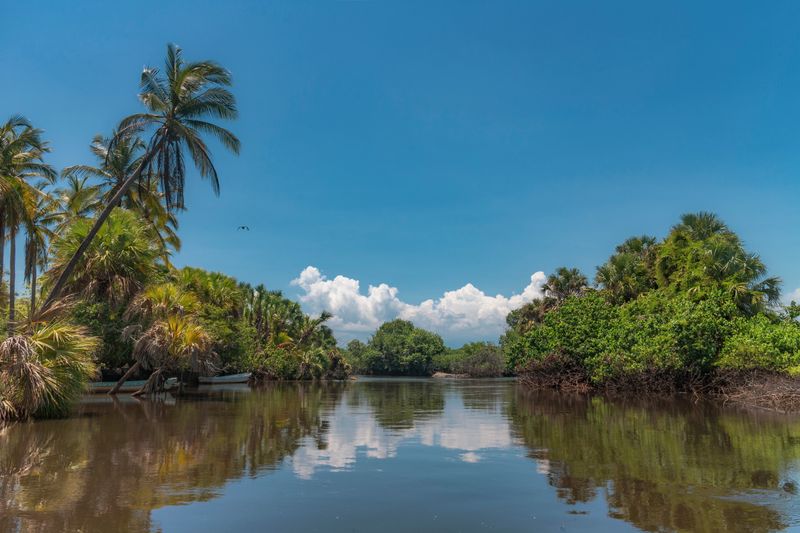
A Ventanilla Mazunte tour is a slow trip by rowing boat through the mangrove lagoon of La Ventanilla, a small community a few kilometres west of Mazunte, where local guides take you close to wild crocodiles, iguanas and water birds. It pairs naturally with the other wildlife story of this coast: sea turtles. Further west lies La Escobilla, one of the most important nesting beaches in the world for the olive ridley turtle, and along the coast conservation camps release hatchlings into the sea in season.
The three are often lumped together as "turtle tours", but they are very different things. Here is how they compare before you plan a day around them.
| Place | What you see | When | How to visit |
|---|---|---|---|
| La Ventanilla lagoon | Crocodiles, iguanas, herons and mangroves | All year, best in the morning | Community boat trip with a local guide |
| La Escobilla | Mass nesting (arribada) of olive ridley turtles | Mainly the rainy season and autumn | Protected sanctuary; access is restricted |
| Hatchling releases | Baby turtles crawling to the sea | In season, usually at dusk | Conservation camps along the coast; ask locally |
| Centro Mexicano de la Tortuga | Several turtle species in tanks and aquariums | All year; check opening days | Walk in, at the entrance to Mazunte |
La Ventanilla: the crocodile lagoon tour from Mazunte
La Ventanilla is a small village on the coast just west of Mazunte, set beside a lagoon where a river meets the Pacific. Its families run the boat trips themselves as a community project, and the guides are the people who live there. For many visitors it is the best wildlife outing within easy reach of Mazunte, and it suits children and anyone who does not want to go out on the open sea.
What the boat trip is like
Groups of a few people sit in a wooden boat that a guide rows or poles through narrow channels in the mangroves. There is no engine, so the animals are not scared away by noise. The usual sightings are American crocodiles resting on the banks or floating with only their eyes above the water, green iguanas in the branches, and herons, egrets, cormorants and kingfishers. The guide explains how the mangrove works as a nursery for fish and a barrier against storms. The trip lasts around an hour, sometimes a little more. Prices are set by the community and paid at the dock; check the current rate when you arrive and bring cash.
Getting there from Mazunte
The turn-off for La Ventanilla is on the coast road west of Mazunte. A colectivo heading towards Puerto Escondido or a taxi can drop you at the junction, and from there a short road leads down to the village and the lagoon. A taxi straight to the village is the simplest option if you are carrying water and a camera. Go in the morning, when it is cooler and the birds are more active, and wear a hat: there is little shade on the water.

La Escobilla: the beach where turtles arrive by the thousand
On the coast between Puerto Escondido and Mazunte, in the municipality of Santa María Tonameca, the beach of La Escobilla is protected as a sea turtle sanctuary. It is one of the few places on Earth where the olive ridley turtle nests in an arribada: a mass arrival in which huge numbers of females come ashore over a few nights to dig nests and lay their eggs.
What an arribada is
Olive ridleys (tortuga golfina in Spanish) usually nest alone, but on a handful of beaches in Mexico, Central America and India they synchronise. During an arribada the beach can be covered with turtles, and over a full season La Escobilla receives hundreds of thousands of nests. The main nesting season on this coast is the rainy season and the autumn, and arribadas cannot be predicted to the day: they depend on the moon, the sea and factors that researchers are still studying.
This is also why Mazunte exists in its current form. For decades, turtles caught off this coast were processed at a slaughterhouse in San Agustinillo. After Mexico banned the harvest of sea turtles in 1990, the slaughterhouse closed, the Mexican Turtle Centre opened in Mazunte, and the villages turned to ecotourism.
Can you visit La Escobilla?
Not freely. La Escobilla is a protected area watched over by federal authorities and conservation staff, because a nesting beach with hundreds of thousands of eggs is exactly what poachers look for. Visitor access is restricted, and you should not walk onto the nesting zone at night on your own. If you want to see an arribada, ask at the Mexican Turtle Centre in Mazunte or with a reputable local guide whether any authorised visit is possible during your dates, and accept a no as the most likely answer. Do not trust anyone who offers to take you onto the beach at night for cash.

Watching a hatchling release near Mazunte
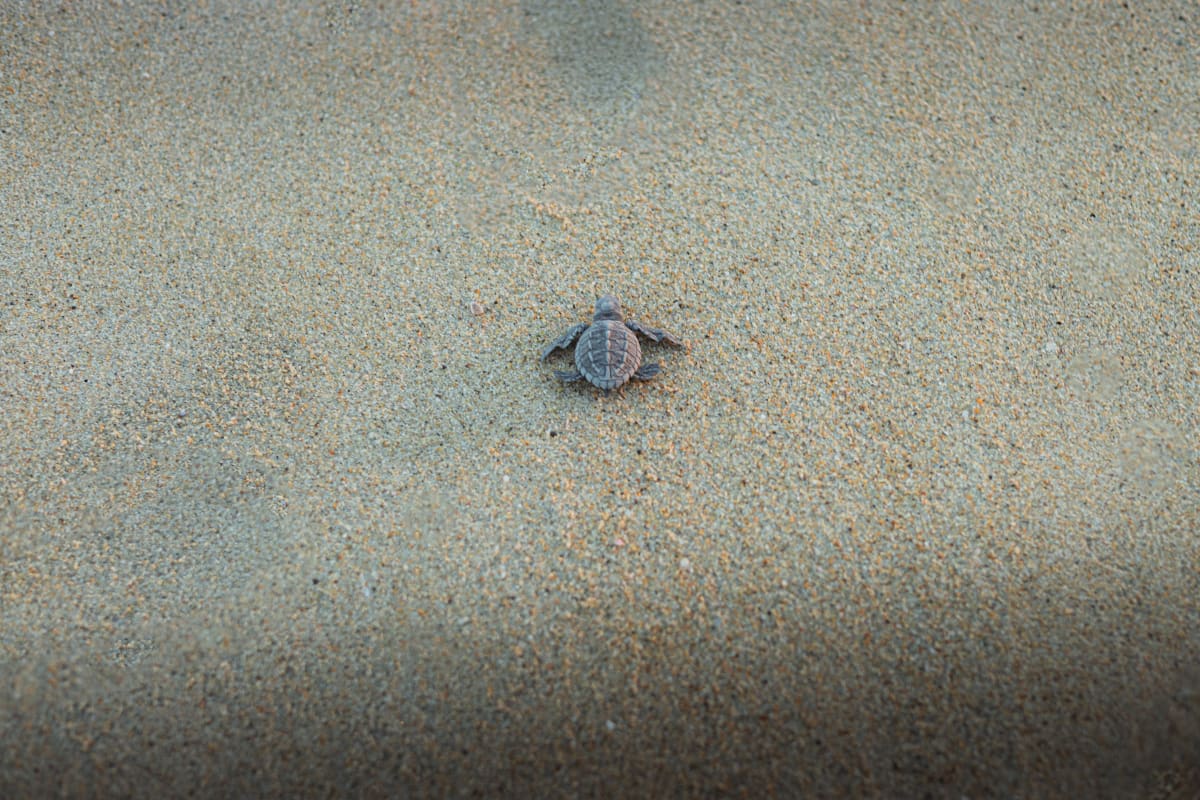
What most travellers mean by a "turtle release" happens away from La Escobilla, at the turtle camps (campamentos tortugueros) that operate on beaches along the Oaxaca coast. Volunteers and local groups collect eggs from nests at risk from poachers, dogs or high tides, rebury them in a protected hatchery and release the young when they emerge, about six to eight weeks later.
How a release works
Releases usually take place in the late afternoon, when the sand has cooled and there are fewer birds hunting. The staff carry the hatchlings to the beach in a container, give a short talk and set them down a few metres from the water, where they crawl into the surf on their own. Visitors stand behind a line in the sand. Many camps ask for a donation, which pays for patrols and hatchery work; that is fair, and it is the main reason to choose a camp that explains openly what it does with the money.
When releases happen
Hatchlings are released while the nests are hatching, which on this coast means roughly from late summer into the winter, following the nesting season. Releases are not daily and are not scheduled weeks ahead: they depend on what hatches. The best approach is to ask at your guesthouse, at the turtle centre or among the tour operators in Mazunte once you arrive, and to keep a flexible evening.

Turtle and crocodile etiquette
Every one of these outings depends on animals that are protected by law, and a few habits make the difference between a visit that helps and one that does harm.
- Do not touch hatchlings, even if someone offers. Sunscreen, insect repellent and simple handling can harm them, and they need to crawl the sand themselves on the way to the water.
- No flash and no torches on a nesting beach. Artificial light disorients adult females and hatchlings, which head for the brightest horizon. Turn your phone screen down too.
- Keep your distance from nesting turtles. Stay behind them, never in front, and do not block their way back to the sea.
- Never buy turtle products. Eggs, meat, tortoiseshell jewellery or leather made from sea turtles are illegal in Mexico, and trading in them is a federal crime. Bringing them home is also illegal in the US, Canada and the EU.
- In the lagoon, keep hands and feet inside the boat and do not ask the guide to feed or bait crocodiles. A good guide will refuse.
To fit the lagoon and a release into a longer stay, read our guide to the best things to do in Mazunte and Zipolite, check transport in how to get to Mazunte, see boat and lagoon trips on our Mazunte and Zipolite tours page and compare cabañas on the stays page.
Frequently Asked Questions
How far is La Ventanilla from Mazunte?
Only a few kilometres west along the coast road. A taxi takes a few minutes, or a colectivo can drop you at the turn-off, from where a short road leads down to the village and the lagoon.
Is the Ventanilla lagoon tour safe with crocodiles?
Yes, when you follow the guide. The crocodiles are wild but used to the boats; the rules are simple: stay seated, keep your hands inside the boat and do not lean over the side to take photos.
Can I see the arribada at La Escobilla?
Usually not. The beach is a protected sanctuary with restricted access. Ask at the Mexican Turtle Centre in Mazunte whether any authorised visit is possible during your dates, and never go onto the beach at night on your own.
When can I see a turtle release in Mazunte?
Roughly from late summer into the winter, when the nests are hatching. Releases depend on what hatches each day, so ask locally once you arrive and keep an evening free.
auto_awesome Continue exploring Mazunte
You Might Also Like
 article Travel Tips calendar_today Oct 11, 2026
 Where to Stay: Mazunte vs Zipolite vs San Agustinillo
Where to stay in Mazunte and Zipolite depends on what you want from the coast: Mazunte for a walkable village and calmer
 article Travel Tips calendar_today Oct 9, 2026
 Is Zipolite Safe? Rip Currents, Theft & Nudist-Beach Etiquette
Zipolite is a relaxed village where the main danger is the sea, not crime: its rip currents drown swimmers. Here is how
 article Travel Tips calendar_today Oct 6, 2026
 How to Get to Mazunte & Zipolite from Puerto Escondido, Huatulco & Oaxaca City
How to get to Mazunte: fly into Huatulco or Puerto Escondido and drive about an hour along the coast, or come down from