
Best Beaches in Puerto Vallarta and Banderas Bay
The best beaches in Puerto Vallarta fall into three groups around Banderas Bay: the city beaches you can walk to, led by Playa Los Muertos and Conchas Chinas; the south-shore coves such as Las Ánimas, Colomitos and Yelapa, most of which have no road and are reached by water taxi; and the long, flatter beaches of the north bay in Nayarit, from Nuevo Vallarta and Bucerías to Punta de Mita. Which one is best depends on whether you want restaurants and people, a quiet cove or easy swimming for children.
| Beach | Area | How to get there | Water | Best for |
|---|---|---|---|---|
| Playa Los Muertos | Zona Romántica | On foot from the old town | Usually moderate; can have shore break | Atmosphere, food, people-watching |
| Conchas Chinas | Just south of Los Muertos | On foot or short taxi | Calmer, rocky, tide pools | Snorkelling in the rocks, quieter sand |
| Mismaloya | South shore, by road | Bus or taxi, 20–30 min | Sheltered cove | Boats to Los Arcos, lunch on the sand |
| Las Ánimas | South shore | Water taxi or coastal trail | Generally calm | A full beach day with restaurants |
| Yelapa | Southern end of the bay | Water taxi only | Calm inside the cove | Village, waterfall, staying overnight |
| Nuevo Vallarta | North bay (Nayarit) | Car, taxi or bus | Wide, flat, gentle | Families, long walks |
| El Anclote, Punta de Mita | Northern tip of the bay | Car, taxi or bus, about 1 hr | Calm, small waves | Beginner surfing, seafood |
Two things apply to every beach on this list. First, all beaches in Mexico are public federal land: a hotel can control access through its own property, but it cannot stop you using the sand. Second, this is the Pacific, and conditions change from one beach and one day to the next, so the section on flags and water quality further down is worth reading before you swim.
City beaches: Los Muertos, Conchas Chinas and Camarones
If you are staying in the old town, these are the beaches you will use most, and you can reach all of them without a car.
Playa Los Muertos
The busiest and liveliest beach in Puerto Vallarta runs along the Zona Romántica from the mouth of the Río Cuale to the rocks at the southern end. It is lined with palapa restaurants and beach clubs that set out loungers and umbrellas, usually for customers who order food or drinks, and vendors walk the sand selling everything from grilled fish on a stick to hats. The Los Muertos pier, with its sail-shaped spire, is where water taxis leave for the south shore, and its lights make it a favourite spot after sunset. The southern part of the beach is the centre of the city's well-known LGBTQ+ beach scene. Come for the atmosphere rather than for peace and quiet.
Conchas Chinas
Walk south past the end of Los Muertos and the sand breaks up into small coves between granite rocks. This is Conchas Chinas, the quieter option within walking distance of the old town, with tide pools at low tide and calmer water between the rocks where you can snorkel with a mask. There are fewer services than at Los Muertos, so bring water and shade, and watch your footing on the wet rocks.
Playa Camarones and the Hotel Zone
North of the Malecón, Playa Camarones is the beach closest to downtown on that side, and from there the sand runs almost unbroken past the hotels and condo towers of the Zona Hotelera, changing name every few hundred metres. These stretches are long and usually calmer than Los Muertos, with fewer vendors. If you are deciding where to base yourself, our guide to where to stay in Puerto Vallarta compares the beach in each neighbourhood.

South shore: Mismaloya and the beaches you reach by boat
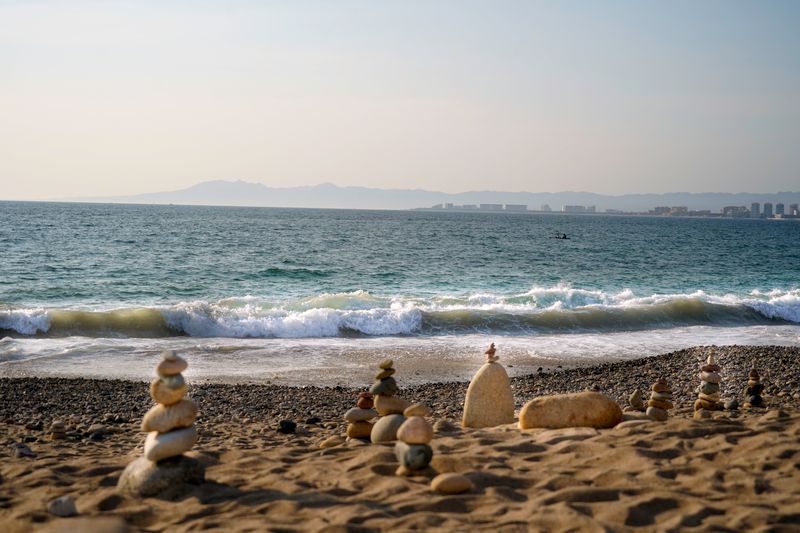
South of town, Highway 200 runs above the sea past Conchas Chinas and Mismaloya to Boca de Tomatlán, where it turns inland. Beyond that point the coast has no road, and the beaches are reached by water taxi or on foot. For many visitors these are the best beaches in Puerto Vallarta, precisely because getting there takes a little effort.
Mismaloya and Boca de Tomatlán
Mismaloya is a sheltered cove 20 to 30 minutes south of the old town by bus or taxi. John Huston filmed The Night of the Iguana here in 1963, and the film is often credited with putting Vallarta on the tourist map. Today the beach has simple restaurants on the sand, and local boatmen run short trips to the granite islets of Los Arcos, a protected area just offshore with the easiest snorkelling near the city. A little further south, Boca de Tomatlán is a small fishing village with its own beach at the mouth of a river; it is mainly the launch point for the water taxis and the coastal trail.
Colomitos, Las Ánimas, Quimixto and Yelapa
- Colomitos is a tiny cove with clear green water, reached after the first stretch of the jungle trail from Boca de Tomatlán or by a short boat ride. It has little or nothing in the way of services, so carry water and snacks.
- Las Ánimas is a long beach with a row of palapa restaurants, about two hours on foot from Boca along the same trail. Most people walk one way and take the water taxi back, and it is a common stop for bay cruises, so it is busiest in the middle of the day.
- Quimixto, a little further along, is a small village beach where a walk or a horse ride inland leads to a waterfall.
- Yelapa, in the southernmost cove of the bay, combines a beach with palapa restaurants, a village without cars and a waterfall a short walk away. It is worth a whole day, or a night; our Yelapa day trip guide explains which water taxi to take.
Water taxis are open boats that leave from Boca de Tomatlán and the Los Muertos pier and stop on request at these beaches. Confirm the time of the last boat back when you land: on this coast there is no other way home.

North bay beaches: Nuevo Vallarta, Bucerías and Punta de Mita
Cross the Ameca River north of the airport and you are in Nayarit, where the beaches become longer, wider and flatter. They suit swimmers and families better than the south shore, and they lead up to the surf towns of the Riviera Nayarit.
Nuevo Vallarta
The resort strip of Nuevo Vallarta has some of the widest and gentlest sand in the bay, which is why it is the usual choice for families with small children. It is a beach for long walks and easy swimming rather than for exploring, since there is little outside the resorts. In the second half of the year, olive ridley turtles nest along these beaches, and conservation camps release hatchlings, usually at dusk.
Bucerías
A little further north, Bucerías is a town with a long, open beach in front of it, restaurants on the sand and a more local, less resort-like feel than Nuevo Vallarta. It is a good choice if you want a beach day with a town to wander around afterwards.
Punta de Mita and beyond
At the northern tip of the bay, the public village side of Punta de Mita has El Anclote, a beach with calm water, seafood restaurants and the small, regular waves that surf schools use for beginners. On the way there, Destiladeras is a long open beach where the surf can break close to the shore, so judge the conditions before swimming. Punta de Mita is also the shortest crossing to the Marietas Islands and their Hidden Beach, a park with its own permits and limits; our guide to the best day trips from Puerto Vallarta covers the Marietas, Punta de Mita and the surf towns of Sayulita and San Pancho, about an hour north.

Beach safety and water quality
Banderas Bay is sheltered compared with the open Pacific, but waves can build quickly, and some beaches drop off steeply right at the shoreline, which creates a strong backwash.
Flags and lifeguards
Where there are flags, green means calm, yellow means caution, red means dangerous conditions and black means the beach is closed to swimming. Many beaches, especially the south-shore coves and the open beaches of the north bay, have no lifeguard. Swim where others are swimming, never alone or after drinking, and if a current pulls you out, swim parallel to the shore until it lets go. Our guide to whether Puerto Vallarta is safe covers the ocean, boats and sun in more detail.
Water quality and COFEPRIS
Mexico's federal health-risk agency, COFEPRIS, monitors the water at popular tourist beaches together with state health authorities, and publishes results, typically ahead of the main holiday periods. The results change from one sampling to the next, so check the latest ones for the beach you plan to use rather than relying on an old list. In the rainy season, roughly June to October, rivers and street drains carry runoff into the bay after heavy storms; give it a day or two before swimming near a river mouth such as the Cuale. Sargassum, the seaweed that troubles the Caribbean coast, is not a Banderas Bay problem.

Frequently Asked Questions
What is the best beach in Puerto Vallarta for swimming?
For gentle water, the wide beaches of Nuevo Vallarta and the calmer stretches of the Hotel Zone. In town, the coves of Conchas Chinas are often calmer than Los Muertos. Always check the flag on the day.
Which Puerto Vallarta beaches can only be reached by boat?
The villages and coves beyond Boca de Tomatlán, including Las Ánimas, Quimixto and Yelapa, have no road. You reach them by water taxi, on a tour, or, for Colomitos and Las Ánimas, on foot along the coastal trail.
Is the water clean at Puerto Vallarta beaches?
COFEPRIS and the state health authorities monitor the main tourist beaches and publish the results. Check the most recent ones for your beach, and avoid swimming near river mouths for a day or two after heavy rain.
auto_awesome Continue exploring Puerto Vallarta
You Might Also Like
 article Adventures calendar_today Oct 11, 2026
 Puerto Vallarta Zipline, ATV & Jungle Tours in the Sierra Madre Compared
A Puerto Vallarta zipline tour is the easiest jungle adventure; ATVs and side-by-sides are muddier and need a driver; ho
 article Adventures calendar_today Oct 10, 2026
 Los Arcos Marine Park: Snorkeling & Diving Guide
Los Arcos, the granite islets off Mismaloya, are the closest protected snorkeling and diving site to Puerto Vallarta. Ho
 article Adventures calendar_today Oct 10, 2026
 Yelapa from Puerto Vallarta: Water Taxi, Waterfalls & Staying Overnight
How to do a Yelapa day trip from Puerto Vallarta: which water taxi to take, how long the crossing is, the walk to the wa