
Los Arcos Marine Park: Snorkeling & Diving Guide
Los Arcos Puerto Vallarta snorkeling happens around a cluster of granite islets that rise straight out of Banderas Bay just off Mismaloya, on the south shore about half an hour by road from downtown. The rocks and the water around them are a federally protected natural area, which is why the fish are still there: it is the closest place to the city where you can drop off a boat into clear water and swim along a rock wall full of life. This guide covers how to get there, what you will see snorkeling and diving, and how the season changes the water.
Do not confuse the islets with the other Los Arcos in town: the arches of the open-air theatre on the Malecón. When a tour or a taxi driver says “Los Arcos” and you are carrying fins, they mean the rocks off Mismaloya.
What Los Arcos is and why it is protected
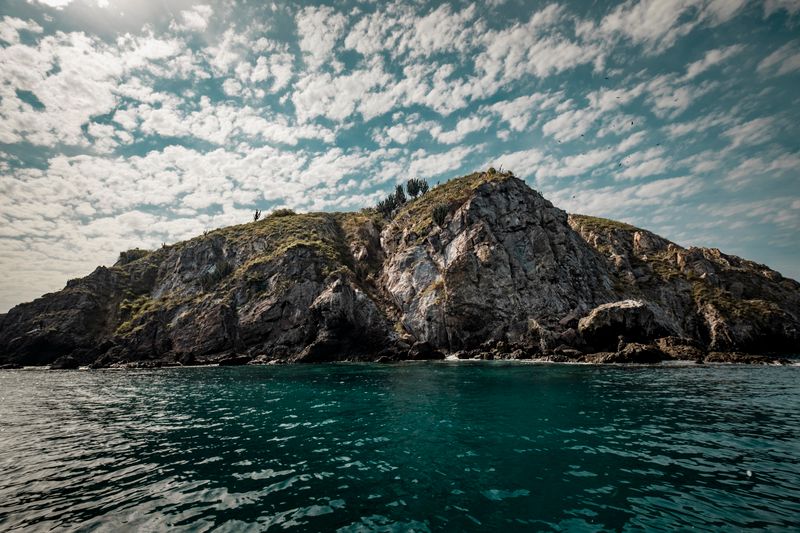
Los Arcos is a small group of steep, bare granite islands a short distance offshore from Mismaloya beach. The sea has cut tunnels and arches through some of them, which gave the place its name, and small boats and kayaks can pass through the largest arch when the swell is low. Above the water the rocks are white with guano: brown pelicans and other seabirds roost on them all year.
The protected area
The islets and the surrounding water were placed under federal protection decades ago, and today the area falls under Mexico’s National Commission of Natural Protected Areas (CONANP). In practice that means fishing is restricted, anchoring is controlled and boats follow designated routes, and that operators may need to pay a park fee or have you wear a wristband. Rules and fees change, so check them with your operator or with CONANP before you go rather than relying on an old forum post.
The underwater landscape
This is a rocky reef, not a coral reef like the Caribbean. The granite drops in walls and boulder slopes covered in sponges, sea fans, urchins and small patches of coral. On the sheltered, shallow side the bottom is within a few metres of the surface, which is where snorkelers stay. On the outer side the walls drop into much deeper water, and that is where divers go.

Snorkeling at Los Arcos
Snorkeling here is easy in calm conditions: the boat stops in the lee of the rocks, you get in with a life vest if the operator requires one, and you follow the wall at your own pace. A typical stop lasts 30 to 60 minutes in the water, which is plenty for most people.
What you can see
- Reef fish in big numbers: sergeant majors, wrasses, parrotfish, angelfish and schools of small silver fish that move as one.
- Puffers and porcupinefish hovering near the rocks, and moray eels looking out of cracks.
- Invertebrates: sea stars, urchins and sea cucumbers on the boulders. Look, do not touch: urchin spines are the most common injury here.
- Above the water: pelicans diving for fish and, in winter, the spout of a humpback whale further out in the bay.
How a snorkeling trip works
There are two ways to do it. The short way is to go to Mismaloya beach, where local boatmen run trips out to the rocks and back; it is a few minutes each way and you can be back on the sand within a couple of hours. The long way is a bay cruise from Marina Vallarta or the Los Muertos pier that stops at Los Arcos as one of several stops, often combined with a beach and lunch. Most cruises bring masks and fins, but your own mask will fit better.

Diving at Los Arcos
Los Arcos is also one of the most dived sites in Banderas Bay because it is so close to town. Shops in Puerto Vallarta use it for discover-scuba sessions, first open-water dives and refresher dives on the shallow side, and for deeper wall dives on the outer side for certified divers.
Shallow side and outer walls
The shallow side is protected from the swell and has the boulder slopes where beginners practise skills while fish swim around them. The outer walls are steeper and more exposed to current, and the depth falls away quickly, so they are for divers with a certification, a guide and good buoyancy control. Ask the dive shop which side they plan to use and what level they require before you book.
Other sites in the bay
Divers who want more often combine Los Arcos with the Marietas Islands at the north end of the bay, another protected area with more open-ocean life such as rays and turtles. Our guide to the best day trips from Puerto Vallarta explains how the Marietas trip and the south-shore beaches fit into a week.

When to go: water temperature and visibility
You can snorkel Los Arcos all year, but the water changes a lot between seasons. As our guide to the best time to visit Puerto Vallarta explains, the sea is warmest from June to November and coolest in February and March. Visibility depends on the day as much as on the month, so treat the table below as a general guide, not a promise.
| Months | Water | Visibility | Good to know |
|---|---|---|---|
| December–January | Cooling, still comfortable | Variable | Whale season begins; peak holiday crowds |
| February–March | Coolest of the year | Often reduced by plankton | A shorty wetsuit helps; whales in the bay |
| April–May | Warming | Improving | Dry, sunny and quieter after Easter |
| June–August | Warm | Often good, worse after storms | Rainy season; go in the morning |
| September–November | Warmest | Often the clearest of the year | Hurricane risk until November; few crowds |
Time of day
Go in the morning whenever you can. The sea is usually flatter before the afternoon breeze picks up, the light reaches deeper into the water, and the first boats get the rocks before the big cruises arrive around midday. In the rainy season, mornings also come before the afternoon storms.

Getting there and the rules on the water
Getting to Mismaloya
Mismaloya is on Highway 200, south of the Zona Romántica. Local buses heading south along the coast from downtown stop there, and taxis and ride-hailing cars do the trip in about half an hour depending on traffic. The beach is also where John Huston filmed The Night of the Iguana in 1963, and it makes a good base for the morning: snorkel first, then lunch on the sand. If you have a full day, continue south to Boca de Tomatlán and take a water taxi to Yelapa, as described in our Yelapa day trip guide.
How to behave in a protected area
- Do not touch, stand on or take anything: not shells, not urchins, not rocks.
- Do not feed the fish. Bread and snacks change their behaviour and pollute the water.
- Use a mineral sunscreen or a rash guard instead of a thick layer of chemical sunscreen.
- Stay with your group and away from boat lanes. Wear the life vest if your boat hands you one; currents can be stronger on the outer side.
- Choose an operator that follows the park rules, including where to moor and how many people go in at once.
Los Arcos fits easily into a half day, so it pairs well with the rest of the things to do in Puerto Vallarta. To compare snorkeling, diving and bay cruises with times and departure points, see our Puerto Vallarta tours.
Frequently Asked Questions
Is Los Arcos good for beginner snorkelers?
Yes, on calm days. Boats stop on the sheltered side, where the rocks are close to the surface and the fish are easy to see. Wear a life vest if you are not a strong swimmer, and skip the trip if the swell is up.
Can you snorkel Los Arcos from the beach?
The islets are offshore, so you need a boat, a kayak or a paddleboard to reach them. Mismaloya beach is the closest launch point, and the boat ride from there takes only a few minutes.
When is the water clearest at Los Arcos?
Often in autumn, from September to November, when the sea is also at its warmest. In February and March the water is cooler and plankton can reduce visibility, though that is also when humpback whales are in the bay.
Do you need to be certified to dive at Los Arcos?
Not for a discover-scuba session in shallow water with an instructor. For the deeper outer walls you need an open-water certification, and a dive shop will ask to see it.
auto_awesome Continue exploring Puerto Vallarta
You Might Also Like
 article Exploring calendar_today Oct 12, 2026
 Best Beaches in Puerto Vallarta and Banderas Bay
From Playa Los Muertos in the old town to the boat-only coves of the south shore and the calm sand of Nuevo Vallarta and
 article Adventures calendar_today Oct 11, 2026
 Puerto Vallarta Zipline, ATV & Jungle Tours in the Sierra Madre Compared
A Puerto Vallarta zipline tour is the easiest jungle adventure; ATVs and side-by-sides are muddier and need a driver; ho
 article Adventures calendar_today Oct 10, 2026
 Yelapa from Puerto Vallarta: Water Taxi, Waterfalls & Staying Overnight
How to do a Yelapa day trip from Puerto Vallarta: which water taxi to take, how long the crossing is, the walk to the wa