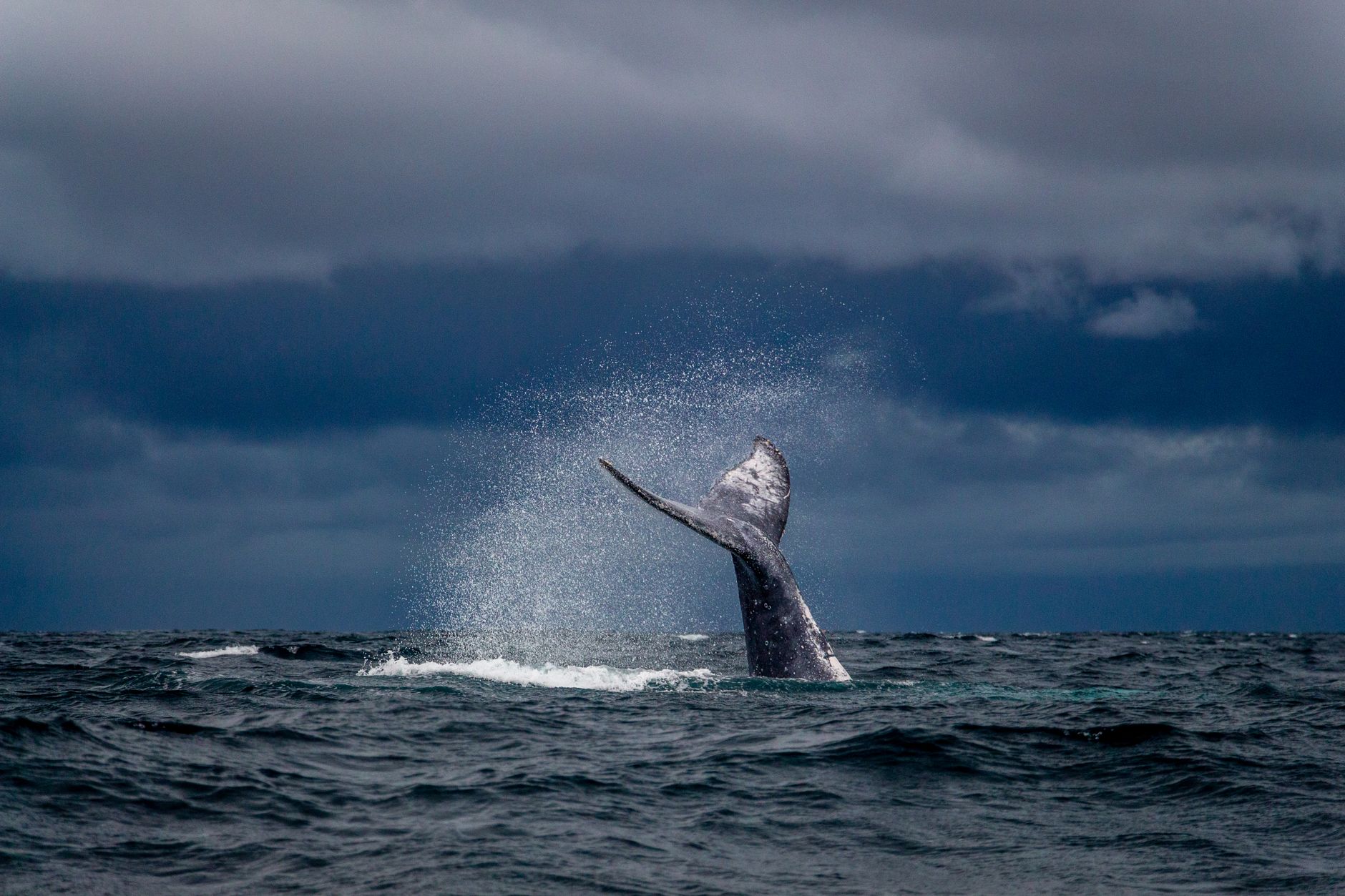
Whale Watching in Puerto Vallarta: Season, Best Tours & What You Will See
Puerto Vallarta whale watching season runs from December to March, when humpback whales come to Banderas Bay to mate and give birth, and the best sightings are in January and February. Tours last about three to four hours, leave from the marina and the town piers, and in peak weeks almost every trip finds whales.
| Month | Whale activity | What to expect |
|---|---|---|
| November | Occasional early arrivals | Sightings possible but not reliable; most dedicated tours have not started |
| December | Whales arriving | Good chances from mid-month; Christmas boats book up |
| January | Peak | Newborn calves, singing males, frequent breaching |
| February | Peak | The most reliable month; competitive groups of males |
| March | Whales leaving | Fewer whales week by week; mothers and calves often the last to go |
| April to October | Humpbacks gone | Dolphins, rays and turtles instead; no whale tours |
Banderas Bay is one of the largest bays on Mexico’s Pacific coast, shared by Jalisco to the south and Nayarit to the north, and it is sheltered and warm enough to work as a nursery. Below is when to go, what you are likely to see, how to pick a boat and the federal rules that every whale-watching trip in Mexico has to follow.
Whale season in Puerto Vallarta, month by month
The humpbacks that winter in Banderas Bay spend the summer feeding in cold northern waters off the west coast of the United States and Canada, and some come from as far as Alaska. They swim several thousand kilometres south to breed and calve, eat very little while they are here and head north again in spring.
Why humpbacks come to Banderas Bay
Calves are born with little blubber, so mothers give birth in warm, calm water. The bay offers both, plus shallow areas near the coast where mothers rest with their calves. Males come for the females: this is where the singing, chasing and display behaviour that people travel to see takes place. A female that mates here one winter usually returns to give birth about a year later.
The best weeks
If whales are the main reason for your trip, aim for mid-January to late February. December is good but less predictable, and by late March the bay is emptying. Within a day, morning trips usually have calmer water, which makes spotting spouts easier and the ride more comfortable. Our guide to the best time to visit Puerto Vallarta covers the weather and prices of these months.

What you will see on a Puerto Vallarta whale watching tour
Adult humpback whales grow to about 15 metres, and calves are around 4 metres at birth. On a typical trip you see several groups, but how much they do above water varies from day to day.
Humpback behaviour to watch for
- Spouts: the bushy cloud of breath, often the first sign of a whale, visible from far away on a calm day.
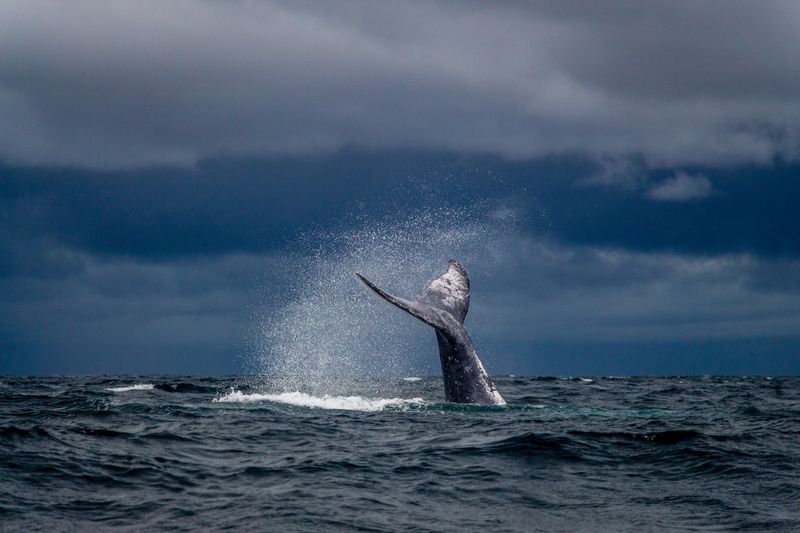
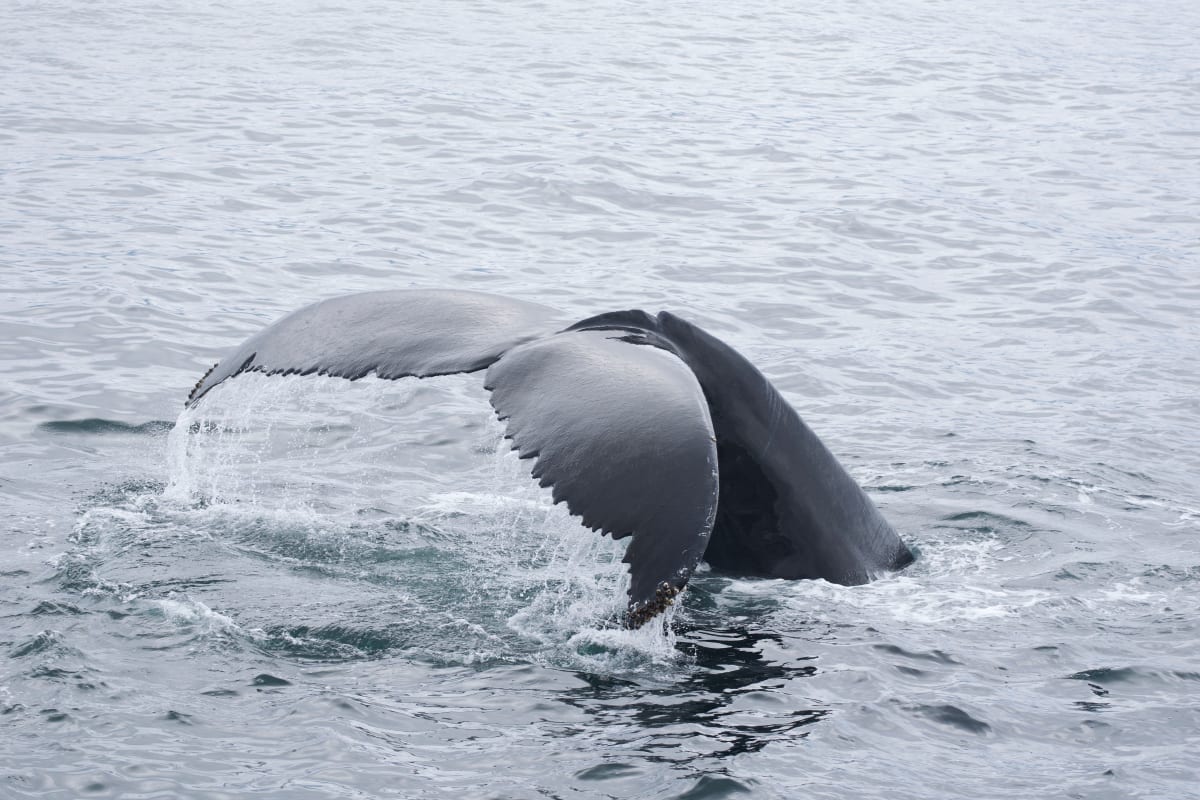
- Fluke-up dives: the tail rises out of the water as the whale goes deep. The pattern on the underside is unique to each animal and is used by researchers to identify individuals.
- Breaches: the whole body launches out of the water and crashes back. Calves often breach again and again as they gain strength.
- Tail and fin slaps: whales slap the surface with their tail or their long pectoral fins, which can be heard from the boat.
- Mother and calf: a large whale moving slowly with a small one at its side, the calf surfacing more often because it needs to breathe more.
- Competitive groups: several males chasing a female at speed, pushing and blowing bubbles. They are fast and boats keep well back.
- Song: only males sing. Some boats carry a hydrophone, an underwater microphone, so you can hear it on board.
Other wildlife in the bay
Bottlenose dolphins are common all year and often ride the bow. You may also see mobula rays leaping clear of the water, sea turtles at the surface and seabirds working over schools of fish. If your tour goes out to the Marietas Islands, the cliffs hold a nesting colony of blue-footed boobies; our Marietas Islands tour guide explains how those trips work and how they combine with whale watching in winter.
Choosing a whale watching tour in Puerto Vallarta
All tours look for the same whales in the same bay, so the differences are in the boat, the group size and the people on board.
Types of trip
- Small boats and pangas: fewer passengers, quicker to move between groups and closer to the water for photos. Choppier on a windy day.
- Large catamarans and group boats: more stable, with shade, toilets and drinks, and usually cheaper per person. Many people on deck, so the view depends on where you stand.
- Sailing trips: quieter, slower and more relaxed; good if the sailing matters as much as the whales.
- Combined trips: whale watching with snorkelling at the Marietas Islands or with a beach stop. Less time with the whales, more day for the money.
- Private charters: the best option for families or photographers who want to decide how long to stay out.
Where tours leave from
Most trips start at Marina Vallarta, near the hotel zone, or at the Los Muertos pier in the Zona Romántica. Boats also leave from Nuevo Vallarta, La Cruz de Huanacaxtle and Punta de Mita on the Nayarit side, which are closer to the open mouth of the bay. Choose the departure point closest to where you are staying rather than crossing the city early in the morning.
What a good operator does
Look for a boat with a federal whale-watching permit, a guide who explains what you are seeing (some bring marine biologists), life jackets for everyone, including children’s sizes, and a clear policy on refunds if the weather cancels the trip. Be wary of any captain who promises to get you right next to a whale: that is exactly what the rules forbid.

The rules: NOM-131 and responsible whale watching
Whale watching in Mexico is regulated by a federal standard, NOM-131-SEMARNAT, and every commercial boat that takes people to see whales needs an authorisation from the environment ministry. In broad terms, the rules say:
- Boats must keep a minimum distance from the whales, which depends on the type of boat, and approach slowly from the side or from behind, never head-on or cutting across their path.
- Only a limited number of boats may watch the same group at once, and each boat has a limited time with them.
- Mothers with calves get extra space, and boats must not separate them or chase a whale that is moving away.
- Swimming or diving with the whales is not allowed, and neither is feeding them or making loud noise.
The point is not only protecting the whales: a whale that is not stressed by boats stays at the surface longer and behaves more naturally, which makes for a better trip. If the whales approach a stopped boat on their own, that is fine; what is forbidden is driving the boat at them.

Tips for a better day on the water
- Book a morning trip. The afternoon wind usually picks up, and the sea gets rougher.
- Take seasickness medicine before boarding if you are prone to it; waiting until you feel ill is too late.
- Bring a zoom lens or binoculars, a hat, reef-safe sunscreen and a light jacket for the ride back.
- Watch from shore too. On calm winter days spouts and breaches are visible from the Malecón and from the hills above the bay.
- Be patient. Whales can stay underwater for several minutes between breaths; the best moments often come after a quiet wait.
To build the rest of your trip, see our list of things to do in Puerto Vallarta, compare whale-watching, snorkelling and Marietas trips on our Puerto Vallarta tours page and choose a neighbourhood near your departure point on the Puerto Vallarta stays page.
Frequently Asked Questions
When is whale season in Puerto Vallarta?
From December to March. The best months are January and February, when the most humpbacks are in Banderas Bay and calves have been born.
Are you guaranteed to see whales?
No one can guarantee wild animals, but in January and February sightings on whale-watching tours are very likely. Some operators offer a second trip if you see none; ask before you book.
Can you swim with whales in Puerto Vallarta?
No. Mexican rules do not allow swimming or diving with whales, and boats must keep their distance. Snorkelling trips in the bay are fine, but not next to whales.
Can you see whales from the shore?
Yes, on calm days in winter you can often see spouts and breaches from the Malecón and from viewpoints above the bay, though a boat gets you much better views.
auto_awesome Continue exploring Puerto Vallarta
You Might Also Like
 article Adventures calendar_today Oct 15, 2026
 Sport Fishing in Puerto Vallarta: Seasons, Species and How Charters Are Priced
How a Puerto Vallarta fishing charter works: which species bite in which season, inshore versus offshore trips, what dri
 article Travel Tips calendar_today Oct 14, 2026
 Puerto Vallarta LGBTQ+ Travel Guide: Beaches, Where to Stay & Events
Gay Puerto Vallarta in one guide: the Zona Romántica, the LGBTQ+ end of Los Muertos beach, which neighbourhood to stay i
 article Adventures calendar_today Oct 14, 2026
 Puerto Vallarta with Kids: Family Activities That Actually Work
Calm north-bay beaches, the Malecón at dusk, turtle releases, whales and short boat trips: what works in Puerto Vallarta