
Punta Mosquito Sandbar Walk: Flamingos, Tides and Timing

Punta Mosquito is the point east of the village on Holbox where the beach runs out into a wide field of sandbars and knee-deep water. At low tide you can wade a long way out across it, watch shorebirds feed along the channels and, on some days, see flamingos. On other days the same place is half under water and the birds are elsewhere. This guide to Punta Mosquito, Holbox is about that difference: how the tide and the wind decide what you find, which birds to expect, and how to walk there without pushing the flocks off the flats.
What Punta Mosquito is, and what you see there
Holbox is a long, flat sand island off the northern tip of Quintana Roo, inside the Yum Balam protected area. The village sits at the western end. Walk east along the north shore past the last hotels and the beach gets wider, the water gets shallower, and eventually the shoreline breaks up into sandbars, pools and channels. That area, and the point it leads to, is what everyone calls Punta Mosquito.
The sandbar at low tide
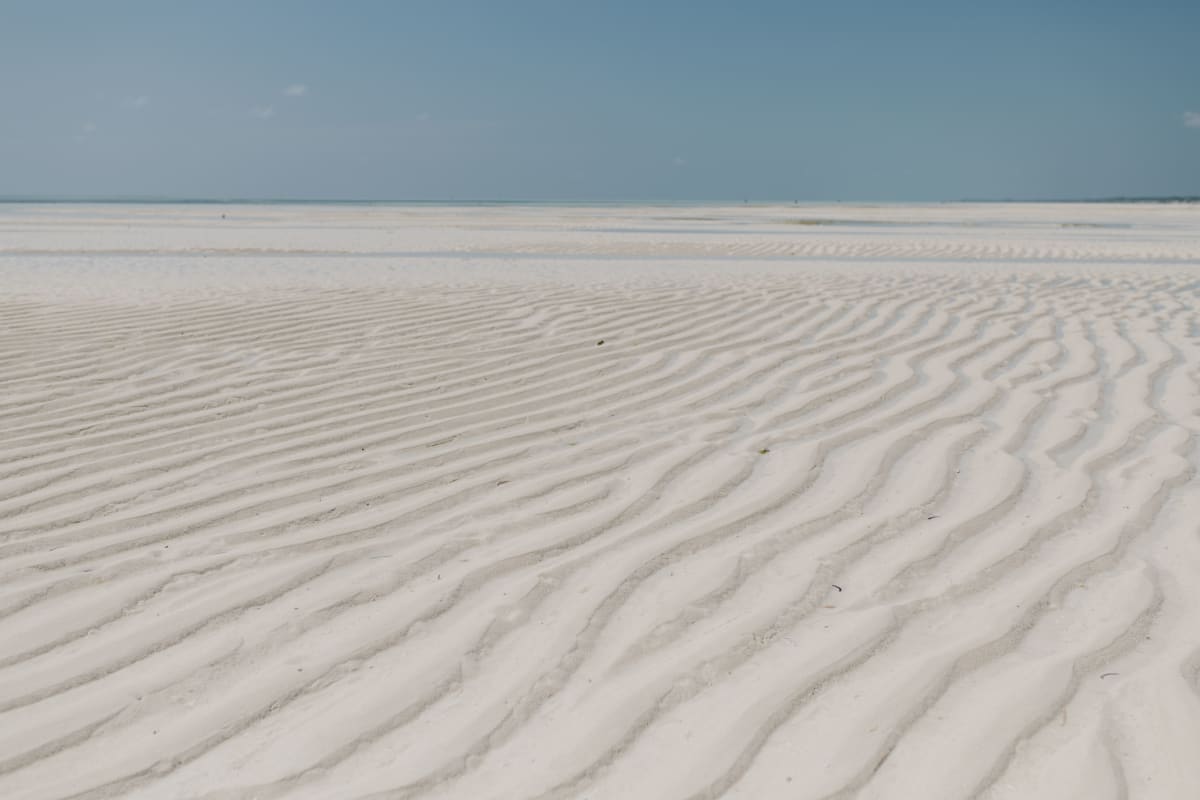
At low tide, long bars of white sand come out of the water with shallow pools behind them. You can walk on the dry bars and wade the channels between them in water from ankle to knee deep, sometimes deeper. The bottom is mostly soft sand with patches of seagrass. In the pools you will see small fish, crabs and hermit crabs, and sometimes rays resting on the bottom.
A place the birds use
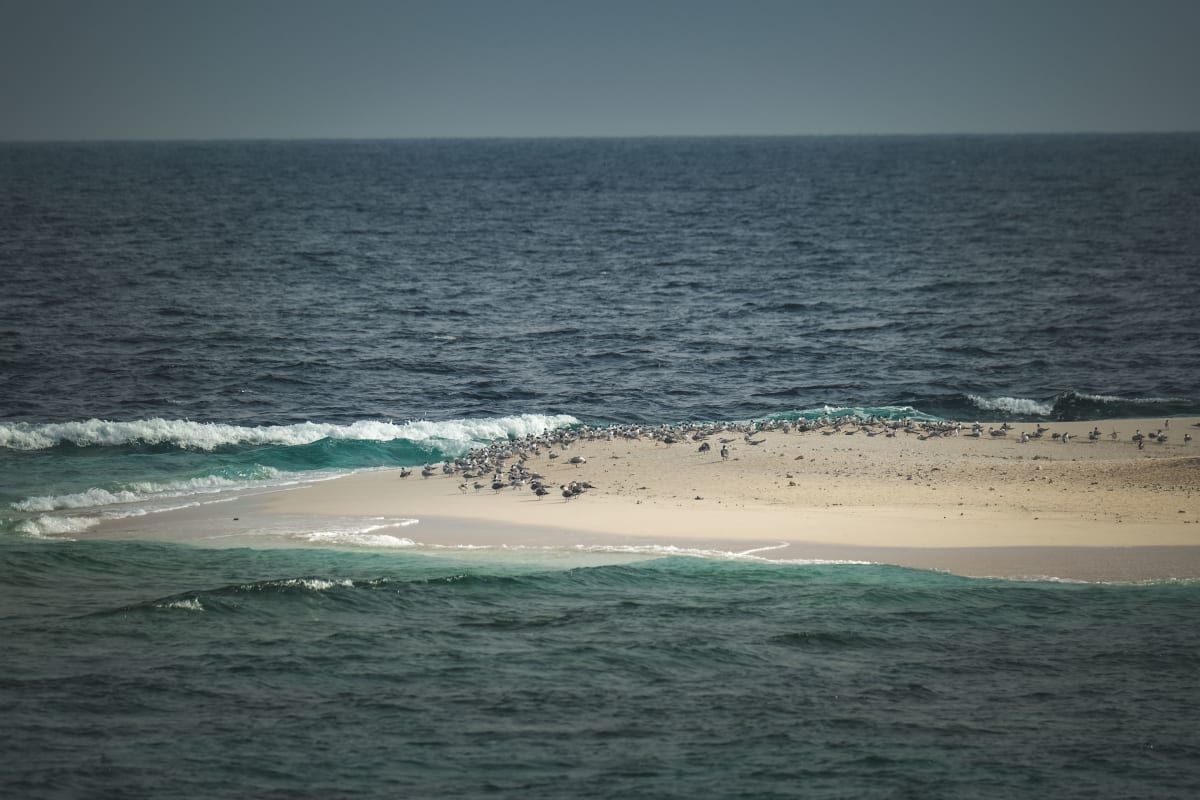
The same flats are a feeding and resting ground for birds, which is why the walk is popular and why it needs care. Pelicans, cormorants, gulls and terns rest on the exposed bars; herons and egrets stalk the edges of the pools; small sandpipers and plovers run along the waterline. Flamingos turn up some days and not others.
Tides and wind: how to time the walk
The tidal range on this coast is small, usually well under a metre. On ground this flat, though, a few tens of centimetres decide whether the bars are dry and wide or only a pale line under the water. The pattern is also irregular: some days have two low tides, some days effectively one, and the times shift from day to day. Before you go, check a tide table for Holbox or the nearest port in a tide app, and treat the prediction as a guide rather than a promise.
| Conditions | The sandbar | The birds | Verdict |
|---|---|---|---|
| Low tide, calm morning | Bars exposed, pools shallow and clear | Feeding along the channels | The best time to go |
| Low tide around midday | Bars exposed | Often fewer active, harsh light | Fine with serious sun protection |
| Low tide with a strong north wind | Water can stay higher than the table predicts, choppy | Sheltering, harder to see | Check from the beach before committing |
| Rising tide | Channels deepen, the way back gets deeper than the way out | Moving to the last dry sand | Start back early |
| High tide | Mostly under water | Fewer in view | Walk the beach and come back later |
Reading the tide table
Aim to arrive about an hour before the predicted low tide and to start back not long after it. That gives you the widest bars and the shallowest channels for the whole walk, and it means you are not wading home through water that has risen while you were looking at birds. If the low falls in the middle of the day, either accept the heat or wait for a day when it falls in the early morning or late afternoon.
Wind and the nortes
Wind matters almost as much as the tide. A steady north wind pushes water onto the north shore, so the flats can stay covered even at a predicted low. In the cooler months, cold fronts known as nortes bring a day or two of strong wind, choppy water and cloud; that is a day for something else. The same steady winds bring the kitesurfers, who often ride in the flat water toward Punta Mosquito, so on windy days keep well clear of their lines and launch areas. Our Holbox kitesurfing guide explains where they ride.
Flamingos at Punta Mosquito: what to expect
Why sightings come and go
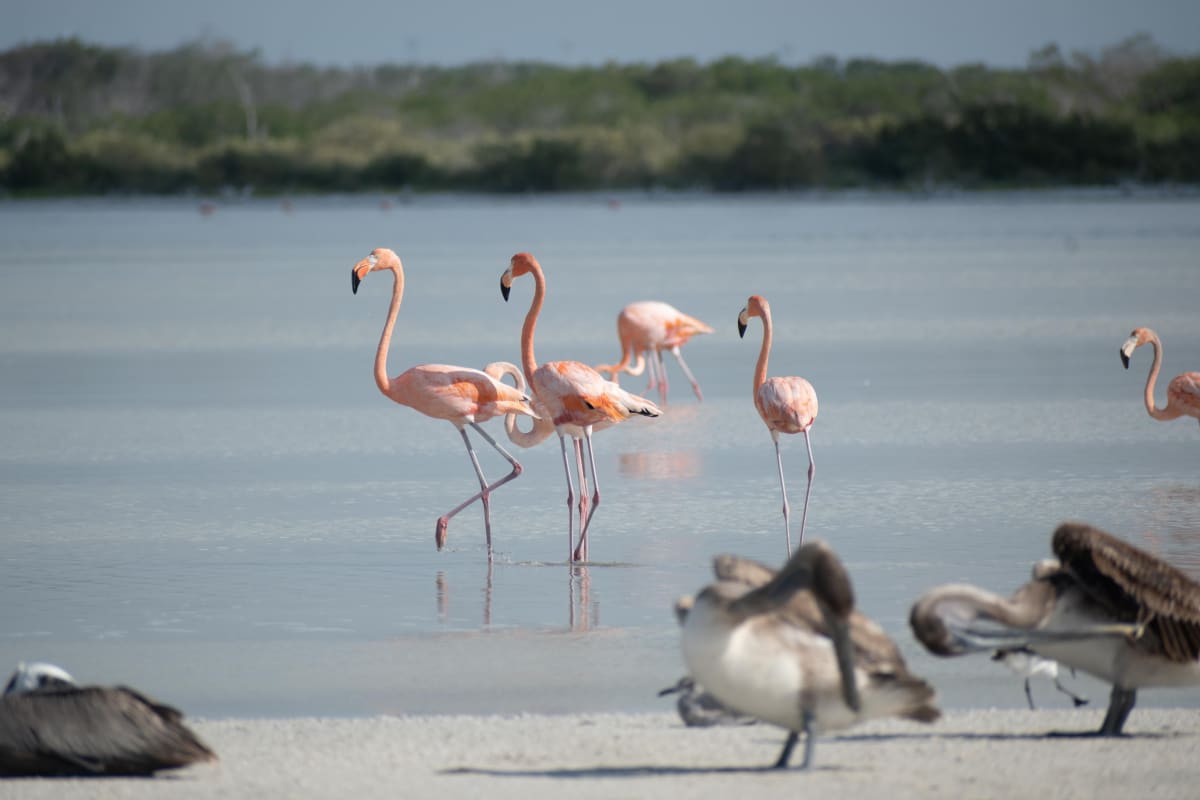
The flamingos of the Yucatán Peninsula are American flamingos, the deep pink species of the Caribbean and the Gulf. They move between feeding grounds along the coast following food and water levels, so a flock that was on the Holbox flats last week may be somewhere else today. There is no month when you can count on seeing them at Punta Mosquito. If you do see them, it will usually be at a distance, feeding with their heads down in shallow water.
If seeing flamingos is the priority
Do the walk for the sandbar and treat flamingos as a bonus. Ask at your hotel or among the guides in the village whether anyone has seen them that week, and take binoculars. The lagoon boat trips also pass through bird habitat; our guide to the Holbox three islands tour covers Isla Pájaros, where the birds are watched from walkways and towers.
The birds you are more likely to see
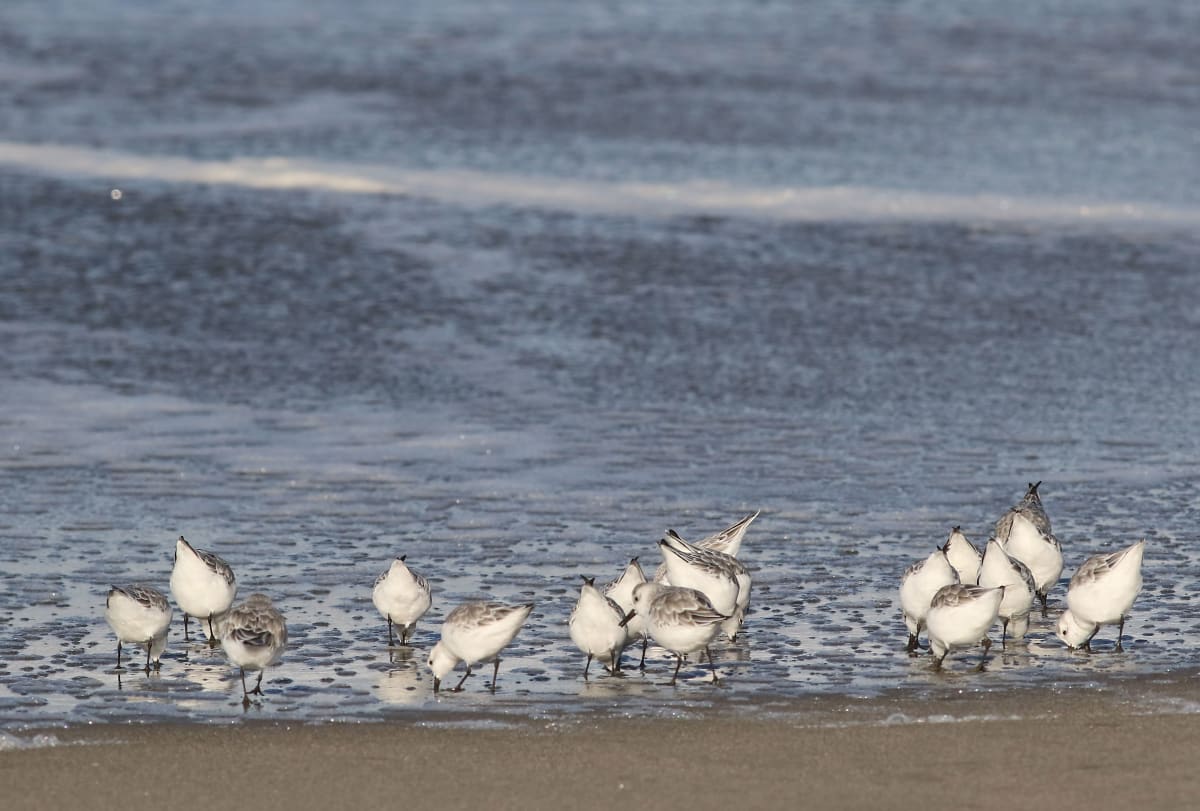
Brown pelicans are almost always around, along with cormorants, gulls and terns resting on the bars and magnificent frigatebirds overhead. Herons and egrets hunt in the pools. From roughly autumn to spring, migrating shorebirds from North America spend the winter on Mexico's coasts, so that is when you are most likely to see busy groups of small sandpipers and plovers at the waterline.
Doing the walk: route, time of day and what to bring
Getting there
Punta Mosquito is reached on foot along the beach from the village, heading east with the sea on your left. From the centre most people take somewhere around half an hour to the start of the flats, more if you are staying at the western end or stop often; the whole outing, with time on the sandbar, usually fills two to three hours. You can ride a bicycle or a golf cart part of the way, but the last stretch is on sand and in water.
Morning or late afternoon
Morning is usually best when the tide allows it: cooler air, calmer water, softer light and birds that are actively feeding. A late-afternoon low tide works too, but leave enough daylight for the walk back, and remember that the sunset spot on Holbox is Punta Cocos, at the other end of the island, not here. Mosquitoes and biting sandflies are worst around dawn and dusk and in the rainy months, which is where the point gets its name.
What to bring
- Water and a hat. There is no shade and nothing to buy on the flats.
- Sun protection you put on well before. A long-sleeved UV shirt is better than sunscreen in this water.
- Insect repellent for the beach, not for wading.
- A dry bag for your phone; channels can be deeper than they look.
- Binoculars, so you can watch birds without walking up to them.
- A small bag for rubbish, yours and any you find.
Rules for walking near the bird areas
Holbox is a protected area, and the flats at Punta Mosquito are where birds rest between feeds. Every time a flock takes off because someone walked through it, the birds lose energy they need, especially migrants at the end of a long flight. A few simple rules:
- Watch the birds, not the distance. If they stop feeding, lift their heads or start walking away, you are too close. Stop and back off.
- Never walk through a resting flock to get a photo, and never chase birds to make them fly.
- Respect signs and roped-off areas where they exist, and any instructions from park staff or guides.
- No drones near the flocks, and dogs on a lead.
- Shuffle your feet when wading, so resting rays move off instead of being stepped on.
- Turn back before the tide does. Do not cross channels with a current or water above your waist.
Punta Mosquito fits easily into a morning, which leaves the rest of the day for the lagoon or a lazy afternoon. For the bigger picture, see our list of things to do in Holbox and our guide to the best time to visit Holbox, and compare boat trips, whale sharks and lagoon tours on the Holbox tours page.
Frequently Asked Questions
Where is Punta Mosquito in Holbox?
East of the village, along the north shore of the island. Walk along the beach with the sea on your left, past the last hotels, until the shore breaks up into sandbars and shallow channels.
Do you need a tour to visit Punta Mosquito?
No. It is a free walk from the village and needs no guide or ticket. What it does need is a low tide and reasonably calm weather, so check a tide table before you set out.
Will I see flamingos at Punta Mosquito?
Maybe. Flamingos are seen there on some days, but they move along the coast and there is no season when they are guaranteed. Go for the sandbar and the shorebirds, and treat flamingos as a bonus.
What is the best time of day to walk the Punta Mosquito sandbar?
A morning low tide on a calm day. Arrive about an hour before low tide, start back soon after it, and avoid days with a strong north wind, when the water can stay high.
Continue exploring Holbox
You Might Also Like
 ExploringNov 16, 2026
How Many Days in Holbox? Day Trip vs 2 Nights vs a Week
Three nights is the right answer for most people asking how many days in Holbox: enough for a boat tour, a sandbar walk
 ExploringOct 28, 2026
Holbox vs Bacalar: Island Sandbars or Lagoon of Seven Colors?
Holbox vs Bacalar: choose Holbox for a car-free sand island with whale sharks, flamingos and sea sunsets; choose Bacalar
 ExploringOct 26, 2026
10-Day Riviera Maya & Holbox Itinerary
A 10-day Riviera Maya and Holbox itinerary that runs in one line from Cancún airport: Playa del Carmen, three nights in