
7 Days in Yucatán: Mérida, Valladolid, Chichén Itzá & the Cenotes

Seven days in Yucatán is enough to see the state's big three, Chichén Itzá, Uxmal and the cenotes, without spending every day in a car. The plan below uses two bases: four nights in Mérida, where the day trips west and south start, and two nights in Valladolid, about 40 km from Chichén Itzá, so you can be at the gate when it opens instead of arriving with the coaches from Cancún.
Each day is short on purpose. We already have a full guide for every stop, so this post gives you the order, the drive times and the decisions, and links to the detail.
The 7-day Yucatán itinerary at a glance
| Day | Sleep in | Plan | Drive (approx.) | Full guide |
|---|---|---|---|---|
| 1 | Mérida | Historic centre, Paseo de Montejo | None | Things to do in Mérida |
| 2 | Mérida | Uxmal and Kabah | 1 h 15 each way | Uxmal and the Ruta Puuc |
| 3 | Mérida | Celestún flamingos | About 1 h 30 each way | Celestún flamingos |
| 4 | Mérida | Cenotes of Cuzamá and Homún | About 1 h each way | Cenotes near Mérida |
| 5 | Valladolid | Izamal on the way east | 1 h to Izamal, then on to Valladolid | Izamal |
| 6 | Valladolid | Chichén Itzá at 8 am, a cenote | About 45 min each way | Chichén Itzá |
| 7 | Out | Las Coloradas and Río Lagartos, or a slow morning | Varies | Las Coloradas |
Drive times are typical estimates on the main roads without long stops. If you are still choosing how to arrive, our guide on how to get to Mérida covers flights, ADO buses and the road from Cancún.
Days 1 to 4: Mérida and its day trips
Mérida is the base because almost every classic day trip on the western half of the peninsula starts there, and because the city itself deserves at least one unhurried day. Book one hotel for four nights and you only unpack once. Our guide to where to stay in Mérida compares the historic centre, Santa Lucía, Santiago and Paseo de Montejo.
Day 1: the historic centre
Start at the Plaza Grande with the Cathedral of San Ildefonso, built in the 16th century from the stones of the Maya city the Spanish founded Mérida on, and the Palacio de Gobierno next door, whose upstairs halls hold Fernando Castro Pacheco's large murals of Yucatán's history. After the midday heat, walk or take a taxi up Paseo de Montejo, the boulevard of mansions built with the wealth of the henequen boom. Check which night you arrive: Sunday brings Mérida en Domingo to the main square, Monday the Vaquería dancing, Thursday the Serenata Yucateca in Parque Santa Lucía.
Day 2: Uxmal and Kabah
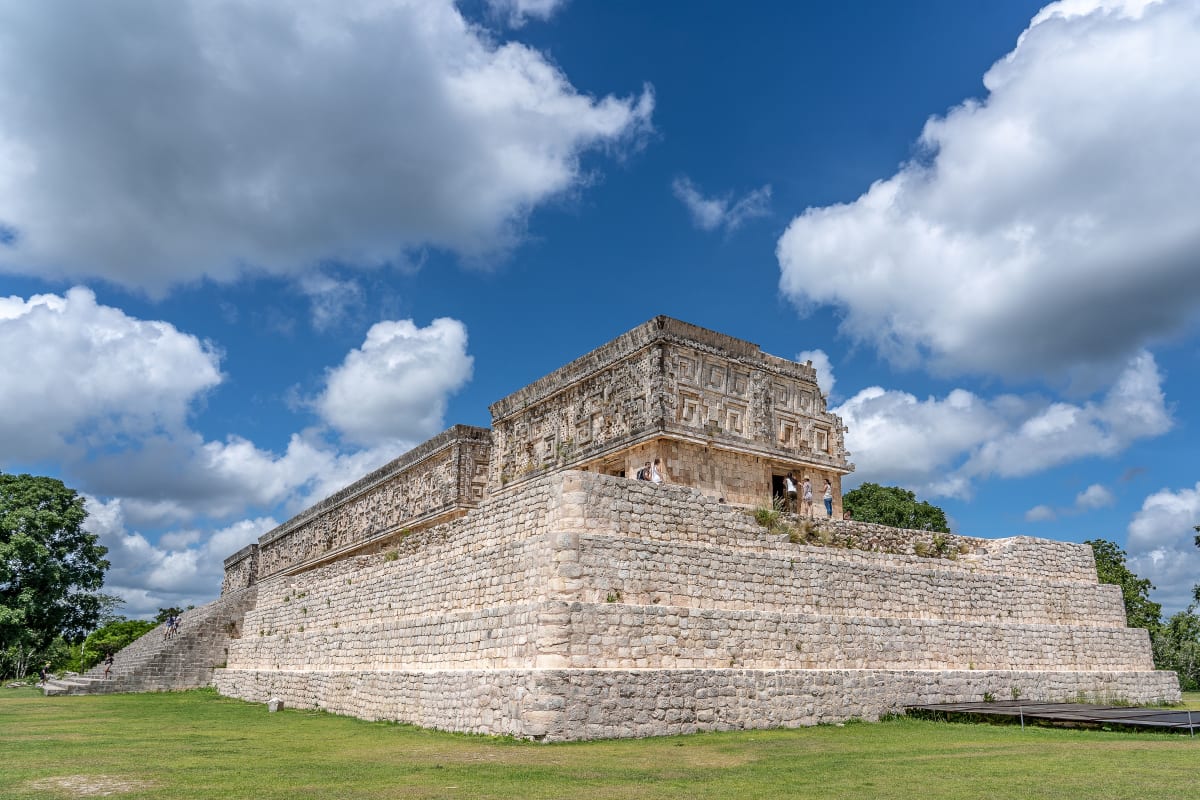
Leave around 7 am. Uxmal is about 80 km south, roughly 1 hour 15 minutes by Highway 261, and the early start puts you on the Pyramid of the Magician and the Nunnery Quadrangle before the heat. Allow two to three hours, then drive 20 minutes on to Kabah for the Codz Poop, the façade covered in Chaac masks. With your own car and energy left, add Sayil, Xlapak and Labná; otherwise be back in Mérida by mid-afternoon.
Day 3: Celestún and the flamingos
Celestún is about 95 km west, an hour and a half by road. Go in the morning, when the water in the estuary is calmer and the wind from the Gulf has not picked up yet. Boats are hired per boat and usually combine the flamingo flats, a mangrove tunnel and a freshwater spring. The largest flocks are there roughly from November to March; from April to October numbers drop, so in those months you might swap this day for Dzibilchaltún and its open cenote, about 30 minutes north, and an afternoon at the beach in Progreso.
Day 4: the cenotes of Cuzamá and Homún
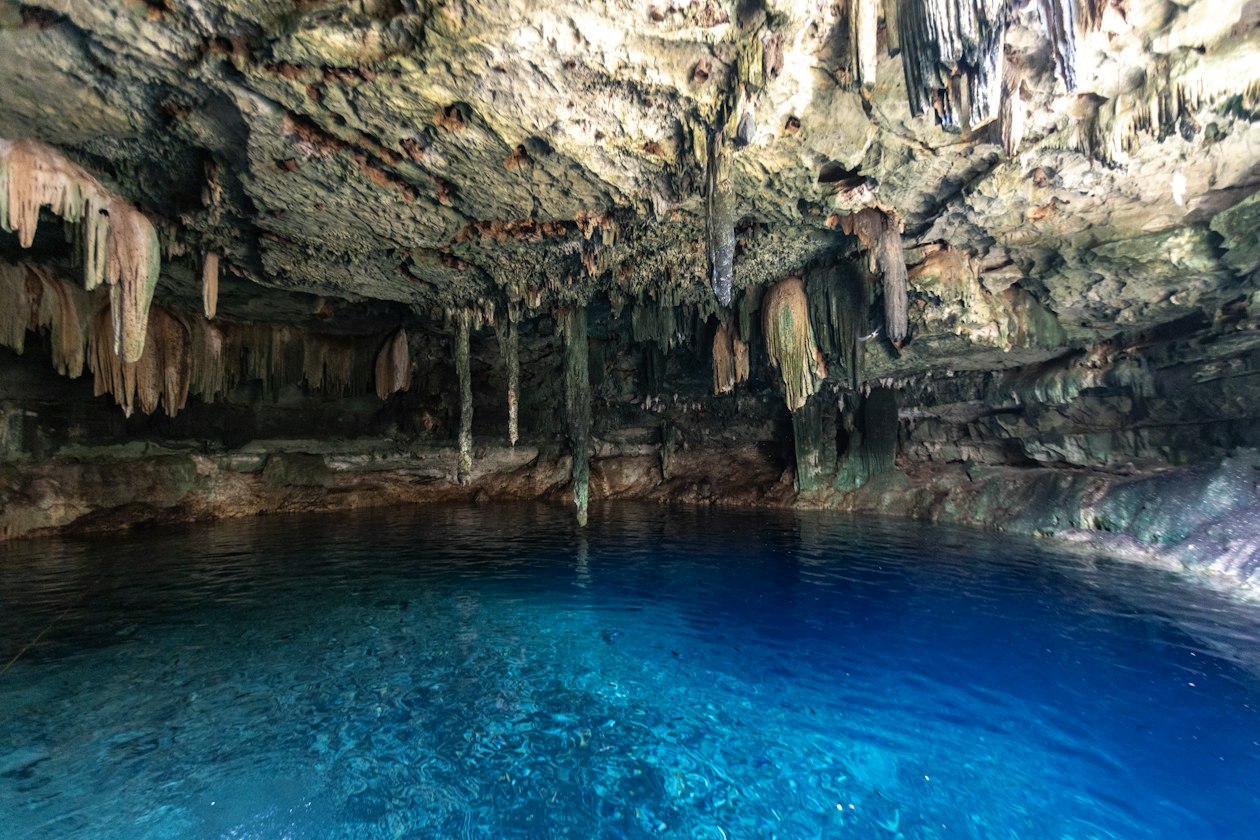
The two villages are about an hour southeast of Mérida and sit on the Ring of Cenotes, the arc that traces the buried rim of the Chicxulub crater. In Cuzamá a horse-drawn cart on narrow rails takes you between cave cenotes; in Homún the Santa Bárbara park has three cenotes on one ticket, and family-run cenotes cluster around the village. Bring cash in pesos, skip the sunscreen before you swim and wear a life jacket. Go early on a weekend, when families from Mérida arrive by late morning.
Days 5 to 7: Izamal, Valladolid and Chichén Itzá
On day 5 you check out of Mérida and move east. The order matters: Izamal lies north of the road between Mérida and Chichén Itzá, so it fits on the way, and sleeping in Valladolid turns Chichén Itzá from a two-hour drive into a short one.
Day 5: Izamal on the way to Valladolid
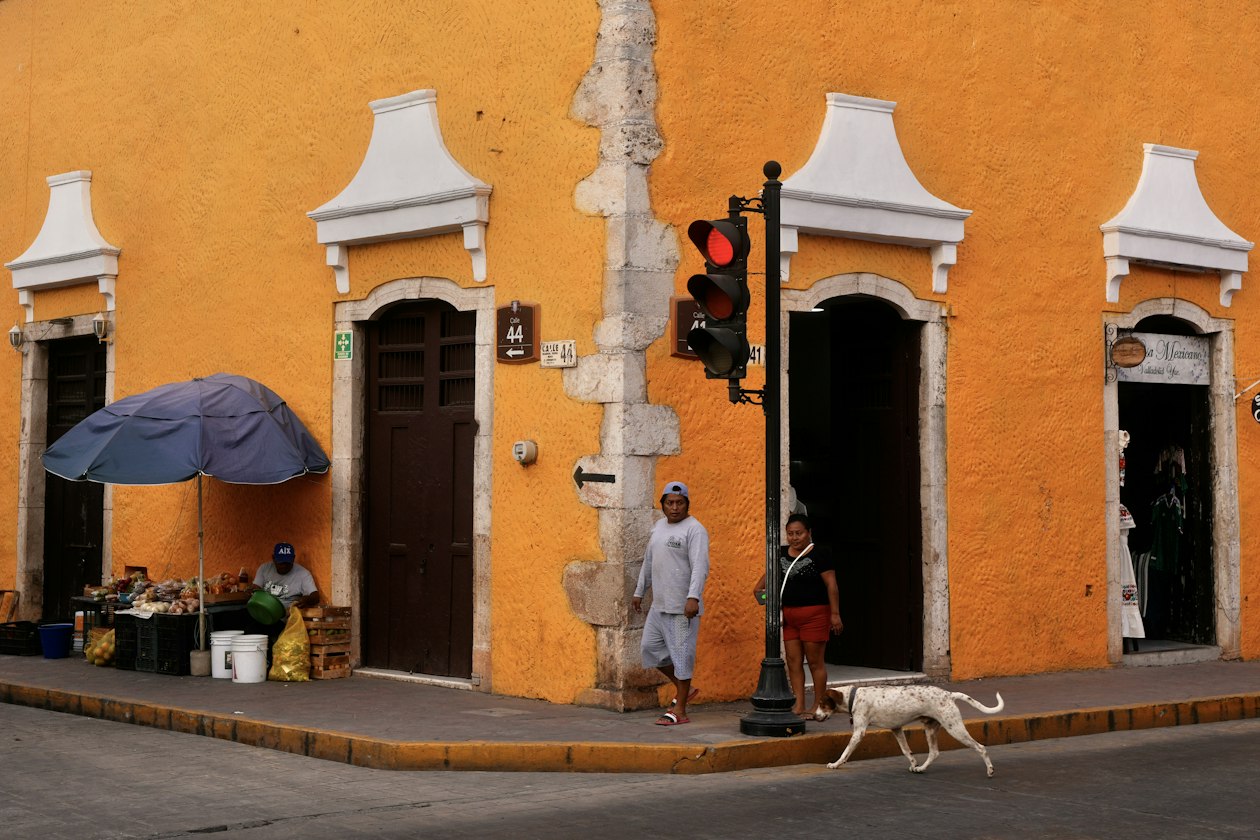
Izamal is about 70 km east of Mérida, 1 hour to 1 hour 15 minutes by car. Climb the Kinich Kak Moo pyramid first, while it is cool, then walk the atrium of the Convent of San Antonio de Padua, ringed by yellow arches. Have lunch near the main square and drive on to Valladolid in the afternoon. In the evening, walk the main square and the church of San Servacio, then the Calzada de los Frailes, a street of painted colonial houses that leads to the former convent of San Bernardino de Siena.
Day 6: Chichén Itzá at opening time
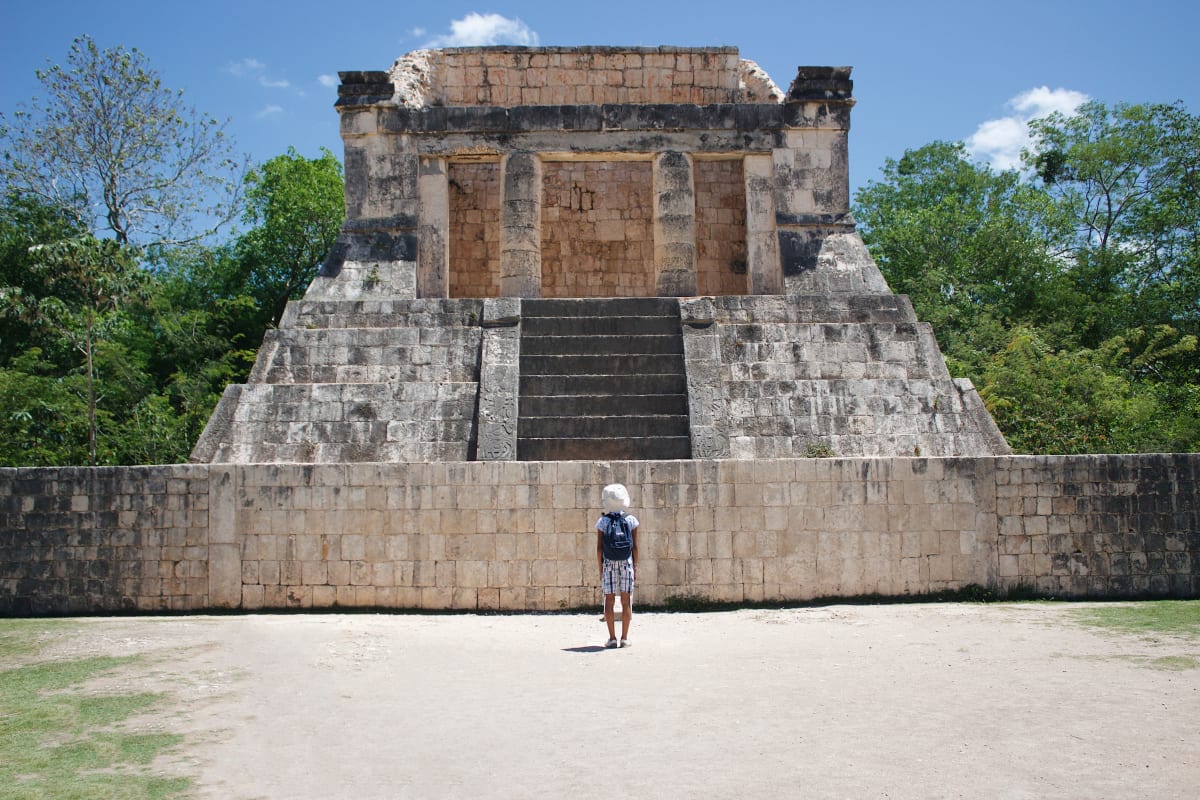
This is the day the whole route is built around. From Valladolid, Chichén Itzá is about 40 km west, so leaving at 7:15 gets you into the ticket line before the 8 am opening. Go straight to El Castillo for photos without crowds, then the Great Ball Court, the Temple of the Warriors and the Sacred Cenote, and finish in the quieter southern group around El Caracol. By late morning the coaches from the Riviera Maya arrive; that is your cue to leave for a cenote such as Ik Kil, about 3 km from the ruins, or Yokdzonot. Back in Valladolid, the cenote Zací is in the middle of town if you still want a swim.
Day 7: Las Coloradas, or a slow last morning
You have two good endings. The first is Las Coloradas, the pink salt ponds on the north coast, paired with a boat ride in Río Lagartos, the flamingos' breeding ground. From Mérida that is about three hours each way; from Valladolid you are already a good part of the way there, on the road through Tizimín. Remember that you look at the ponds, you do not swim in them. The second option is a slow morning in Valladolid, then the drive back to Mérida, about 2 to 2.5 hours, or east towards Cancún if you are flying out from there.
Getting around: car, tours or bus
The route works with any of the three, but they change how early you arrive at each site, and on this peninsula arriving early is most of the trick.
Rental car
The most flexible option and the only one that lets you reach Uxmal, Chichén Itzá and the cenotes at opening time. Roads are flat and mostly in good condition; the toll motorway between Mérida, Valladolid and Cancún is faster than the free road, which crosses villages with speed bumps (topes) at every entrance. Avoid driving the back roads after dark.
Tours from Mérida
If you do not want to drive, days 2 to 4 are all classic group or private tours from Mérida, and many tours combine Chichén Itzá with Izamal or Valladolid in a single day. You can compare them on our Mérida tours page. The trade-off is timing: group tours rarely reach the sites at opening. For a broader menu of options, see our ranking of day trips from Mérida.
ADO bus
First-class ADO buses link Mérida, Valladolid, Chichén Itzá and Cancún, and Mérida to Valladolid takes about 2 to 2.5 hours. Buses work well for the move between bases, less well for the cenote villages, Uxmal and Celestún, where you depend on second-class buses, colectivos or a taxi once you arrive.
Adjusting the route
For the heat and the rainy season
From April to May afternoon highs often pass 38 °C, and from June to October storms usually arrive in the afternoon. In both cases the same rule applies: ruins in the morning, cenotes and the hotel pool after lunch, the city again after sunset. The coolest and easiest months for this route are December to February.
If you fly into Cancún
Run the route backwards: Valladolid and Chichén Itzá first, then Izamal on the way west, and finish with four nights in Mérida. Flying into one airport and out of the other saves the long drive back.
If you only have five days
Drop Celestún (or Uxmal, if you are short on ruins time) and Las Coloradas. Mérida, the cenotes, Izamal and Chichén Itzá from Valladolid still give you the core of the trip.
Frequently Asked Questions
Is 7 days enough for Yucatán?
Seven days is enough for Mérida, Uxmal, Chichén Itzá, Izamal, Valladolid and a day of cenotes at a comfortable pace. Adding Campeche or the Caribbean coast needs more days.
Should I stay in Mérida or Valladolid?
Both. Mérida is closer to Uxmal, Celestún and the cenotes of Cuzamá and Homún; Valladolid is about 40 km from Chichén Itzá, close enough to be there for the 8 am opening.
Do I need a car for this itinerary?
No, but it helps. Tours from Mérida cover days 2 to 4, and ADO buses connect Mérida, Valladolid and Chichén Itzá. A car is what lets you arrive at the sites before the crowds.
What is the best time of year for a week in Yucatán?
December to February, when the heat eases and Celestún has its largest flamingo flocks. April and May are the hottest months; June to October brings afternoon storms and lower prices.
Continue exploring Mérida
You Might Also Like
 Travel TipsNov 11, 2026
Yucatán Road Trip by Car: Stages, Roads and Driving Tips
A road trip through the Yucatán by car, from Mérida to the Caribbean: the stages and driving times, toll or free roads,
 Travel TipsOct 28, 2026
Cancún to Mérida by Tren Maya: A Station-by-Station Itinerary
How to ride the Tren Maya from Cancún to Mérida: the stations worth stepping off at, how to turn the trip into a three-d
 AdventuresOct 27, 2026
Cenotes in Mérida vs Tulum: Which Region Has Better Swimming?
Mérida’s cenotes are deep cave pools inland around Homún and Cuzamá; Tulum’s are clear, shallower caverns on underground