Best Time to Visit Mazunte & Zipolite

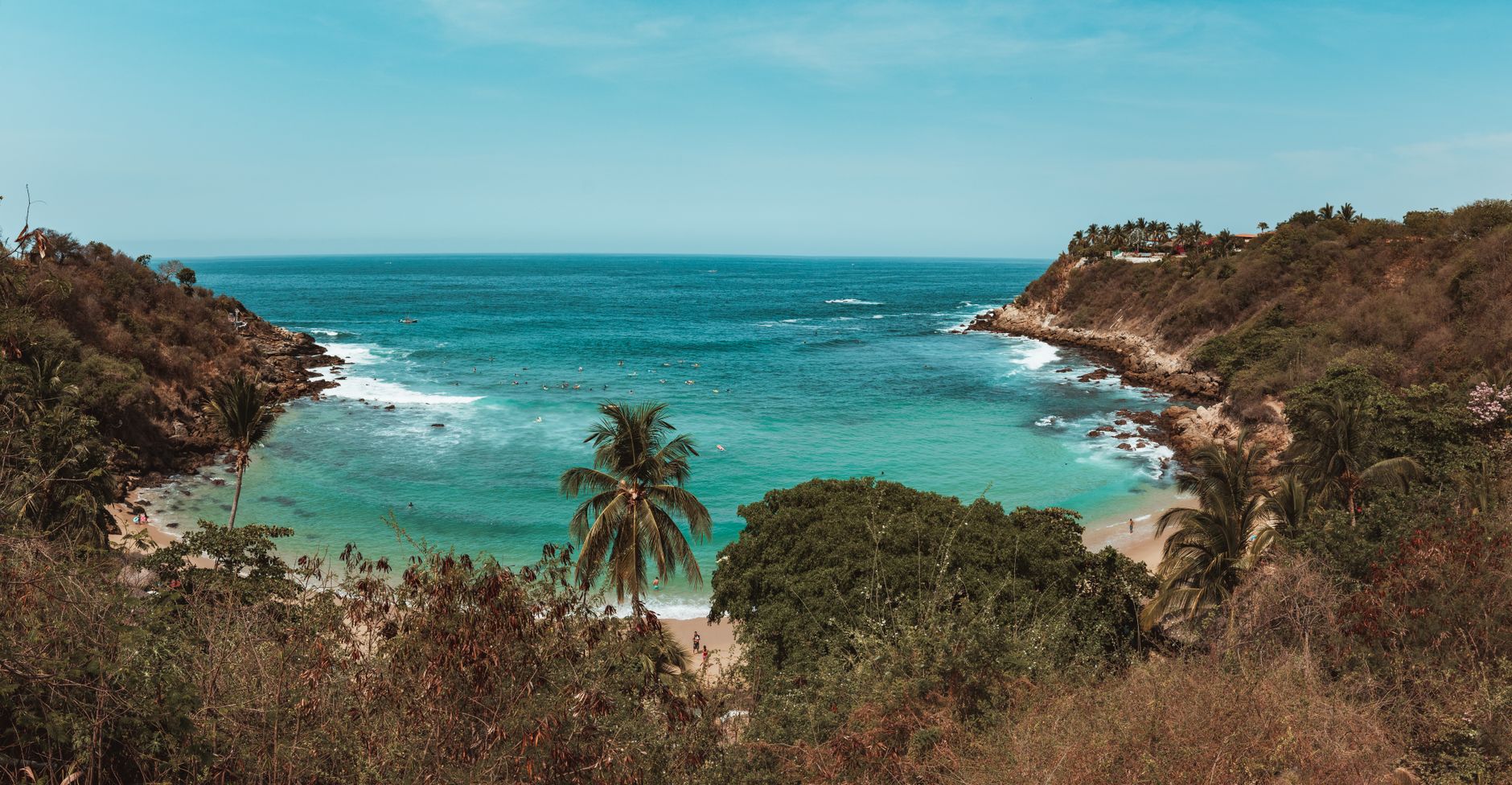
The best time to visit Mazunte and Zipolite is the dry season, from November to April: almost no rain, calmer seas in the morning and, from December to March, humpback whales passing along the coast. November and the weeks after Easter give the best balance of weather and space. From June to October it is hot, wet and quiet, the season of turtle nesting, mosquitoes and the occasional hurricane.
| Month | Weather | Sea | Crowds | Good for |
|---|---|---|---|---|
| January | Dry, sunny, slightly cooler nights | Calm mornings | High in the first week, then medium-high | Whales, Punta Cometa |
| February | Dry, clear skies | Calm mornings | Medium-high | Whale season at its best |
| March | Dry, getting hotter | Mostly calm | Medium; Easter can fall here | Last whales |
| April | Dry, hot, hills turning brown | Swell starting to build | Very high at Easter, then low | Beaches after Easter |
| May | Hottest and most humid; first storms possible | Bigger swells | Low | Value, surf |
| June | Rainy season starts | Big swells, rough days | Low | Green hills, quiet beaches |
| July | Hot, afternoon and night storms | Often rough | Mexican summer holidays | Turtle nesting season |
| August | Hot, humid, wet | Often rough | Medium, then low | Turtle nesting season |
| September | Wettest stretch, hurricane risk | Rough | Lowest | Turtles, empty beaches |
| October | Wet, hurricane risk, easing late | Rough, calming late | Low | Turtles, first hatchling releases |
| November | Rains end, dry and green | Calming | Medium, rising | Best balance overall |
| December | Dry, sunny | Calm mornings | Highest at Christmas–New Year | Whales arrive |
Mazunte, San Agustinillo and Zipolite sit on the Pacific coast of Oaxaca, at about 15° north, so it is hot all year: highs stay around 30 °C or more in every month, and the sea never gets cold. What changes through the year is rain, humidity, the size of the swell and who is in town. Below is what each season is really like, the wildlife calendar and the best months for different kinds of trip.
Dry season (November to April): the best time to visit Mazunte
From November to April it rarely rains. Skies are clear, humidity is lower than in summer and the mornings are the calmest part of the day on the water, which is when boat trips go out. This is high season on the whole coast, and the villages are at their liveliest: the cafés on Mazunte's main street are full, the sunset crowd on Punta Cometa is at its biggest and Zipolite's beach road is busy every night.
Peak weeks: Christmas, New Year and Easter
The two absolute peaks are the Christmas–New Year fortnight and Semana Santa (Holy Week, the week before Easter Sunday). Mexican families and foreign visitors arrive at the same time, the best-located cabañas book up weeks ahead and room rates are at their highest of the year. Between New Year and Easter it is busy but easier: many long-stay visitors come for a month or more, so in January and February the places with sea views and a kitchen go first. Our guide on where to stay in Mazunte and Zipolite compares the villages if you need to book early.

November: the month we would choose
November catches the coast at its best moment. The rains have just ended, so the hills are still green, the sea is settling down after the summer swells and the high-season crowds have not yet arrived. It is also late enough in the year for hatchling releases from the turtle camps, and Día de Muertos (1–2 November) brings altars and family celebrations to the villages. The other good window is the stretch after Easter in April: still dry and quieter, but hotter, with a browner landscape and the swell beginning to build.
Rainy season (June to October): hot, green and quiet
The wet season usually starts in June and lasts until October, with September and early October normally the wettest weeks. Days are hot, nights stay warm and the humidity makes it feel hotter than the thermometer says. This is low season, apart from the Mexican school holidays in July and August, when families from Oaxaca City and further inland fill the beaches for a few weeks.
What the rain is actually like
It rarely rains all day. The usual pattern is a bright, steamy morning, clouds building in the afternoon and a heavy storm in the late afternoon or at night. Plan beaches and walks for the morning and you lose less than you might expect. The landscape changes completely: the dry scrub on the hills turns green and the dust of April disappears. The trade-offs are muddy paths, including the trail to Punta Cometa, cloud that often hides the sunset, and a sea that is rougher. Summer brings the biggest swells of the year to this coast, which suits surfers and bodyboarders but makes swimming at Zipolite, dangerous at any time, even riskier.
Heat, mosquitoes and air conditioning
Mosquitoes increase sharply in the rainy season, and dengue is present on the coast of Oaxaca, as in much of tropical Mexico. Bring a repellent with DEET or icaridin, use it from late afternoon, and choose a room with screens or a mosquito net. Many simple cabañas have only a fan; if you need air conditioning between May and October, confirm it before you book.
Hurricane season: the real risk
The eastern Pacific hurricane season runs officially from 15 May to 30 November, with the highest risk from late August to October. Most storms stay out at sea, but the Oaxaca coast does get direct hits: in May 2022 Hurricane Agatha came ashore on this stretch of coast and caused serious damage in the villages. If you travel in this window, take travel insurance that covers weather, keep your bookings flexible and follow the forecasts of the US National Hurricane Center in the days before you go.

Whales and turtles: the wildlife calendar
For many visitors the deciding factor is not the weather but the animals. The two big wildlife seasons on this coast fall at opposite ends of the year.
Humpback whales (December to March)
Humpback whales travel along the coast of Oaxaca roughly from December to March, with the most regular sightings in January and February. Small pangas leave from the beach at Mazunte and from Puerto Ángel in the morning, when the sea is flattest, and on clear mornings you can watch for spouts from the headland at Punta Cometa. Sightings are never guaranteed, but dolphins and turtles are seen on the same trips all year. Our guide to whale watching from Mazunte explains how the trips work and the rules boats follow.

Sea turtles (nesting in the rainy season and autumn)
The turtle season runs the other way. The olive ridley turtles that made Mazunte famous nest mainly in the rainy season and the autumn, and the beach of La Escobilla, west of Mazunte, receives mass arrivals called arribadas, which cannot be predicted to the day. Hatchling releases from the conservation camps follow the nesting, roughly from late summer into the winter, usually at dusk and never on a fixed schedule. The Centro Mexicano de la Tortuga in Mazunte and the crocodile lagoon at La Ventanilla are worth a visit in any month; our guide to the Ventanilla lagoon and the turtle beaches explains what you can and cannot see.

The best time to visit Mazunte for your kind of trip
- First visit, all-round: November, or the second half of April once Easter week is over.
- Whale watching: January and February; late December works too, if you book a room early.
- Turtles and hatchling releases: late September to December, with a flexible evening or two.
- Lowest prices and fewest people: late August to October, if you accept rain, mosquitoes and the hurricane risk.
- Swimming: the dry season, when the sea is calmer; even then, swim in Mazunte Bay or the coves near Puerto Ángel rather than at Zipolite.
- Surfing and bodyboarding: from about May to October, when the summer swells arrive.
- Sunset at Punta Cometa without a crowd: a weekday outside the Christmas and Easter holidays; our guide to Punta Cometa lists sunset times by month.
Whatever the month, the coast runs on a morning rhythm: boat trips, swims and walks go best before the wind, the heat or the afternoon storms arrive. Once you have dates, check which boat, snorkelling and lagoon trips run that month on our Mazunte and Zipolite tours page.
Frequently Asked Questions
What is the best month to visit Mazunte?
November is the best all-round month: dry, green after the rains, a calmer sea and fewer people than in winter. For whales, choose January or February.
When is the rainy season in Mazunte and Zipolite?
Roughly from June to October, with the heaviest rain usually in September and early October. Storms tend to come in the afternoon or at night, so mornings are often clear.
When can you see whales in Mazunte?
From about December to March, with the most regular sightings in January and February. Outside those months there are no humpbacks, but dolphin trips run all year.
Is it a good idea to visit Mazunte in hurricane season?
It can be, with care. The season runs from 15 May to 30 November and the risk is highest from late August to October. Book flexibly, buy insurance that covers weather and follow official forecasts before you travel.
Continue exploring Mazunte
You Might Also Like
 ExploringNov 6, 2026
Mazunte vs Puerto Escondido: Village Calm or Surf-Town Energy?
Mazunte is a small, slow village of cabañas, turtles and sunsets; Puerto Escondido is a real town built around big surf.
 Travel TipsOct 24, 2026
Mazunte on a Budget: Where the Money Goes and Cash Tips
Mazunte can be a cheap beach trip if you choose the right season, sleep in a cabaña or hostel and eat where locals eat.
 Travel TipsOct 23, 2026
Yoga Retreats in Mazunte: What to Expect & How to Choose
What a Mazunte yoga retreat is really like: residential programmes, silent meditation retreats and build-your-own weeks